 lop News
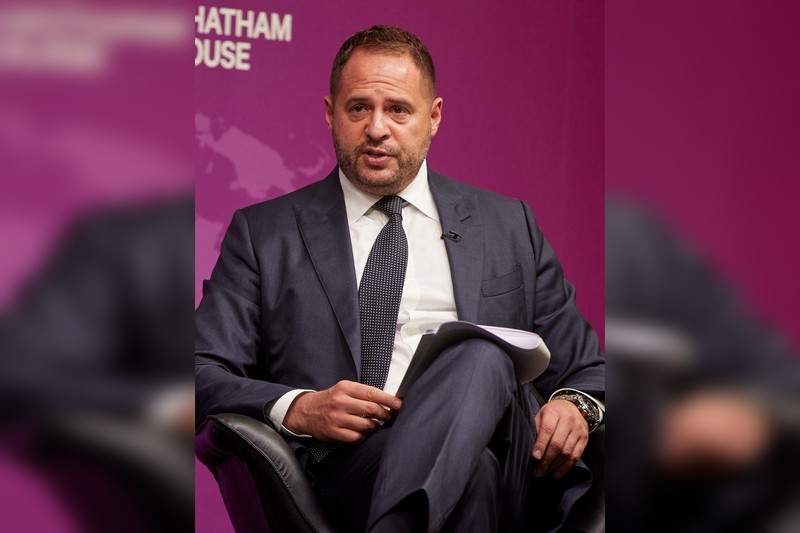
For three years of full-scale war, Andriy Yermak was the figure who loomed largest in Volodymyr Zelenskyy’s orbit — the chief of staff who controlled access to the president, shaped wartime strategy, and reportedly slept metres from his boss in an underground bunker during Russian missile attacks. Widely regarded as the second most powerful person in Ukraine, Yermak was, by every account, Zelenskyy’s most trusted ally and effective deputy.
On Thursday, a Kyiv anti-corruption court ordered him locked up.
The High Anti-Corruption Court ruled that Yermak be held in pre-trial detention for 60 days on money-laundering charges, unless he posts bail of 140 million hryvnia — roughly $3.2 million. Prosecutors allege he helped launder 460 million hryvnia, approximately $10.5 million, through the construction of an elite housing complex in Kozyn, outside Kyiv, between 2021 and 2025. Investigators say part of those funds originated from corruption at Energoatom, Ukraine’s state nuclear energy company.
“I don’t have that amount of money. I wasn’t prepared for this,” Yermak told reporters after the ruling.
The Fall of a Wartime Operator
Yermak’s trajectory mirrors Ukraine’s recent history in miniature: a one-time film producer who helped engineer Zelenskyy’s improbable rise from playing a fictional president on television to leading a nation under siege. He served as chief of staff through most of Russia’s invasion until his resignation in November 2025, when investigators raided his home as part of the same corruption probe.
Before that resignation, Yermak was the gatekeeper — an éminence grise who tightly managed who reached the president and what crossed his desk.
Prosecutors have raised pointed questions about his movements since leaving office. According to the Specialized Anti-Corruption Prosecutor’s Office, Yermak holds four diplomatic passports, and data on his border crossings since November 20, 2025 have been deleted from the state border-control system — a detail that suggests someone with the means and connections to flee may have been preparing to do so.
Yermak has denied all charges. “As a lawyer with more than 30 years of experience, I have always been guided by the law. And now I will likewise defend my rights, my name, and my reputation,” he wrote on Telegram. He told the court he would remain in Ukraine. “I have nothing to hide.”
The Midas Web
The case is part of a broader anti-corruption operation codenamed “Midas,” led by the National Anti-Corruption Bureau of Ukraine (NABU) and the Specialized Anti-Corruption Prosecutor’s Office (SAPO). The operation, first unveiled in November 2025, has ensnared a widening circle of senior figures.
Timur Mindich, a former business associate of Zelenskyy, has been accused of orchestrating a $100 million kickback scheme at Energoatom. Mindich denies the allegations and left for Israel on the eve of being served with a suspicion notice. NABU has submitted documents for his inclusion on an Interpol wanted list. Former Deputy Prime Minister Oleksii Chernyshov is also implicated; he was released after posting bail of 120 million hryvnia in full. Rustem Umerov, who now heads Ukraine’s National Security and Defence Council and serves as a key negotiator in US-led peace efforts, has been questioned as a witness.
NABU chief Semen Kryvonos confirmed that Zelenskyy himself is not the subject of any investigation. Under Ukrainian law, a sitting president cannot be investigated.
A Test of Institutions
The stakes extend well beyond one man’s liberty. Ukraine’s Western backers have tied billions in military and financial aid to the country’s willingness and ability to confront internal corruption. The Yermak case is, by any measure, the most significant test yet of whether the anti-corruption infrastructure built after the 2014 pro-democracy uprising can reach into the president’s inner circle.
The Zelenskyy government has not always welcomed that scrutiny. Last year, Kyiv attempted to strip NABU and SAPO of their independence — a move that triggered rare wartime protests and forced Zelenskyy to backtrack after sharp criticism from the European Union.
Some Ukrainian lawmakers see the case as proof the system works. “Partners see that Ukraine has an independent anti-corruption system that is performing its function,” said Oleksandr Merezhko, head of the parliamentary foreign-affairs committee and a member of Zelenskyy’s own Servant of the People party.
The public may need more convincing. A Kyiv International Institute of Sociology poll conducted in early May found that 54 percent of Ukrainians, when given a choice between the two, considered corruption a greater threat to the country’s development than Russia’s war — a striking judgment in a nation fighting for its survival.
The Silence from Bankova Street
Through it all, Zelenskyy has said nothing. A communications adviser said Monday it was too early to address the matter. That silence — whether strategic, legal, or personal — carries weight in a country that has heard the president speak on virtually every crisis of the past three years.
Yermak, for his part, invoked his wartime record. Asked whether he was morally prepared for a prison cell, “As someone, who stayed in Kyiv, in the presidential office on February 24, 2022, when many said that Kyiv will fall in a few hours, in a few days … I am quite a strong person,” he said, referencing the day of Russia’s invasion.
The war grinds on. So, now, does the most consequential corruption case in Ukraine’s post-independence history.
Discussion (10)