 lop News
President Volodymyr Zelenskiy’s Monday evening address carried an unusual urgency. Ukrainian intelligence, he said, indicated Russian forces were preparing a new massive attack—possibly within hours. “Please pay attention to air raid alerts today,” he warned. “Relevant orders for air defence have already been issued.”
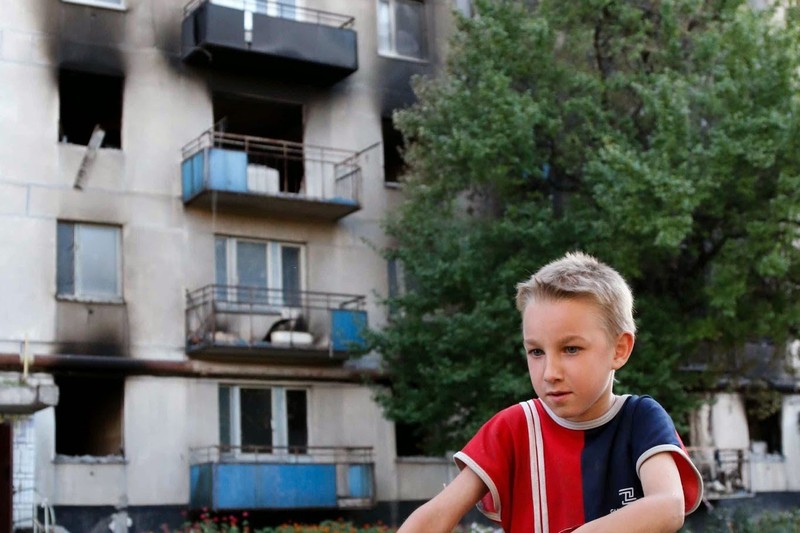
The attack came before dawn Tuesday. Ballistic missiles and drones struck apartment buildings in Poltava and Zaporizhzhia, killing at least two people and injuring 10 others, according to regional officials. In Poltava, a hotel and multiple residential buildings sustained damage. Fires broke out across Zaporizhzhia as drones targeted homes and non-residential structures. Air raid alerts blanketed much of the country, with drones reported as far west as Ukraine’s border regions.
The strike validated Zelenskiy’s intelligence—and underscored the grim rhythm of a war entering its fifth year.
Long-Range Strikes, Strategic Messaging
The Russian barrage came just hours after Ukraine demonstrated its own reach. Overnight Saturday, Ukrainian forces struck two major Russian energy facilities: the Transneft oil terminal at Primorsk, Russia’s primary Baltic Sea export hub, and the Bashneft-Ufaneftekhim refinery in Bashkortostan, nearly 1,400 kilometers from Ukrainian territory.
Primorsk handles approximately 60 million tons of oil annually—more than one million barrels per day. A fuel tank and oil-loading infrastructure were hit, causing a fire to break out. While Leningrad region Governor Alexander Drozdenko said only one fuel tank was damaged, Radio Free Europe/Radio Liberty reported at least four tanks ablaze, citing satellite imagery.
Industry sources told Reuters that both Primorsk and the nearby Ust-Luga port, which handles roughly 700,000 barrels daily, suspended operations following the attack. The timing is significant: global energy markets are already unsettled by Iran’s effective closure of the Strait of Hormuz.
The Bashneft-Ufaneftekhim refinery, with an annual processing capacity of 6-8 million tons, also caught fire, Ukraine’s General Staff confirmed. Both facilities, the military said, support Russia’s war effort through fuel processing and transport.
Leningrad authorities said air defense systems intercepted more than 70 Ukrainian drones. St. Petersburg’s Pulkovo International Airport suspended flights for nine hours overnight.
The Spring Campaign Takes Shape
The exchange of strikes reveals both sides’ calculations as winter loosens its grip. Russia has consistently targeted Ukrainian energy infrastructure during colder months—an attempt, Kyiv officials argue, to freeze the country into submission. The March 24 attack fits that pattern, though spring now approaches.
Zelenskiy’s warning about an imminent strike, delivered with unusual specificity, suggests Ukrainian intelligence has gained visibility into Russian operational planning. The fact that the attack materialized on the timeline he indicated—overnight Tuesday, hours after his address—points to either a significant intelligence breakthrough or a deliberate Russian decision to telegraph intentions.
Neither scenario is encouraging for Ukraine. If Russia can launch coordinated strikes on predictable schedules, it retains offensive initiative. If Ukrainian intelligence can anticipate but not prevent such attacks, air defense remains a reactive capability.
The Iran Connection
Beyond the immediate battlefield, Zelenskiy disclosed what he called “irrefutable evidence” that Russia continues providing intelligence to Iran—specifically, radio-technical and electronic intelligence, along with information from Russian partners in the Middle East. He also cited “clear information” that Russia plans to deploy ground control stations for long-range drones in occupied Ukrainian territories and at four locations in Belarus.
The intelligence-sharing allegation, if accurate, suggests a deepening military relationship between Moscow and Tehran that extends beyond the Iranian drones already deployed against Ukrainian targets.
A War of Attrition, Redefined
Ukraine’s ability to strike deep into Russian territory—Primorsk lies more than 1,000 kilometers from the nearest Ukrainian border—demonstrates that Kyiv retains meaningful offensive capacity despite Western ammunition shortfalls and uncertain political support. The attacks on energy infrastructure mirror Russia’s own strategy, turning the Kremlin’s tactics against its economy.
But Russia’s response was immediate and lethal. Two dead in Poltava. Ten injured across multiple cities. Residential buildings burning in the pre-dawn dark.
The spring campaign, it seems, has already begun.
Sources
- Ukraine war latest: Ukraine hits Russia’s key Baltic Sea oil port, Bashkortostan oil refinery, General Staff confirms — Kyiv Independent
- Ukraine Strikes Primorsk Port in Northwestern Russia, Damaging Fuel Reservoirs — The Moscow Times
- Ukraine’s Zelenskiy says intelligence shows Russia preparing new massive attack — Reuters via Straits Times
- Russian missiles, drones strike apartment buildings in multiple Ukrainian cities, killing 2, injuring 10 — Kyiv Independent
Discussion (9)