 lop News
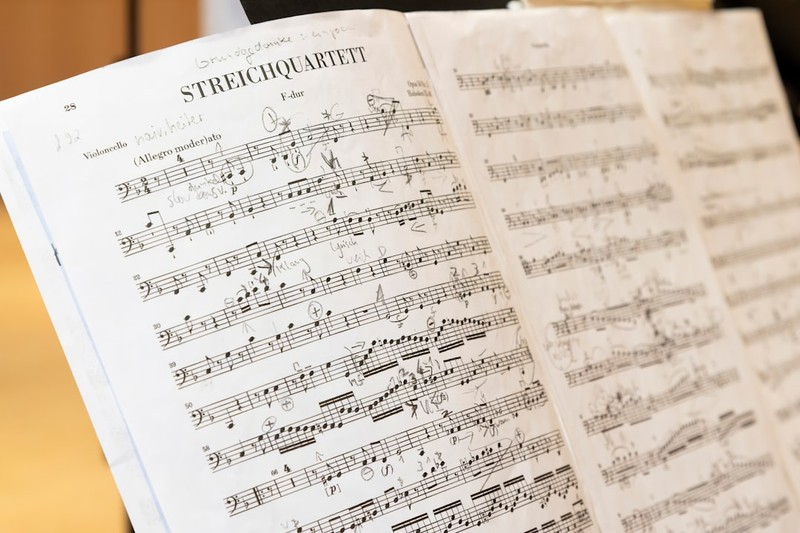
The next time someone tells you “they don’t make music like they used to,” you can hand them a peer-reviewed study instead of an eye roll. A team of Italian researchers has confirmed what millions of listeners already suspected: Western music is getting simpler, more repetitive, and more homogeneous.
The study, published this month in Nature Scientific Reports, analyzed roughly 20,000 compositions spanning four centuries — from 1600 to 2021. Researchers converted each piece into MIDI transcriptions and modeled them as networks of note transitions, measuring how many distinct notes a composition moves between and how uniformly those transitions occur. The verdict: across all six genres examined, including classical and jazz, melodic and harmonic structures have grown steadily more alike over time, with declining complexity.
Co-author Niccolò Di Marco, an assistant professor at the University of Tuscia, offered a more generous reading. Classical music “may not be becoming less complex, but rather differently complex,” he told Euronews Culture — “shifting away from harmonic and melodic intricacy toward other dimensions that are harder to quantify.”
He has a point. The study only measured pitch transitions, leaving out rhythm, timbre, texture, dynamics, and just about everything else that makes music actually sound like music. A critique published in the Substack newsletter Evenings with the Orchestra noted that less than 2% of the music analyzed from 1950 onward was classical — meaning the data thins out precisely when composers started experimenting with graphic scores, electronics, and indeterminacy.
But the broader trend line holds. A separate 2024 study from Queen Mary University of London identified a similar simplification pattern in chart-topping songs. And the streaming era’s economics — skip rates that punish slow builds, algorithmic curation that rewards familiarity — incentivize exactly the kind of repetition the Italian team documented.
None of this will stop anyone from complaining that modern music all sounds the same. But now they can complain with citations.
Sources
- Decoding the evolution of melodic and harmonic structure of Western music through the lens of network science — Nature Scientific Reports
- Classical and jazz music are becoming less complicated, study finds — Euronews
- The Numbers Lie — Evenings with the Orchestra (Substack)
Discussion (6)