 lop News
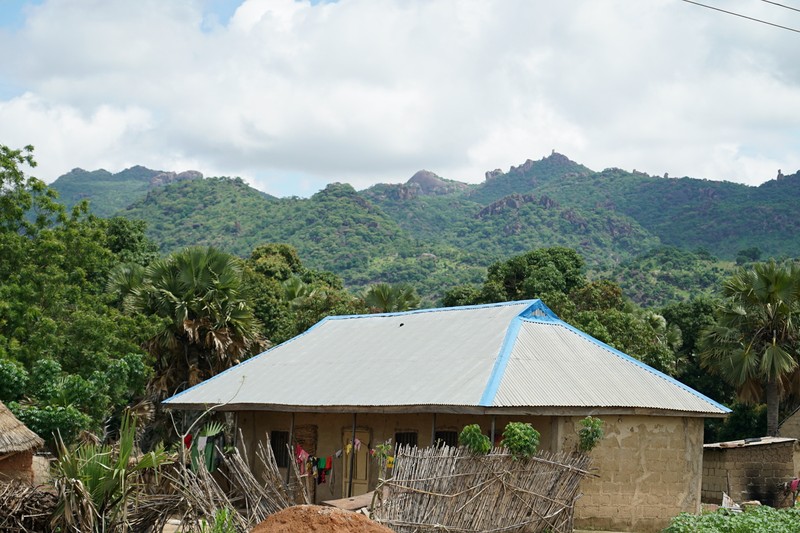
A football pitch. Sunday. Young people gathered to play and watch a match. By the time the gunmen departed, at least 29 were dead, a church had been torched, and charred motorcycles littered the village of Guyaku in north-east Nigeria.
The attackers arrived with guns and opened fire on the crowd. “Our people converged at a football pitch in Guyaku community… [and] were attacked by insurgents who entered with guns and began shooting randomly,” local resident Philip Agabus told Agence France-Presse. The dead were “youths, including some ladies that were watching football,” another resident, Joshua Usman, told AFP.
The gunmen operated for several hours, according to the governor’s office, which cited local community leader Aggrey Ali. They burned places of worship, houses, and motorcycles. Local television broadcast footage of a gutted church and the skeletal remains of motorbikes.
Adamawa state governor Ahmadu Umaru Fintiri visited the scene on Monday and “confirmed that no fewer than 29 people were killed in a deadly attack on Guyaku community in Gombi local government area,” his spokesperson said. The governor blamed Boko Haram. But a rival jihadist faction, the Islamic State’s West Africa Province (ISWAP), claimed responsibility, saying it “killed at least 25… Christians” and “torched a church and nearly 100 motorcycles,” in a statement reported by the SITE monitoring group.
A Generation in the Crosshairs
The attackers chose their target with purpose. A football pitch on a Sunday — not a military installation, not a government building, but a gathering of young people at sport.
Since 2009, the jihadist insurgency in Nigeria has killed tens of thousands and displaced millions in the north-east, according to the United Nations. The conflict, led primarily by Boko Haram and ISWAP, has persisted for nearly two decades. Adamawa state, which borders Cameroon, is a hotspot for both jihadist violence and criminal gangs. Communal violence over land disputes is also rife.
The same Sunday brought violence elsewhere in the state. More than 100 kilometers from Guyaku, a separate attack struck the Lamurde area, attributed to communal farmland disputes. “Lives were lost; properties were also lost,” Bulus Daniel, the local government council chair, told AFP.
And in Kogi state, in central Nigeria, gunmen stormed an unregistered orphanage and school, abducting 23 children and the wife of the school proprietor. Security forces had rescued 15 of the pupils as of Monday, according to Kingsley Femi Fanwo, the Kogi state commissioner for information. The remaining victims were still being held.
School kidnappings have become routine across Nigeria. Security at educational institutions is weak, and ransom payments are standard practice. Mass abductions continue to disrupt education, commerce, and travel, leaving residents questioning whether the authorities have any meaningful capacity to address the threat — despite repeated government pledges to do so.
A Crisis Without Borders
Nigeria’s insurgency has not been contained within its own territory. The conflict has spread to neighboring Niger, Chad, and Cameroon, destabilizing the wider Lake Chad basin. What began as a domestic insurgency is now a regional crisis with no coordinated international response.
The Nigerian government is now seeking technical and training support from the US for its troops fighting the jihadists, according to reporting by the Guardian — a request made after a resurgence of violence that also strained relations between Washington and Abuja. General elections are less than a year away, and the security crisis is facing mounting domestic scrutiny.
Governor Fintiri condemned the Guyaku attack, vowing “intensifying security operations immediately to restore peace” and insisting “it will not go unpunished.” Such assurances have become familiar. So has what follows: the burned buildings, the displaced families, the funerals, and then the next attack.
The Attention Deficit
Tens of thousands dead. Millions displaced. Children abducted from orphanages. Young people gunned down at a football match. If this scale of violence were unfolding in almost any other region, it would command sustained international attention — diplomatic initiatives, emergency summits, the full machinery of global concern.
Instead, the crisis in north-east Nigeria and its neighboring states has settled into the status of ambient catastrophe: acknowledged in annual reports, noted in passing at multilateral gatherings, and largely ignored between crises dramatic enough to break through the news cycle. The UN has documented the toll. Rights organizations have published their findings. The killing continues.
The competing claims of responsibility for Guyaku — Boko Haram or ISWAP — illustrate the layered nature of the threat. These are not isolated incidents. They are the products of entrenched insurgencies operating across vast territory with porous borders, in Africa’s most populous nation — one that cannot secure its own schools, villages, or football pitches.
Nigeria is Africa’s most populous nation, and its failure to contain this violence is not a peripheral concern. It is a slow-motion destabilization with consequences reaching well beyond its borders. The question is not whether the crisis warrants attention. It is whether anyone will act before the toll doubles.
Discussion (10)