 lop News
Behind closed doors at last week’s Beijing summit, Chinese President Xi Jinping offered Donald Trump a private assessment of Vladimir Putin’s war that the Russian leader would not want broadcast. Putin, Xi told the US president, might come to regret invading Ukraine.
The remark, first reported by the Financial Times and confirmed by several people familiar with the US assessment of the summit, marks a striking departure from Xi’s usual diplomatic restraint on Russia’s invasion. One person aware of Xi’s previous meetings with former president Joe Biden noted that the Chinese leader had never before offered such a candid appraisal of Putin’s decision to go to war.
Then the conversation took an unexpected turn. Trump suggested that he, Xi, and Putin should cooperate against the International Criminal Court — the body that has issued an arrest warrant for the Russian president over alleged war crimes in Ukraine, and whose chief prosecutor Trump has sanctioned over investigations into US and Israeli officials.
Between them, the two revelations illuminate how the leaders of three of the world’s most powerful states discuss the rules-based order when no one is taking notes for the press. One leader privately concedes that a fellow strongman’s signature military campaign may have been a strategic error. The other proposes that all three coordinate against a court designed to hold individuals accountable for war crimes and genocide.
Putin Arrives Seeking Reassurance
The timing sharpens the picture. Putin arrived in Beijing on Monday for a two-day summit with Xi, ostensibly to mark the 25th anniversary of the 2001 Sino-Russian Treaty of Good-Neighborliness and Friendly Cooperation. But the visit comes days after Trump’s own state visit — and Putin has every reason to seek reassurance that any warming between Beijing and Washington will not come at Moscow’s expense.
Before departure, Putin said Russia and China are ready to “support each other on issues affecting the core interests of the two countries, including the protection of sovereignty and national unity.” Relations, he claimed, have reached an “unprecedented level” of mutual understanding and trust.
An Asymmetric Partnership
The optics project unity. The substance tells a different story. China has become Russia’s largest trading partner by far since Western sanctions severed Moscow from European markets — supplying more than a third of Russian imports and buying more than a quarter of its exports, according to Deutsche Welle. Russia accounted for nearly 18 percent of China’s oil imports in 2025, energy Beijing can secure at a discount precisely because Moscow has nowhere else to sell.
Claus Soong of the Mercator Institute for China Studies described the dynamic as a couple “in the same bed with different dreams” — interests aligned but not identical. Both Washington and Moscow need Beijing right now, Soong told Deutsche Welle, albeit in opposing ways. Beijing does not need to choose between them.
The power balance is asymmetrical and tilting further. Russia depends on China for markets, dual-use goods, and diplomatic cover. China depends on Russia for discounted energy and a strategic partner on its northern border — useful, but not indispensable.
Xi’s private candor to Trump about Putin’s potential regret underscores that Beijing understands this leverage. China has never condemned Russia’s invasion and presents itself as a neutral party. But privately, its leader appears willing to acknowledge what four years of grinding warfare have made plain: the invasion has not gone to plan.
A Court Under Siege
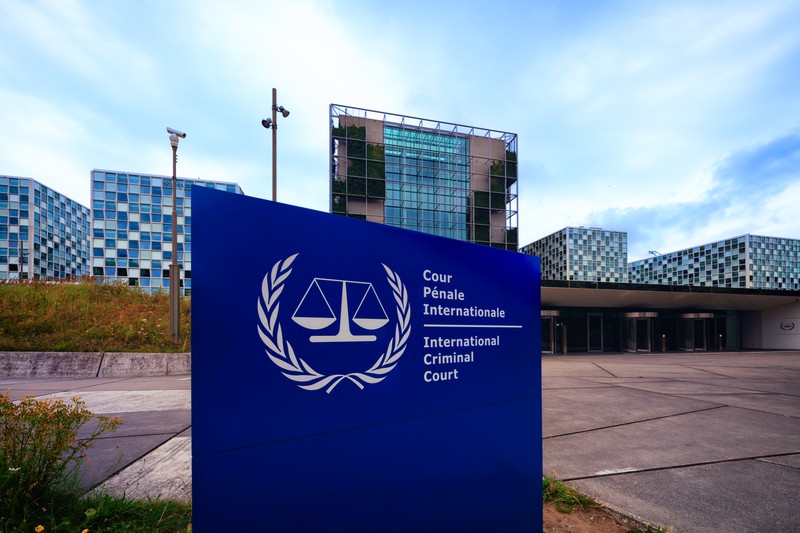
The ICC discussion adds its own dimension. The court’s president, Judge Tomoko Akane, told the institution’s annual meeting in The Hague on Monday that it would “never accept any kind of pressure” — even as nine staff members, including six judges and the chief prosecutor, face US sanctions or Russian arrest warrants.
The US, Russia, China, and Israel are not ICC members. The idea that three leaders of non-member states would discuss coordinating against the court suggests the institution’s detractors sense an opening. Trump sanctioned prosecutor Karim Khan over investigations into US and Israeli officials. Putin faces an ICC arrest warrant over Ukraine. Both want the court diminished.
Whether Xi shares that goal is another matter. China has its own reasons to be wary of international legal institutions that might one day examine its conduct, but Beijing has not made the ICC a public target.
The Putin-Xi summit is underway in Beijing now. Whatever Xi told Trump about Putin’s regrets will hang over every handshake and joint declaration this week — whether either leader acknowledges it.
Sources
- Xi reportedly told Trump that Putin might ‘regret’ invading Ukraine — The Independent
- China’s moment? Putin heads to Beijing after Trump courts Xi — Deutsche Welle
- ICC president vows to resist US and Russian pressure despite sanctions and threats — Associated Press
Discussion (8)