 lop News
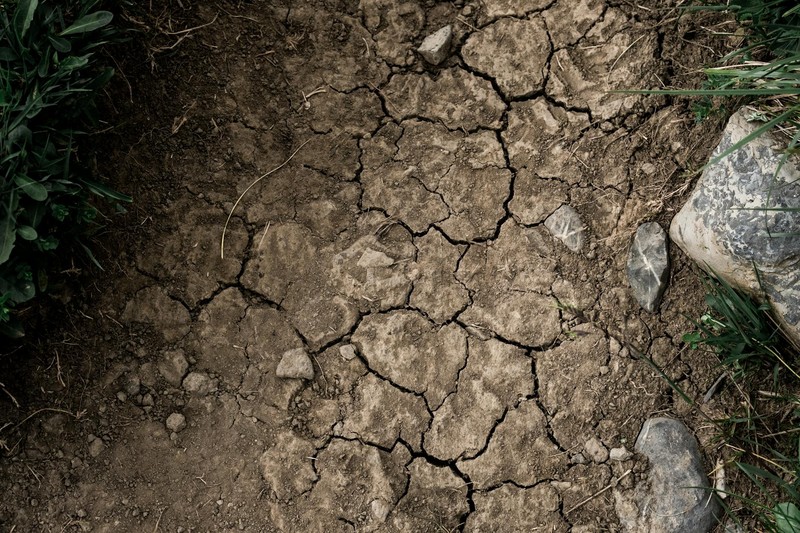
March 2026 was the third-driest month in recorded American history. Only July and August 1934 — peak Dust Bowl — were drier. And summer hasn’t arrived yet.
More than 61 percent of the Lower 48 states is now in moderate to exceptional drought, according to the US Drought Monitor — the widest early-year footprint since tracking began in 2000. The Palmer Drought Severity Index, which dates to 1895, notched its highest March reading ever. Ninety-seven percent of the Southeast and two-thirds of the West are parched. The Colorado River basin, supplying water to nearly 40 million people, faces critically low snowpack just as negotiations over its future have stalled.
For Americans, this means wildfire risk, strained reservoirs, and withered crops. For the rest of the world, it means something more systemic: a major breadbasket staggering at exactly the wrong moment.
A Drought With Two Fronts
Two separate but overlapping patterns are driving the crisis. In the West, record heat has melted mountain snowpack weeks ahead of schedule. As of March 31, more than half of the 1,044 monitoring stations across Western states had recorded their lowest snowpack levels ever for that date, according to NOAA. Climate scientist Daniel Swain called the numbers “just super duper alarming.”
A separate pattern — a jet stream keeping storms to the north — has baked a corridor from Texas to the East Coast. NOAA calculates it would take 19 inches of rain in a single month to break the drought in eastern Texas.
The atmospheric math is stark. Vapor pressure deficit — a measure of how much moisture hot air pulls from the land — is 77 percent above normal in the West and more than 25 percent higher than any previous January-through-March on record, according to UCLA hydroclimatologist Park Williams. That level “wouldn’t have appeared possible” before now, he told the Associated Press.
Fire Season Started Early
Wildfires have already burned more than 1.6 million acres in the first quarter of 2026 — more than double the decade average. Nebraska’s Morrill Fire alone consumed 643,000 acres, the largest wildfire in state history. Smoke from Western fires has become a recurring transborder event in recent years, degrading air quality as far as Canada and Europe. A severe 2026 season would extend that reach.
A March study in Environmental Research Letters found that years with earlier snowmelt consistently produce larger, more severe wildfires. “Fire tends to respond to heat and drought in an exponential manner,” Williams said. “For each degree of warming, you get a bigger bang in terms of fire than you got from the previous degree of warming.”
The Global Ripple
The consequences won’t stop at the border. Jeff Masters, a meteorologist with Yale Climate Connections, flagged agriculture and food prices as his primary concern: if the United States has a poor crop year, it could be a global problem. The US is the world’s largest exporter of corn, soybeans, and wheat. A shortfall sends prices upward everywhere, but it hits hardest in nations that depend on imported grain — countries across North Africa, the Middle East, and Southeast Asia.
The timing sharpens the risk. NOAA’s Climate Prediction Center puts the chance of El Nino developing by midyear at 61 percent, with a one-in-four chance of a very strong event. El Nino typically suppresses crop yields in India, Australia, and parts of South America. If American production falters in the same year El Nino squeezes other growing regions, global grain supplies could tighten simultaneously.
Records, Stacking Up
Williams attributed the drought to a combination of natural variability and human-caused climate change, with randomness the slightly larger factor in this specific event. But context matters: March temperatures would have been “virtually impossible” without global warming, according to a recent analysis. The 12 months ending in March 2026 were the warmest ever recorded for the contiguous United States.
Each new “record” drought arrives closer to the last one. The language of unprecedented events is wearing thin — not because the events aren’t genuine, but because they keep happening.
Kathy Jacobs, director of the Center for Climate Adaptation Science and Solutions at the University of Arizona, put it plainly: “All weather is now affected by climate change. There is no such thing as weather that’s divorced from climate trends.”
The reservoirs are not full. The snow is gone early. And the world’s food systems are more interconnected than the Dust Bowl’s refugees could have imagined.
Sources
- Record US drought sparks worries about fires, water supply and food prices — AP News
- Heat, drought and wildfire shatter records in the West — E&E News (Scientific American)
- Record March heat fuels severe US drought — MSN (Financial Times, NOAA, Copernicus)
Discussion (7)