 lop News
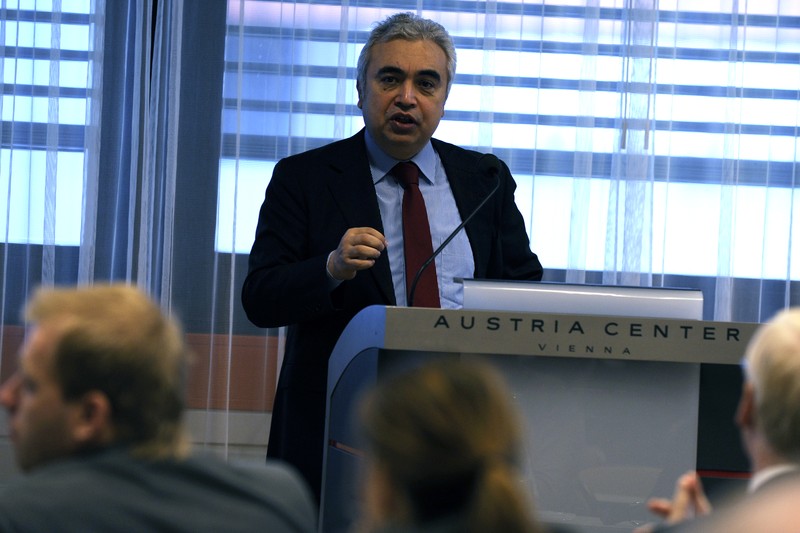
The 1973 Arab oil embargo quadrupled prices and plunged the West into recession. The 1979 Iranian Revolution gutted global supply. The 2022 Russian invasion of Ukraine sent oil to nearly $140 a barrel and inflation soaring worldwide. The head of the International Energy Agency says the current crisis makes all three look manageable by comparison.
“This is more serious than the ones in 1973, 1979 and 2022 together,” IEA executive director Fatih Birol told French newspaper Le Figaro in an interview published Tuesday. “The world has never experienced a disruption to energy supply of such magnitude.”
His reasoning is straightforward. Previous shocks were driven partly by market panic or demand spikes. This one involves a physical choke point. Iran has almost entirely blocked the Strait of Hormuz — through which roughly 20 million barrels of oil and petroleum products pass daily, about a fifth of global supply — in retaliation for US and Israeli military strikes that began on February 28. Infrastructure across the Gulf has been damaged or destroyed. Even if diplomacy resolves the standoff tomorrow, supply will not resume quickly.
A crisis without precedent
The numbers bear out Birol’s claim. In 1973, an embargo by Arab producers roughly quadrupled the price of a barrel of oil. Singapore’s inflation rocketed from 2 per cent to 22 per cent. In 2008, speculation and surging demand pushed crude to a record $147. In 2022, supply fears after Russia’s invasion sent prices to $139. This time, the Strait is physically closed, regional production capacity has been knocked out, and there is no clear diplomatic off-ramp. WTI crude now sits around $115 a barrel, with Brent just above $111 — and those prices reflect expectations that the situation could escalate further before it improves.
Dr David Broadstock, partner at energy consultancy The Lantau Group, noted that infrastructure in the Middle East has been damaged and destroyed during the conflict, meaning supply will not be easily resumed even if politics changes.
The cascading global response
Governments are scrambling. Singapore has established a new Homefront Crisis Ministerial Committee and warned businesses and households to prepare for “severe consequences” if Middle Eastern supply routes remain constrained. Prime Minister Lawrence Wong cautioned that the world could face stagflation — the toxic combination of stagnant growth and persistent inflation that defined the 1970s.
The Philippines declared a national energy emergency after inflation jumped to 4.1 per cent in March from 2.4 per cent in February, driven largely by diesel prices surging nearly 60 per cent year-on-year. The country imports 98 per cent of its oil from the Gulf. Thailand has ordered civil servants to conserve energy. Vietnam’s trade ministry is urging businesses to adopt work-from-home arrangements. Laos has cut school weeks to three days.
South Korean President Lee Jae Myung called on citizens to “save every drop of fuel,” as his government imposed fuel price caps and delayed the shutdown of coal-fired power plants. In Australia, Prime Minister Anthony Albanese asked commuters to switch to public transport to preserve supplies for farmers and critical industries.
In Bangladesh, the crisis has turned violent. The president of the Bangladesh Petrol Pump Owners Association told the Washington Post that robberies at fuel stations are reported daily, with some station managers beaten or killed. The government has cut office hours and ordered markets to close by 6pm.
Bond markets rattled from Tokyo to London
The shock has unsettled financial markets globally. The IMF, in a blog post on March 30, warned that bond yields have risen across major advanced economies and many emerging markets, stock prices have declined, and volatility has increased. Countries already carrying record-high debt levels face a particularly precarious moment: higher import bills for fuel, fertilizer, and food are widening trade deficits and pressuring currencies.
“The same shock can look like a terms-of-trade windfall for some countries, a balance-of-payments strain for others, and a renewed cost-of-living squeeze across many economies,” the IMF said.
The unease is visible in real time. On Tuesday, equity markets fluctuated as investors assessed President Donald Trump’s latest ultimatum — reopen the Strait of Hormuz by midnight GMT Wednesday or face the destruction of Iran’s civilian infrastructure. Tehran has warned that any such attack would trigger retaliation against energy infrastructure in the Gulf, tightening supplies further. Stephen Innes at SPI Asset Management described markets as “oscillating in a narrow, uneasy range” as traders sized up the countdown.
Asia bears the brunt
About 80 per cent of crude oil and oil product shipments and 90 per cent of liquefied natural gas exported through the Strait of Hormuz last year were bound for Asian markets, according to the IEA. This is, as Singapore’s foreign minister Vivian Balakrishnan put it, an “Asian crisis” — and Asian economies are absorbing the worst of it.
QatarEnergy’s CEO told Reuters that Iranian attacks have knocked out 17 per cent of Qatar’s LNG export capacity, causing an estimated $20 billion in lost annual revenue. Qatar supplies roughly a quarter of Singapore’s LNG. Countries such as Thailand, Malaysia, Vietnam and the Philippines source around 60 to 95 per cent of their crude oil from the Middle East, according to the ASEAN Centre for Energy.
The IMF’s assessment is blunt: “All roads lead to higher prices and slower growth.” A short conflict could send prices soaring before markets adjust. A long one could keep energy expensive and strain import-dependent economies indefinitely. The middle path — lingering tensions, costly energy, stubborn inflation — may be the most likely outcome, and the hardest to manage.
For anyone who buys petrol, heats a home, or holds a bond portfolio, the Strait of Hormuz standoff is no longer a distant geopolitical concern. It is a line item on the next utility bill.
Sources
- IEA chief: current oil and gas crisis worse than 1973, 1979, 2022 together — Reuters
- How the War in the Middle East Is Affecting Energy, Trade, and Finance — IMF Blog
- What the Iran war shows about Singapore’s energy resilience for now and the future — Channel News Asia
- Oil prices rally, stocks edge up after Trump’s latest Iran threat — Channel News Asia
- The Strait of Hormuz Crisis Is Driving a Wave of Global Energy Rationing — Time
- Fuel price surge pushes Philippine inflation above central bank target — Channel News Asia
Discussion (9)