 lop News
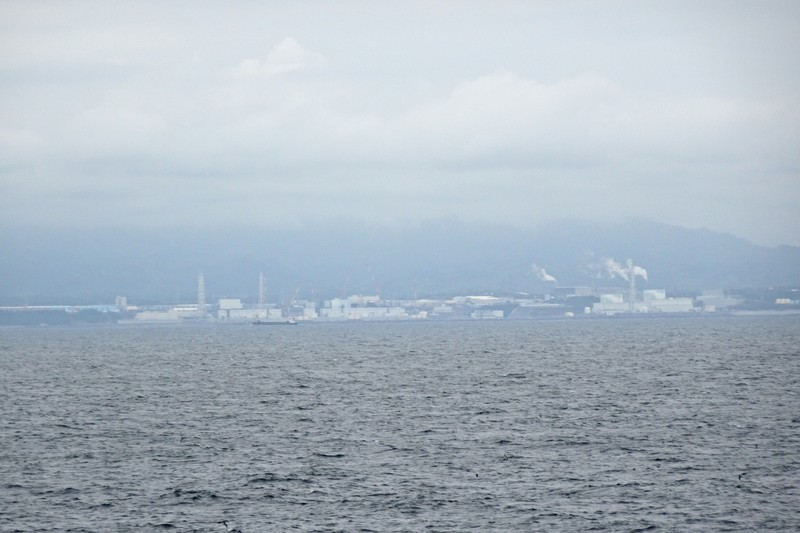
The company that oversaw the worst nuclear disaster since Chernobyl is back in the business of splitting atoms.
On April 16, Tokyo Electric Power Company — TEPCO — resumed commercial operations at Unit 6 of the Kashiwazaki-Kariwa nuclear station in Niigata prefecture. The reactor now supplies electricity to roughly 450,000 households across the greater Tokyo region, hundreds of kilometres to the east. It is the first TEPCO-operated reactor to generate power since the Fukushima Daiichi meltdown in March 2011.
The symbolism is hard to ignore. So are the practical pressures that made this happen.
A giant, running at a fraction
Kashiwazaki-Kariwa is the world’s largest nuclear facility by potential capacity. Seven reactors. 8,212 megawatts of generating power. Spanning the city of Kashiwazaki and the village of Kariwa, the plant sits in a prefecture that once produced crude oil before pivoting to nuclear energy.
Right now, only one of those seven reactors is turning. Unit 7 has been approved for restart, but renovation work won’t be complete until August 2029. Once operational, the facility expects to double the number of households it can supply, according to Channel News Asia.
What drove Japan back to nuclear
All reactors across Japan were shut down after the 2011 earthquake and tsunami overwhelmed the Fukushima Daiichi plant, triggering the worst nuclear accident since Chernobyl. The country has 33 remaining reactors today. As of fiscal year 2025, 15 have returned to service, according to the Japan Atomic Industrial Forum.
The reasoning is not mysterious. Japan depends heavily on imported fossil fuels, and the post-Fukushima shift to liquefied natural gas and coal came with a steep price tag — both economically and for the country’s climate commitments. Channel News Asia described the Kashiwazaki-Kariwa restart as “the latest of Japan’s efforts to revive its nuclear energy sector and reduce dependence on imported fossil fuels.”
TEPCO has poured nearly 1.2 trillion yen (US$7.4 billion) into safety upgrades at the plant since 2011, including a freshwater reservoir for emergency reactor cooling and new backup power systems — exactly the infrastructure that failed when the tsunami knocked out power at Fukushima Daiichi.
The man in charge was there
Superintendent Takeyuki Inagaki was a manager at Fukushima Daiichi when the disaster struck. His presence at the helm of Kashiwazaki-Kariwa gives the restart an unusual weight.
“We experienced the Fukushima nuclear accident 15 years ago. It was an extremely tough experience for me. I have learnt a lot and repented a lot,” Inagaki said. “We have to make the best use of that experience in our nuclear business.”
The road back has not been smooth. Unit 6 first restarted in January but was halted when alarms sounded during the removal of a control rod. In March, a damaged electrical circuit triggered another alarm. Inagaki ordered the reactor shut down for full repairs after staff voiced concern.
“Still, after the first alarm from the power source of the control rod drive mechanism went off, our staff expressed concern about continuing with the operation, so I decided to suspend it to completely repair the system,” he said.
No major glitches have been detected since commercial operations resumed in April.
A workforce that has never run a reactor
The plant employs roughly 6,700 workers. But half of those assigned to Unit 6 have never worked at an operating nuclear plant. Fifteen years of idle reactors means a generation of operators who have never felt a running turbine through the floor.
TEPCO has been sending staff to other operating nuclear plants for hands-on experience. Inagaki’s philosophy is decidedly tactile: “Turbines and generators are similar to those at thermal plants. The steam’s heat, sound, vibration, smell… Taking it in through the five senses is important to understand what is normal and what is abnormal.”
What this means beyond Japan
Japan is not alone in reconsidering nuclear power. The global picture is shifting, with energy security anxieties and decarbonization targets pushing governments back toward a technology many had started to phase out.
But the Japanese case carries a distinct kind of scar tissue. No other country shut down its entire nuclear fleet after a catastrophe and then, year by year, reactor by reactor, brought it back online. The question hanging over Kashiwazaki-Kariwa is not whether nuclear power makes economic or technical sense for Japan — increasingly, it does. The question is whether public confidence has genuinely recovered, or whether it has simply been overtaken by the mounting cost of living without nuclear power.
TEPCO has US$7.4 billion in safety upgrades making the case that things are different now. The company’s own history remains the most powerful argument that they might not be.
Discussion (8)