 lop News
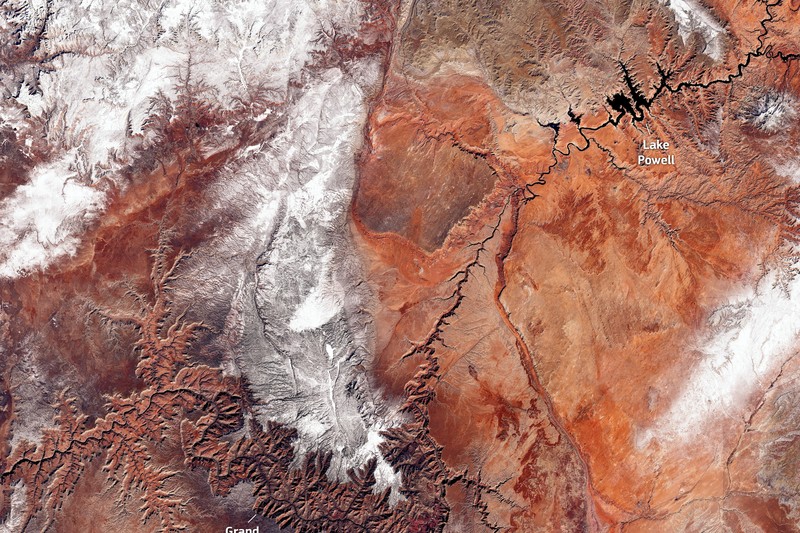
Three numbers capture winter 2026 in the American West: 155,000 square miles of snow cover where there should be 460,000. Sixty-seven weather stations recording their warmest December-through-February on record. And five — the number of river basins, out of roughly 70 across the region, that remain at or above the 1991–2020 median for snow water equivalent.
For much of the West, snow never came. What did arrive was heat.
The Numbers Behind the Drought
Snow cover across the Western U.S. on February 1 measured 139,322 square miles — the lowest February 1 reading in the MODIS satellite record, which dates to 2001. By late March, satellite imagery showed the shortfall had only worsened.
Oregon, Colorado, and Utah have all recorded their lowest statewide snowpack since systematic records began in the early 1980s. In Oregon, the current snowpack isn’t just a record low — it’s 30% below the previous record, according to NOAA’s National Integrated Drought Information System.
The U.S. Department of Agriculture’s Natural Resources Conservation Service tracks approximately 70 river basins across the West. As of late March, only five sit at or above the 1991–2020 median for snow water equivalent. More than half are below 50% of median. Eleven basins — including headwaters of the Colorado, Columbia, and Missouri rivers — hold less than 25%.
The cause was a three-month cascade: December and February were too warm, January too dry. More than 8,500 daily high temperature records were broken or tied across the West since December 1. In Boise, temperatures reached the low 80s Fahrenheit in mid-March. Phoenix hit 105°F.
What the Reservoirs Show
Lake Powell, the second-largest reservoir in the U.S., is projected to hit 3,490 feet elevation by December — minimum power pool for Glen Canyon Dam. Below that level, the dam cannot produce hydroelectric power for the millions of customers across seven states who depend on it.
By March 2027, Bureau of Reclamation projections show the reservoir could fall to 3,476 feet — the lowest elevation since the reservoir was filled, further constraining the dam’s ability to release water at all.
The water year inflow forecast for Lake Powell has dropped by 1.5 million acre-feet since January alone. That’s roughly equivalent to 50 feet of elevation lost from projections made just three months earlier. Current inflow estimates sit at 52% of average.
Reclamation began adjusting releases in December 2025 to retain more water in the reservoir. Additional operational tools remain available through 2026, the agency noted, and “will likely need to be implemented if hydrologic conditions remain as projected or deteriorate further.”
Farms, Fires, and Junior Water Rights
Water managers in Wyoming and Washington have already signaled that some water rights holders will receive less than their full allotment this year. Other states are expected to follow.
Under the Doctrine of Prior Appropriation, which governs water rights across most of the West, those with the oldest claims get water first. Junior rights holders — often farmers and agricultural districts — face the sharpest cuts. Some will need to decide whether to plant at all.
The snow drought also sets up conditions for an early and potentially severe fire season. When snow disappears early, soils and vegetation dry out faster. The rain that fell in early winter allowed plants to grow; the question now is whether those plants will become fuel.
A Glimpse of What’s Coming
World Weather Attribution analyzed the March heat wave and found it would have been “virtually impossible” without human-caused climate change. In a climate 1.3°C warmer, such events have become roughly 4°C more intense and 800 times more likely.
Winter is the fastest-warming season across much of the United States. That means more precipitation falling as rain rather than snow — and what snow does fall melting earlier.
Mark Serreze, director of the National Snow and Ice Data Center, has been in Colorado nearly 40 years. “I have not seen a winter like this before,” he said. “This pattern that we’re in is so darned persistent.”
The data are unambiguous. What they portend for the West’s water, its agriculture, and its fire seasons in the years ahead is the question that remains.
Sources
- Bureau of Reclamation February 24-Month Study: Lake Powell Projections — U.S. Bureau of Reclamation
- Snow Drought Current Conditions and Impacts in the West — NOAA National Integrated Drought Information System
- 2026’s Historic Snow Drought Brings Worries About Water, Wildfires and the Future in the West — The Conversation
- Record Snow Drought in Western US Raises Concern for a Spring of Water Shortages and Wildfires — Associated Press
- Before and After Satellite Images Show How Little Snow Is Left in the Western US — CNN
- Record-Shattering March Temperatures in Western North America Virtually Impossible Without Climate Change — World Weather Attribution
Discussion (10)