 lop News
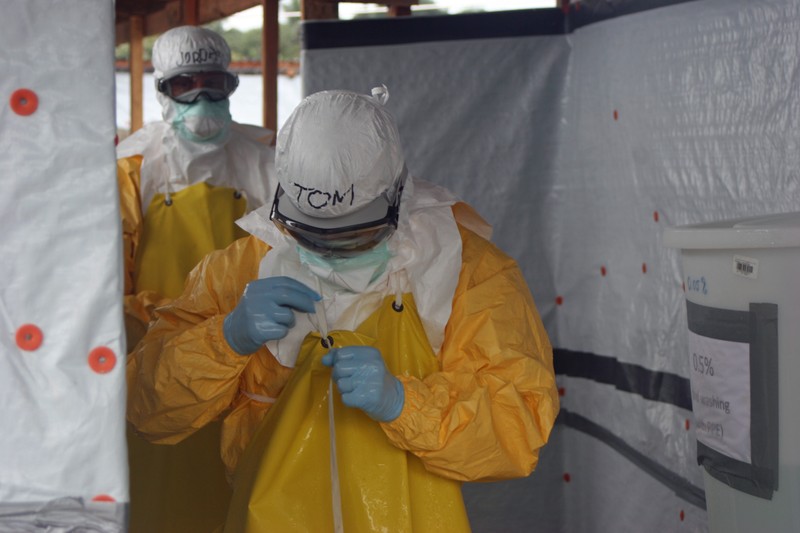
The last time the world paid attention to an Ebola outbreak in eastern Congo, it was the Zaire species — the one with the terrifying 60 to 90 percent fatality rate, the one with a vaccine, the one with two approved treatments. This is not that outbreak.
On Saturday, WHO declared the Ebola outbreak spreading across the Democratic Republic of the Congo and into Uganda a Public Health Emergency of International Concern (PHEIC) — the highest alert level under international health law. The virus responsible is Bundibugyo ebolavirus, a species that has caused only two known outbreaks in history and has no approved vaccine, no approved treatment, and no candidate vaccine ready for clinical trials.
WHO made the declaration while explicitly stating the outbreak does not meet the criteria for a pandemic emergency. The distinction matters. A PHEIC triggers coordinated international response, funding mechanisms, and temporary recommendations for governments. A pandemic declaration requires evidence of sustained community transmission across multiple regions — something the data does not yet show. What the data does show is alarming enough.
A virus the world barely knows
Bundibugyo ebolavirus was first identified in 2007 in Bundibugyo District in western Uganda, just across the border from the current outbreak zone. That initial outbreak sickened 131 people and killed 42 — a case fatality rate of roughly 32 percent. A second outbreak in Congo in 2012 recorded 57 cases. This is the third. It is already the largest.
Because Bundibugyo has appeared so few times, the scientific community has far less data on how it behaves in human populations than it does for Zaire, which has caused dozens of outbreaks over nearly 50 years. The two viruses are roughly 40 percent genetically different — enough that Ervebo, Inmazeb, and Ebanga, the vaccines and therapeutics developed for Zaire, offer no protection against Bundibugyo.
The case fatality rate for Bundibugyo in past outbreaks has hovered around 36 to 40 percent. Lower than Zaire’s worst outbreaks. Still devastating.
The numbers as of May 16
As of May 16, according to WHO, eight laboratory-confirmed cases, 246 suspected cases, and 80 suspected deaths have been reported in Ituri Province in northeastern DRC, across at least three health zones: Bunia, Rwampara, and Mongbwalu. A high positivity rate — eight positives among 13 samples — suggests the true number of infections is likely far higher than currently detected.
Four healthcare workers have died with symptoms consistent with viral hemorrhagic fever, raising concerns about transmission within health facilities.
On May 15 and 16, two laboratory-confirmed cases with no apparent link to each other were reported in Kampala, Uganda — both individuals who had traveled from the DRC. One, a 59-year-old Congolese man admitted to Kibuli Muslim Hospital on May 11, died in intensive care on May 14 with bleeding symptoms. His body was transported back to Congo. On May 16, a confirmed case was also reported in Kinshasa — roughly 1,700 kilometers from the outbreak zone — in someone returning from Ituri.
How did 246 cases accumulate before the world noticed?
Africa CDC was the first to publicly declare this outbreak. The Congolese government has not yet issued a formal declaration. According to infectious disease specialist Dr. Celine Gounder’s analysis, WHO received a signal of suspected cases on May 5 and sent a team to Ituri. Initial field tests came back negative. Samples were then sent to the National Institute of Biomedical Research (INRB) in Kinshasa, which confirmed Ebola only on May 16.
That 246 suspected cases accumulated before the outbreak surfaced internationally raises uncomfortable questions about surveillance capacity in a province that has endured Ebola before. Africa CDC expressed concern about “gaps in contact listing, infection prevention and control challenges, and the proximity of affected areas to Uganda and South Sudan.”
What a PHEIC actually triggers
The declaration activates a legal framework under the International Health Regulations (2005). It requires WHO to issue temporary recommendations to governments and unlocks coordinated funding from mechanisms like the Pandemic Fund.
The DRC and Uganda must activate emergency operations centers under the authority of their heads of state, enhance surveillance and contact tracing, strengthen infection prevention, and implement exit screening at airports and border crossings. Confirmed cases cannot travel until two diagnostic tests, at least 48 hours apart, come back negative. Contacts face restricted travel until 21 days after exposure. Bordering countries — including South Sudan and Rwanda — must urgently enhance preparedness, including active surveillance and laboratory access.
WHO advised all other countries not to close borders or restrict trade, warning that such measures are “usually implemented out of fear and have no basis in science” and push movement to unmonitored informal crossings.
No tools in the toolbox
The most urgent practical problem is the absence of medical countermeasures. Oxford and Moderna are working on a broad-spectrum vaccine covering Bundibugyo, Sudan, Zaire, and Marburg, funded by CEPI and the EU, but it remains in early development. Nothing targeting Bundibugyo is close to ready, according to Gounder.
That leaves responders with the fundamentals: case identification, contact tracing, isolation, infection prevention, and safe burials. The same tools used in every Ebola response since the virus was identified in 1976. They work — but they require speed, trust, and access to communities. In Ituri Province, all three are in short supply.
WHO specifically called for clinical trials to advance candidate therapeutics and vaccines as part of the response — an unusual step that underscores how bare the cupboard is.
A difficult place to work, with less help than before
Ituri sits in one of the most challenging operational environments in central Africa. ADF militants are active in the area. Mongbwalu is a gold-mining town with constant worker movement. The region shares borders with Uganda and South Sudan. Armed conflict, a protracted humanitarian crisis, and a large network of informal healthcare facilities compound the risk of undetected spread.
Africa CDC has activated its Incident Management Support Team, deployed multidisciplinary surge teams to the DRC and Uganda, and convened an emergency coordination meeting on May 16 with health authorities from both countries and South Sudan, along with WHO, UNICEF, the US CDC, and other partners. WHO is airlifting five metric tonnes of supplies from Kinshasa to Bunia.
This is the DRC’s 17th Ebola outbreak since 1976. The second in less than a year. But global response capacity has moved in the opposite direction. The dismantling of USAID has reduced funding for contact tracing teams, border screening, and laboratory capacity in the region, according to Gounder. According to Dr. Celine Gounder’s reporting, CDC Acting Director Jay Bhattacharya said the agency is “absolutely committed” to providing resources through its country offices. But CDC provides technical expertise. The operational staffing that USAID funded — contact tracers, border screeners, lab technicians — is a different question.
The US and DRC signed a $1.2 billion cooperation agreement earlier this year, with $900 million from the US and $300 million from the Congolese government. It remains unclear when that money will reach the ground. The infrastructure it was meant to replace has already been dismantled.
What the next weeks will decide
Three variables will shape the trajectory: whether additional cases surface in Kampala or along the Uganda-DRC border, whether the body transported back to Congo on May 14 leads to further transmission, and whether emergency coordination translates into actual resources reaching a remote, insecure province fast enough.
Only 20 of the 246 suspected cases have been tested. As laboratory capacity scales up, the confirmed count will rise — possibly fast.
This is the third Bundibugyo outbreak in recorded history. The world is learning about this virus in real time, in a conflict zone, without the tools that made previous Ebola responses manageable. The PHEIC declaration signals that WHO understands the stakes. What matters now is whether the response can outrun the virus.
Sources
- Epidemic of Ebola disease caused by Bundibugyo virus in the Democratic Republic of the Congo and Uganda determined a public health emergency of international concern — World Health Organization
- Africa CDC Calls for Urgent Regional Coordination Following Ebola Virus Disease Outbreak in Ituri Province, DRC, and Imported Ebola Bundibugyo Case Reported by Uganda — Africa CDC
- Democratic Republic of the Congo confirms new Ebola outbreak, WHO scales up support — WHO Regional Office for Africa
- Congo’s New Ebola Outbreak Has No Vaccine, No Treatment, and Has Already Crossed a Border — Celine Gounder
- US CDC monitoring Ebola outbreak in DRC and Uganda, providing assistance — Reuters via AOL
Discussion (13)