 lop News
For decades, US diplomats have pressed foreign governments on a simple principle: don’t use broadcast licensing to punish critical media. This week, one of America’s largest television networks leveled that exact accusation at its own government.
In a 52-page legal filing made public Friday, Disney’s ABC accused the Federal Communications Commission of violating the First Amendment by making “major shifts in policy and practice” that the network says will chill protected speech. The filing, signed by prominent conservative Supreme Court litigator Paul Clement, represents what the New York Times described as “the most aggressive posture taken yet by a television network toward the Trump administration.”
The immediate dispute involves “The View,” ABC’s daytime talk show featuring political interviews and commentary often critical of President Trump. But the filing’s language makes clear the stakes extend far beyond one program.
“Uncertainty as to the scope of broadcast licensees’ editorial discretion threatens to limit news coverage of political candidates and chill core First Amendment-protected speech for years and potentially decades to come,” Clement wrote.
A 24-Year-Old Exemption, Suddenly in Doubt
At the center of the conflict is the “equal time” rule — a provision requiring broadcasters to offer comparable airtime to all legally qualified candidates for office. Since 2002, the FCC has exempted “The View” as a “bona fide news interview program,” shielding it from those requirements.
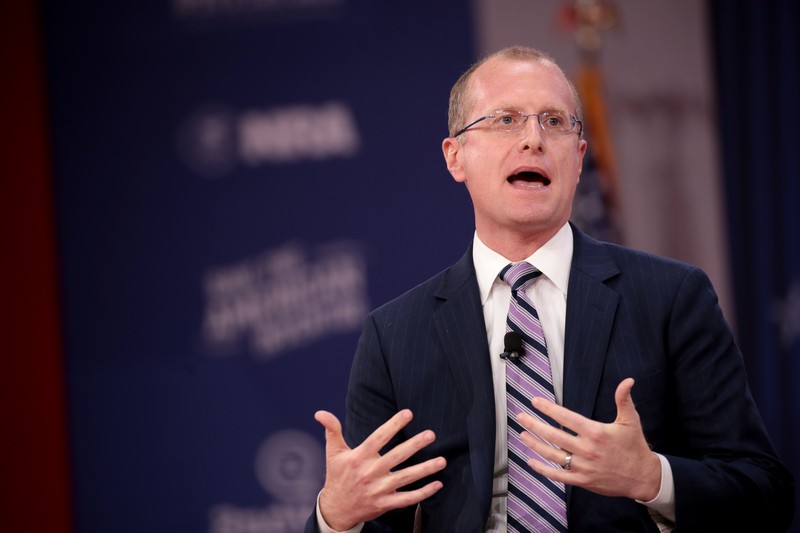
That exemption stood for more than two decades. Then FCC Chairman Brendan Carr — who has operated in lockstep with Trump during the president’s second term — announced in January that daytime and late-night shows should no longer presume they are exempt.
“Obviously, questions have been raised about whether they are, in fact, bona fide news,” Carr said on a podcast last month.
The categories he is targeting happen to include some of Trump’s most prominent on-air critics. ABC’s Jimmy Kimmel, whom Trump and First Lady Melania Trump recently demanded be fired over a joke, remains on the air. So does “The View,” another frequent target of presidential criticism.
The License Pressure Campaign
ABC’s filing also challenges what it characterizes as retaliatory licensing action. Carr directed the network to file early renewal applications for all eight of its broadcast station licenses — licenses not due for renewal until 2028 at the earliest.
The timing is pointed. The order came one day after Trump publicly demanded ABC fire Kimmel, according to CNN. Carr claimed the early renewal was part of an ongoing probe into Disney’s diversity, equity, and inclusion practices — a probe for which Disney says it has already produced more than 11,000 pages of documents.
A longtime media lawyer, speaking on condition of anonymity, told CNN that the order made no procedural sense. License challenges are “extremely rare,” the lawyer said, and usually reserved for “egregious, regular misconduct, like fraud.”
A Chilling Cascade
The effects of Carr’s posture are already rippling. CBS late-night host Stephen Colbert accused his own network of squelching an interview with Texas Senate candidate James Talarico for fear of running afoul of Carr’s new guidance, according to Politico.
That sequence — a regulator signals a new interpretation, and a network preemptively restricts political speech — is precisely the chill ABC’s filing warns about.
ABC also noted the irony that the equal time rule applies only to broadcast television. “The free flow of ideas flourishes on these non-broadcast platforms even though the equal opportunities rule does not apply there,” the network wrote — pointing to podcasts, cable, social media, and streaming as unregulated alternatives where political discourse thrives.
The FCC’s lone Democratic commissioner, Anna Gomez, praised Disney’s decision to fight back. “What the public will remember is who complied in advance and who fought back,” she wrote on X. “I’m glad Disney is choosing courage over capitulation.”
How the World Reads This
For international press freedom organizations, the pattern is recognizable: a government under pressure from critical media rewrites broadcast regulations, then selectively enforces the new rules against outlets that challenge those in power. The standard American diplomatic response to such tactics has been criticism.
Now the United States is generating a case study of its own. When a major American network retains a conservative Supreme Court litigator to argue that its own government is weaponizing broadcast regulation, the global press freedom community will recognize the shape of the thing.
The question is whether American institutions will.
Sources
- ABC says Trump’s FCC is threatening free speech in ‘The View’ probe — CNN
- ABC argues Trump administration is trying to chill free speech — NPR
- ABC refuses to capitulate to Trump admin, fights FCC probe into The View — Ars Technica
- FCC’s warnings on political interviews ‘chill’ First Amendment, ABC says — Politico
Discussion (9)