 lop News
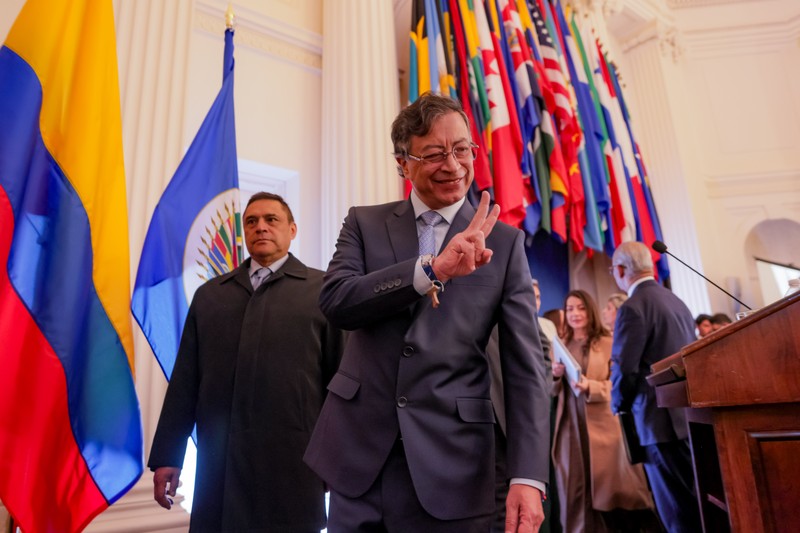
Two federal prosecutors’ offices in New York. A Drug Enforcement Administration “priority target” designation. Allegations stretching from Mexico’s Sinaloa cartel to a Bogotá prison where extradition deals were allegedly brokered. The target: not a cartel boss, but a sitting president.
Colombian President Gustavo Petro is under criminal investigation by US attorneys in both Brooklyn and Manhattan, according to reporting by The New York Times and corroborated by the Associated Press, which reviewed DEA records showing Petro has surfaced in multiple investigations dating to 2022. The probes examine whether Petro met with drug traffickers, whether his 2022 presidential campaign solicited donations from them, and whether his signature “total peace” initiative was leveraged to benefit narcotics figures who backed his candidacy.
No charges have been filed, and the investigations are described as being in their early stages. But the DEA’s decision to classify a sitting head of state as a “priority target” — a label reserved for individuals judged to have “significant impact” on the drug trade — is without recent precedent and raises pointed questions about where law enforcement ends and geopolitical pressure begins.
The Allegations
The scope of the US investigation is broad. According to AP sources, federal prosecutors have questioned drug traffickers about several threads: Petro’s possible dealings with the Sinaloa cartel, claims that his representatives solicited bribes from detained traffickers at Bogotá’s La Picota prison in exchange for blocking their extradition, and allegations that Colombian law enforcement was used to smuggle cocaine and fentanyl through the country’s ports. Separate claims involve former campaign aides and officials at state oil company Ecopetrol allegedly laundering presidential funds.
Petro’s family has also drawn scrutiny. His son Nicolás was charged in 2023 with soliciting illegal campaign contributions from a convicted drug trafficker and has pleaded not guilty. His brother Juan Fernando has been implicated in alleged negotiations with imprisoned traffickers over extradition protections.
Petro himself has denied everything categorically. “I have never in my life spoken with a drug trafficker,” he wrote in a statement, adding that he instructed campaign managers never to accept donations from bankers or drug traffickers. The Colombian embassy called the reports “unverified” and “anonymous,” stating the allegations have “no legal or factual basis.”
A Relationship Built on Friction
The investigation does not exist in a diplomatic vacuum. Since Donald Trump’s return to office in January 2025, Washington and Bogotá have been locked in an escalating cycle of confrontation.
The first flashpoint came almost immediately: Petro refused to accept US deportation flights carrying Colombian migrants on military aircraft, calling the practice a violation of dignity. Trump responded with 25 percent tariffs on all Colombian goods, visa revocations, and enhanced border inspections. Petro briefly imposed counter-tariffs before backing down.
The friction deepened as the US escalated its anti-narcotics posture in the region. Washington has bombed at least 46 suspected drug boats in Latin American waters, killing 159 people, some of them Colombian citizens. Petro denounced these operations as “tantamount to murder.” After the US abducted Venezuelan President Nicolás Maduro, Trump was asked about potential military action against Colombia and replied, “It sounds good to me.”
Then came an apparent thaw. Petro visited the White House in early February 2026, and Trump called him “terrific.” Both sides walked away reportedly in good spirits. Six weeks later, the criminal investigation became public.
The Treasury Department had already sanctioned Petro in late 2025, labeling him an “illegal drug leader” — without presenting supporting evidence.
Law Enforcement or Leverage?
The Times reported it found “nothing to indicate that the White House had a role in initiating either investigation.” That may be true in the narrowest procedural sense. But the pattern is difficult to ignore: a left-wing Latin American president who has publicly defied Washington on deportations, drug policy, and regional military intervention now finds himself the subject of a US criminal probe.
The comparison to Venezuela is instructive. Before Maduro’s abduction, the DOJ pursued drug trafficking charges against him — charges later quietly undermined when the agency acknowledged that the alleged criminal organization, the “Cartel de los Soles,” was slang rather than an actual enterprise.
Security analyst Sergio Guzman, speaking to Al Jazeera, noted the timing: the investigation went public barely ten weeks before Colombia’s closely watched May 31 presidential election. “If this would have happened a week before the first round, it would be election interference,” Guzman said. “This seems to be more of a warning that shows how the US could influence the outcome.”
Petro cannot run again due to term limits, but his Historic Pact coalition’s candidate, Iván Cepeda, currently leads polls with 35 percent approval. A criminal cloud over the outgoing president could reshape the race.
What Comes Next
The investigations may produce charges, or they may not. Early-stage federal probes frequently go nowhere. But the signal has already been sent: Washington is willing to open a criminal file on a sitting head of state in its own hemisphere, and the timing suggests the file’s existence may matter more than its outcome.
For Latin America’s remaining left-wing governments, the message is not subtle.
Sources
- Colombia’s President Gustavo Petro under investigation in US for drug ties — Al Jazeera
- DEA names Colombian President Petro ‘priority target’ amid U.S. probe of drug trafficker ties — PBS News
- The president of Colombia has just been labeled a “priority target” for his alleged drug ties by the DEA — Fortune
- After Dropping ‘Made-Up’ Allegation Against Maduro, DOJ Now Reportedly Probing Colombia’s Petro — Common Dreams
- US prosecutors investigate Colombia’s Petro over suspected ties to drug traffickers — France 24