 lop News
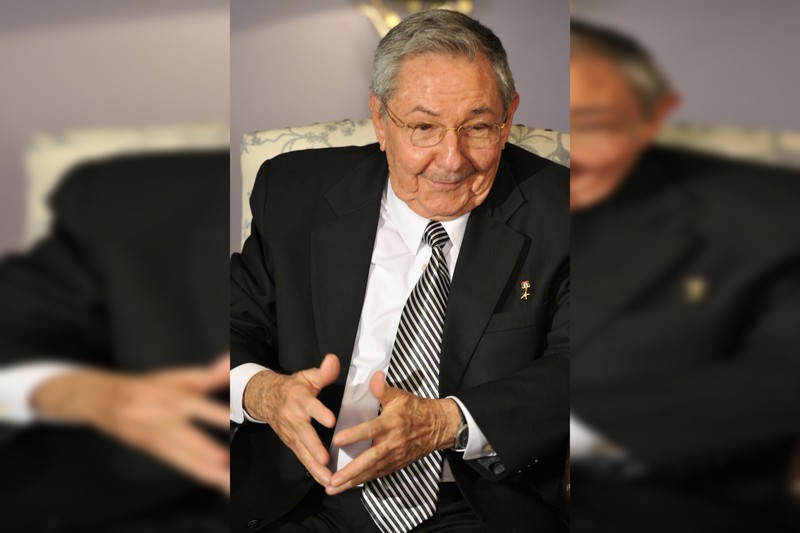
The charges are three decades old. The defendant is 94. And the case is one a previous US administration deliberately chose not to bring.
On Wednesday, the Justice Department unsealed a grand jury indictment charging former Cuban President Raúl Castro with conspiracy to kill US nationals, four counts of murder, and destruction of aircraft — stemming from the 1996 shootdown of two civilian planes operated by the Miami-based exile group Brothers to the Rescue. Carlos Costa, Armando Alejandre Jr., Mario de la Peña, and Pablo Morales were killed when Cuban MiG-29s fired missiles at their unarmed Cessnas over international waters north of Havana.
Acting Attorney General Todd Blanche announced the charges at Miami’s Freedom Tower. “For nearly 30 years, the families of four murdered Americans have waited for justice,” he said. “Nations and their leaders cannot be permitted to target Americans, kill them, and not face accountability.”
Castro is unlikely to see a US courtroom. He has not left Cuba in years, and Havana shows no willingness to extradite a former president who remains, even at 94, an influential behind-the-scenes power broker. Which raises the question: what is this actually about?
A Case Once Shelved
The February 24, 1996 shootdown was no mystery. Brothers to the Rescue, founded by Cuban exiles, had repeatedly entered Cuban airspace, dropping leaflets over Havana urging revolt. Cuba protested to Washington. FAA officials warned the overflights were dangerous. “Worst case scenario is that one of these days the Cubans will shoot down one of these planes,” one FAA official wrote in a January 1996 email, according to declassified records obtained by George Washington University’s National Security Archive.
The International Civil Aviation Organization concluded the Cessnas were shot down in international airspace. The Clinton administration indicted the MiG pilots and Cuban intelligence officers, but stopped short of charging Castro — then Cuba’s defense minister — citing foreign policy concerns. “Raúl was definitely one who slipped through the noose,” former federal prosecutor Guy Lewis told the Associated Press.
Two Tracks, One Target
Unsealing charges now is not a cold-case breakthrough. It is one element in a pressure campaign that has intensified since US forces captured Venezuelan President Nicolás Maduro in a January military raid and imposed a fuel blockade on Cuba, worsening blackouts, food shortages, and economic collapse across the island.
Last week, CIA Director John Ratcliffe traveled to Havana for the highest-level diplomatic contact between the two countries since the blockade began. He met with Interior Minister Lázaro Álvarez Casas, Cuba’s intelligence chief, and Castro’s grandson, Raúl Guillermo Rodríguez Castro.
“Washington appears to be running two simultaneous tracks: a backchannel with the Castro family network, and a public pressure campaign,” Orlando Perez, a political science professor at the University of North Texas at Dallas, told Al Jazeera. “A Raúl Castro indictment fits within that architecture.”
The same day the indictment dropped, Secretary of State Marco Rubio released a Spanish-language video address offering Cubans a “new path.” “Currently, the only thing standing in the way of a better future are those who control your country,” said Rubio, the son of Cuban immigrants. The timing was deliberate: May 20 marks Cuban Independence Day, commemorating the 1902 republic established after the Spanish-American War and a period of US military occupation.
Justice as Statecraft
This is not the first time the Trump administration has used criminal indictments as instruments of foreign policy. Maduro was indicted on drug-trafficking charges before US forces captured him in January — a sequence demonstrating how Justice Department cases can serve as legal scaffolding and political prelude for military action.
William Leogrande, a Latin American politics specialist at American University, told Al Jazeera the Castro indictment “is likely to be the final nail in the coffin for any hope of a diplomatic agreement.” He added: “It appears that the Trump administration is trying to lay the political groundwork for military action against Cuba.”
Cuban President Miguel Díaz-Canel condemned the charges as “a political action without any legal basis” designed to justify “the folly of a military aggression against Cuba.” He defended the shootdown as legitimate self-defense after repeated airspace violations. Deputy Foreign Minister Carlos de Cossío accused Washington of catering to the “anti-Cuban fascist minority entrenched in Florida.”
Perez noted the move could backfire. “The Castro clan is not going to turn over Raúl Castro. Raúl Castro is the legitimacy anchor for the regime,” he said.
There are domestic calculations at work, too. Trump’s approval has fallen to 34 percent, according to a Reuters/Ipsos poll this month — his lowest since returning to office — with midterms approaching in November. A confrontation with Havana plays well with his base.
Blanche, asked how far the US would go to bring Castro in, was blunt: “There was a warrant issued for his arrest. So we expect that he will show up here, by his own will or by another way.”
A 94-year-old defendant. A 30-year-old case. A confrontation calibrated for the politics of the moment. The US justice system, in this application, is not simply a forum for accountability — it is an instrument of state power, deployed when useful and shelved when not.
Sources
- Federal prosecutors announce charges against former Cuban President Raúl Castro in 1996 shootdown — Associated Press (via PBS NewsHour)
- U.S. grand jury indicts Raul Castro, ex-Cuban president — NPR
- Rubio offers Cubans ‘new path’ in special video address — AFP (via RFI)
Discussion (10)