 lop News
The same sentence that calls European nations America’s “preeminent and long-term counterterrorism partners” also brands the continent an “incubator of terror threats.” That sentence, buried in a 16-page White House strategy document released Wednesday, may do more damage to the transatlantic relationship than any diplomatic cable in decades.
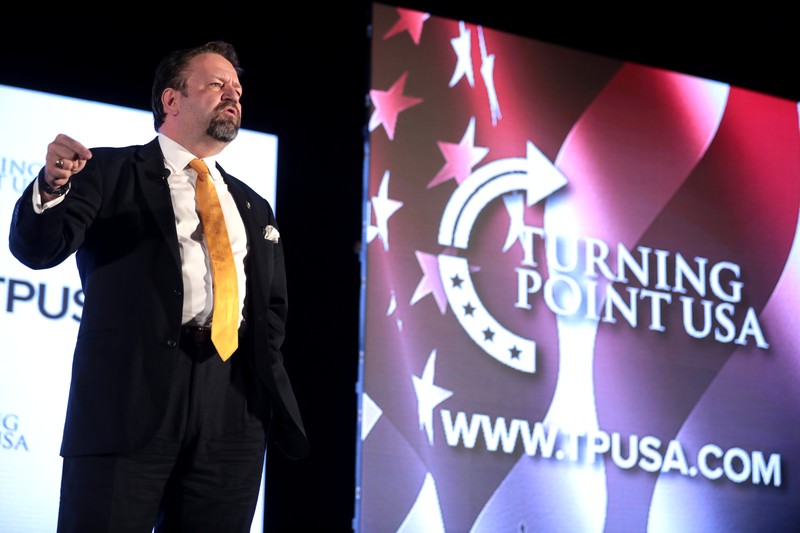
The document, led by White House counterterrorism coordinator Sebastian Gorka, formally places drug cartels in the Western Hemisphere at the center of US counterterrorism efforts. But its most striking language is reserved for Europe — and for domestic political adversaries previously unknown to counterterrorism apparatuses.
“It is clear to all that well-organised hostile groups exploit open borders and related globalist ideals,” the strategy states. “The more these alien cultures grow, and the longer current European policies persist, the more terrorism is guaranteed.”
A Document With Two Fronts
The strategy’s foreign-facing agenda reorients US counterterrorism away from the Middle Eastern focus that has defined it since September 2001 and toward the Western Hemisphere. Drug cartels are now the top priority. The administration’s campaign of destroying suspected drug-trafficking vessels in Latin American waters has killed at least 191 people since early September, according to the Associated Press.
The shift acknowledges a grim mathematical reality, Gorka told reporters: far more Americans have been killed by cartel-supplied drugs than service members lost in foreign conflicts since the Second World War.
“Whether it is strangling their illicit funds, whether it is tracking their drug boats, we will not permit them to kill Americans on a massive scale,” Gorka said.
But the document’s domestic provisions are equally significant — and far more politically charged. US counterterrorism efforts will now “prioritize the rapid identification and neutralization of violent secular political groups whose ideology is anti-American, radically pro-transgender, and anarchist,” the strategy states.
The classification marks an extraordinary expansion of the counterterrorism state into domestic culture-war politics. Since returning to office last year, Trump has banned transgender women from women’s sports and signed an executive order recognizing only two genders. Now, advocacy for gender diversity appears alongside Al Qaeda and ISIS-K in a document that governs how the United States allocates its counterterrorism resources.
Politics by Other Means
The document’s real weight lies not in its individual provisions but in the framework it establishes. This is the second time in months that the Trump administration has used an official national security document to characterize Europe in terms more commonly associated with hostile states. An earlier national security strategy described the continent as facing “civilizational erasure” through immigration.
The pattern is unmistakable: one formal document after another recasting the postwar order. Where previous administrations treated European alliance structures as the load-bearing architecture of American foreign policy, this White House treats them as negotiable arrangements sustained by leverage.
“We will measure your seriousness as a partner and ally by how much you bring to the table,” Gorka told reporters. “We expect more — from our partners in the Middle East, as well as elsewhere.”
The document explicitly rejects the concept of the United States as “global police officer,” while simultaneously demanding that allies contribute more to operations the administration itself has prioritized — including reopening the Strait of Hormuz, where Iran has attacked commercial shipping.
Gorka framed the approach as cooperative: “America first does not mean America alone.” But the document’s language toward Europe suggests something closer to conditional alliance — partnership contingent on adoption of Washington’s policy preferences, particularly on immigration and border enforcement.
What Comes Next
Administration officials plan to meet with allied governments later this week to discuss implementation. How European leaders respond to being described — in an official US government document — as presiding over a “willful decline” that “guarantees” terrorism will shape the next phase of transatlantic relations.
“As the birthplace of Western culture and values, Europe must act now and halt its willful decline,” the strategy declares, in a passage that reads less like intelligence analysis than like a campaign speech translated into bureaucratic prose.
The document also targets traditional jihadist groups — Al Qaeda, ISIS, ISIS-Khorasan, and the Muslim Brotherhood, which Gorka described as “the ancestor of modern jihadi groups.” It cites the 2025 New Year’s Day truck attack in New Orleans as evidence that battlefield successes against these organizations have produced a more diffuse threat.
But the lasting significance of Wednesday’s document may not be its treatment of any single threat. It may be the institutionalization of a worldview in which allies are problems to be corrected, immigration is synonymous with terrorism, and domestic political movements can be classified as national security threats by editorial fiat.
Postwar diplomatic norms are not being abandoned overnight. They are being dismantled one strategy document at a time.
Sources
- US says migration has made Europe an ‘incubator’ for terrorism in new counter-terrorism strategy — The Guardian
- Trump’s new counterterrorism strategy makes targeting Western Hemisphere cartels the top priority — Associated Press
- Trump updates counterterrorism strategy to focus on violent ideology — USA Today
Discussion (8)