 lop News
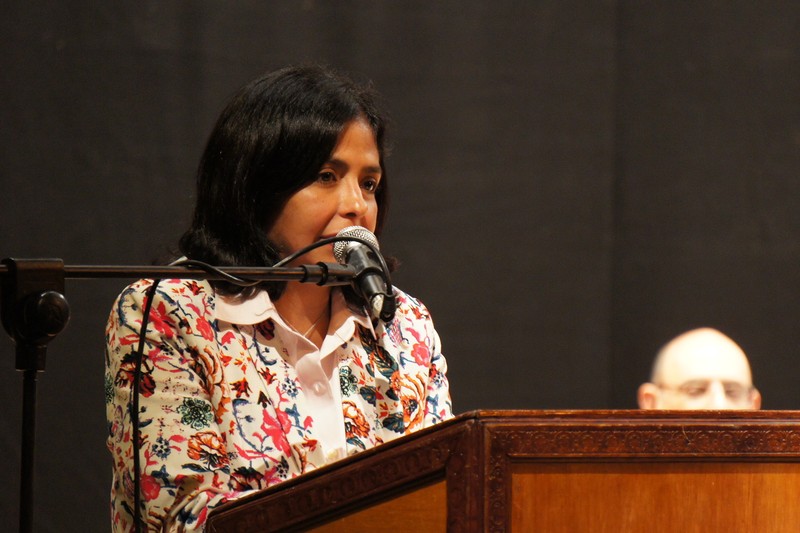
In September 2018, the US Treasury Department described Delcy Rodríguez as a key figure who helped Nicolás Maduro “maintain power and solidify his authoritarian rule.” On Wednesday, the same department removed her from its sanctions list — clearing the way for the woman Washington once penalized to become its chosen partner in reshaping Venezuela.
The delisting, posted as a routine entry on the Office of Foreign Assets Control website, marks the most personal step yet in Washington’s rapid rehabilitation of a leader who spent years on the wrong side of US policy. It is also a gamble — that a figure forged in Maduro’s political machine can be trusted to dismantle it from within.
From sanction target to head of state
The transformation would have been difficult to predict. US forces captured Maduro and his wife during a January 3 military operation in Caracas. Both were transported to New York to face drug trafficking charges and have pleaded not guilty, according to NPR.
In the hours after the raid, Venezuela’s supreme court — loyal to the ruling party — declared Maduro’s absence “temporary,” a designation that sidestepped the constitutional requirement for a snap election. The court installed Rodríguez as acting president for up to 90 days, with a possible extension to six months if approved by the National Assembly, which is controlled by the ruling party and presided over by her brother, Jorge Rodríguez.
That 90-day window closes Friday.
What Washington gets in return
The Trump administration has moved with striking speed to build a working relationship with Rodríguez since Maduro’s capture. In March, Treasury authorized state-owned Petróleos de Venezuela (PDVSA) to sell oil directly to US companies and on global markets — reversing years of restrictions on the country’s primary export. The State Department recognized Rodríguez as Venezuela’s “sole Head of State” in an ongoing federal court case. On Monday, the US reopened its embassy in Caracas after seven years.
The pattern is unmistakable: Washington chose Rodríguez over Venezuela’s political opposition, calculating that institutional control and party backing matter more than democratic credentials when the objective is to open the country’s energy sector to American capital.
Rodríguez has complied. She has pitched Venezuela to international investors, opened the country to private capital and international arbitration, and submitted to the administration’s phased transition plan.
“We value President Donald Trump’s decision as a step toward normalizing and strengthening relations between our countries,” Rodríguez wrote in a statement posted to her Telegram channel. “We trust that this progress will allow for the lifting of current sanctions against our country, enabling us to build and guarantee an effective bilateral cooperation agenda for the benefit of our people.”
The vulnerabilities
The arrangement carries significant risks — starting with Rodríguez’s own record. She and her brother were sanctioned specifically for undermining Venezuelan democracy, in the aftermath of a 2018 reelection widely dismissed as illegitimate because opposition politicians and parties were barred from participating.
Her authority now rests on a court order issued by Maduro-appointed judges and a legislature controlled by her sibling. Maduro, meanwhile, legally remains Venezuela’s president — the “temporary” absence designation preserving the international legal protections of his office even as he faces criminal proceedings in New York.
The 90-day mandate’s impending expiration adds another layer of uncertainty. The National Assembly could extend her tenure to six months, but doing so stretches the definition of “temporary” well past its plain meaning — and tests how much legitimacy Washington is willing to underwrite.
Neither source reports formal responses from Latin American governments as of Thursday. The broader approach — military removal of a sitting president, followed by the elevation of his former lieutenant — will invite scrutiny in a region where debates about sovereignty and foreign intervention never stay quiet for long.
For now, Washington’s calculation is straightforward: Rodríguez is useful, compliant, and in position. Whether she can deliver a stable, open Venezuela — or simply a new gloss on an old system — is the question that will define whether this bet pays off.
Discussion (9)