 lop News
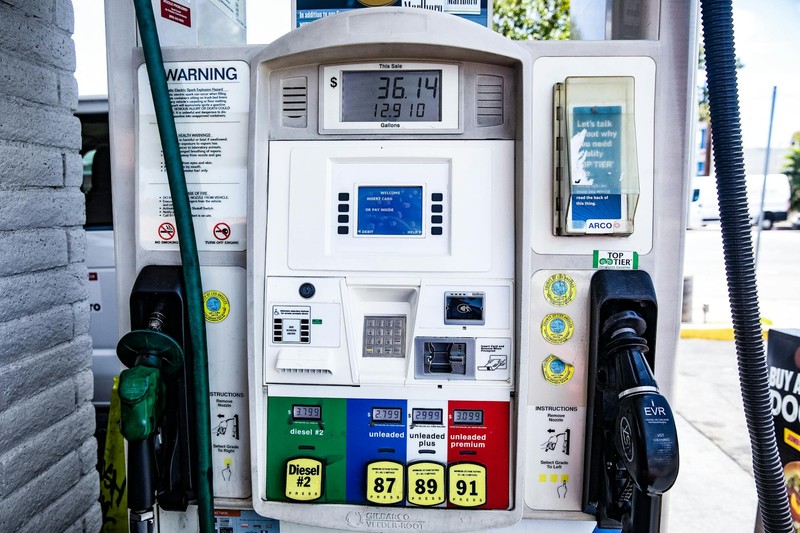
Gasoline up 21.2% in a single month. Consumer prices up 3.3% from a year ago — nearly a full percentage point above February and the sharpest annual increase since April 2024. Workers’ real earnings down 0.6% in March alone.
Those are the numbers the US Bureau of Labor Statistics released Friday, and they are the first hard confirmation that the war with Iran is not contained to the Persian Gulf. It has reached the checkout aisle, the fuel pump, and the household budget.
Headline CPI jumped 0.9% in March — triple February’s 0.3% increase and the largest monthly gain in four years. Nearly three-quarters of that surge came from a single source: gasoline. The BLS gasoline index posted its largest monthly increase since the agency began tracking the figure in 1967. Energy overall rose 10.9%, the sharpest one-month jump since September 2005, when Hurricane Katrina knocked out Gulf Coast refineries.
From the Strait of Hormuz to the Gas Station
The mechanics are brutally straightforward. When the US and Israel launched attacks on Iran on February 28, the Strait of Hormuz — a critical chokepoint for global oil shipments — became a conflict zone. Crude prices surged. Refiners passed the costs along. Within weeks, American drivers were paying more than a dollar extra per gallon, according to NPR, with pump prices still averaging slightly above $4 a gallon despite a tentative ceasefire.
Fuel oil costs surged 30.7% in March, the largest monthly increase since February 2000. Jet fuel prices dragged airline fares up 2.7% for the month. Electricity costs rose 0.8%. The energy shock cascaded through every sector that depends on petroleum — which is to say, most of them.
The Core Tells a Quieter Story
Strip out food and energy, and March looks far less alarming. Core CPI rose just 0.2% for the month and 2.6% year-on-year — a modest 0.1 percentage point increase from February’s annual reading. Both figures came in slightly below economist forecasts, according to CNBC.
Food prices were flat for the month. Grocery costs actually fell 0.2%, dragged down by declining egg prices — down 3.4% in March and a remarkable 44.7% over the past year — and cheaper meat. Restaurant meal prices rose 0.2%. Medical care costs declined. Used car prices kept falling.
The split between headline and core is the split between the war and everything else. Underlying inflation remains elevated but is not accelerating across the board. Shelter costs — a key Fed barometer — rose 0.3% for the month and 3.0% annually, tied for the lowest annual reading since August 2021, according to CNBC.
That divergence is cold comfort for anyone who drives, heats a home, or buys anything transported by truck.
A Global Shock, Not an American One
The CPI is a US statistic. The economics are not. Oil is priced in dollars and traded on global markets. When crude spikes, every import-dependent economy on earth absorbs some version of the blow.
Europe, already managing the lingering energy disruption from Russia’s invasion of Ukraine, faces a renewed inflationary pulse just as the European Central Bank was positioning itself to ease policy. Japan imports virtually all its petroleum and will see the yen-denominated cost amplified by currency movements. Emerging markets with dollar-denominated energy debts face a double squeeze: higher import bills and stronger dollar obligations.
Countries that subsidize fuel absorb the gap between global prices and domestic pump rates, straining public finances. Those without subsidies pass the cost directly to consumers, who have no hedge against it.
The March CPI is the first concrete data point quantifying what policymakers warned about from the moment the first missiles flew. It will not be the last.
The Fed’s Waiting Game
Federal Reserve officials saw this coming and said so. San Francisco Fed President Mary Daly, a member of the Federal Open Market Committee, stated that “a high CPI reading will not be a surprise to anyone” and added that “if the Iran conflict resolves quickly and oil prices come back down, a rate cut is not out of the question,” according to Euronews.
The key word is “if.” A fragile ceasefire is in place, but fighting continues between Israel and Hezbollah in Lebanon, and oil markets remain volatile. Crude has retreated from wartime highs but is still trading near $100 a barrel — well above pre-conflict levels, according to US News & World Report.
Chicago Fed President Austan Goolsbee captured the broader dynamic this way: “We were making progress, making progress. Then we kind of stalled out and now it’s been inching itself up the other way.” He said businesses, uncertain about the war’s duration, are “just going to sit on our hands until we figure out, is the war going to be a temporary shock.”
Markets have already priced out significant rate cuts for the rest of 2026. Stock futures barely moved on the CPI release. Treasury yields were mixed. The consensus, per Goldman Sachs Asset Management global co-CIO Alexandra Wilson-Elizondo, is patience: “The Fed has room to be patient, and every reason to do so. Today’s number buys the Fed time, but the real test lies ahead.”
What Comes Next
The FOMC meets April 28-29. The most likely outcome is a hold, with carefully calibrated language acknowledging the energy shock while emphasizing the core inflation trend. But the path forward depends on variables central bankers do not control.
Skyler Weinand, chief investment officer at Regan Capital, wrote Friday that consumers “will see price pressures on gas, energy, food and other commodities for at least the next three months,” even if the ceasefire holds. Energy costs filter through supply chains on a lag. The April CPI, scheduled for release May 12, will capture another month of elevated pump prices and may begin to show secondary effects — higher trucking costs pushing up goods prices, airlines holding fares at wartime levels.
Then there is the consumer. The University of Michigan is set to release its April consumer sentiment reading later Friday, and expectations are for a sharp decline. A New York Fed survey this week showed Americans expect higher inflation in the short run, though long-run expectations remain anchored, according to NPR. The gap between those two horizons is where the real risk lives. If short-term expectations start pulling long-term expectations upward, the Fed’s job gets dramatically harder.
For now, the data says: a supply shock, not a broad-based inflationary breakout. The question is whether “for now” lasts long enough to matter.
Sources
- Consumer Price Index - March 2026 — U.S. Bureau of Labor Statistics
- US inflation surges to 3.3% as Iran war fuels energy price shock — Euronews
- Inflation surges to highest level in nearly 2 years as energy costs spike — NPR
- Consumer prices rose 3.3% in March, as energy prices spiked due to Iran conflict — CNBC
- Inflation Spikes in March as Effects of Iran War Hit Consumers — U.S. News & World Report
Discussion (12)