 lop News
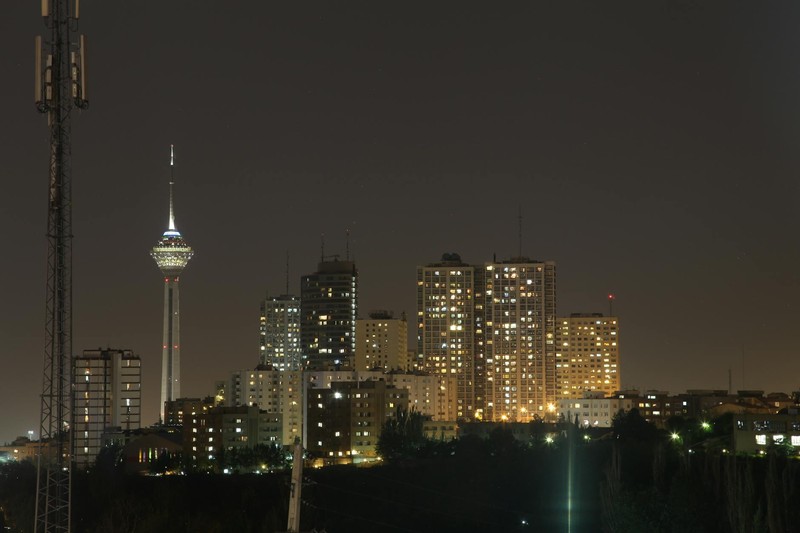
Forty-four dead seafarers. Twenty thousand stranded in a closed waterway. Oil at a four-year high. Air defences activating over Tehran. And from Washington, the word of the day: “Terminated.”
A senior Trump administration official declared Thursday that, for purposes of the War Powers Resolution, the US war in Iran was over. Both sides agreed to a ceasefire on April 7, the official said. There has been no exchange of fire since. The 60-day clock requiring Congress to authorize or end military operations? Stopped. Problem solved — on paper.
Within hours, Tehran’s air defence systems activated against what Iranian state media described as small aircraft and reconnaissance drones. President Donald Trump told reporters the US “might need” to restart military operations. Israel’s defence minister, Israel Katz, warned that Israel may “soon have to act again” against Iran. The commander of Iran’s Revolutionary Guard aerospace force, Majid Mousavi, promised that even a “short and tactical” operation would draw “painful, prolonged, and extensive” retaliation.
The gap between official language and ground truth is the defining feature of a conflict now in its 63rd day — three weeks into a ceasefire that was supposed to change everything.
The Dead and the Stranded
Saman Rezaei, general secretary of the Iranian Merchant Mariners Syndicate, told Al Jazeera on Friday that 44 Iranian seafarers have been killed since hostilities began on February 28 — 22 civilian sailors, 16 fishermen, and six dock workers. Twenty-nine more were injured and nine remain missing. The figures, compiled by Iran’s Ports and Maritime Organization and union members, could not be independently verified.
Rezaei submitted complaints to the International Maritime Organization in March and April, attributing the deaths to “attacks by US and Israeli armies on Iranian ports and commercial fleets.” The IMO confirmed separately that Iranian attacks on vessels in the Gulf have killed at least 10 seafarers since the war began.
Around 20,000 seafarers of all nationalities remain stranded in and around the Strait of Hormuz, with supplies running low and what Rezaei described as “severe psychological distress” after 60 days trapped at sea in a war zone. Stephen Cotton, general secretary of the International Transport Workers’ Federation, told Al Jazeera: “The point is, these are seafarers. You can say they are under an Iranian flag, and there are sanctions, but not everybody agrees with the sanctions.”
The broader toll extends far beyond the water. The US-based Human Rights Activists in Iran news agency reports at least 1,701 civilians killed, including 254 children. Defense Secretary Pete Hegseth told senators Thursday that the Pentagon has “every resource necessary” to limit civilian harm, after being pressed about a strike that killed approximately 170 people at a primary school.
A Waterway Closed, an Economy Strangled
The Strait of Hormuz — through which roughly one-fifth of the world’s energy and gas exports normally flow — has been effectively closed since the war began. Iran maintains its grip on the waterway; the US Navy enforces a separate blockade of Iranian ports. Brent crude soared more than seven percent to $126.41 on Thursday, a four-year high, before easing. West Texas Intermediate rose 3.4 percent to $110.31.
UN Secretary-General Antonio Guterres said the closure is “strangling the global economy.” International Energy Agency chief Fatih Birol called it “the biggest energy crisis in history.” Iran’s supreme leader, Mojtaba Khamenei — who succeeded his father, Ali Khamenei, after the elder leader was killed in the initial US-Israeli strikes — declared that the US had suffered a “shameful defeat.” Iranian President Masoud Pezeshkian called the US naval blockade an “extension of military operations” that is “intolerable.”
Washington is now assembling an international coalition to coordinate safe passage through Hormuz while maintaining its blockade of Iran. Trump has separately threatened to pull US troops from Italy, Spain, and Germany over their opposition to the war.
A Clock That Won’t Stop
The constitutional crisis running alongside the military one reached its nominal deadline Friday. Under the War Powers Resolution of 1973, the president has 60 days to conduct military action without congressional authorization, after which the law requires him to “terminate any use of United States Armed Forces” unless Congress votes to approve. Trump notified Congress of hostilities on March 2, placing the 60-day mark at May 1 by most readings.
The administration’s argument that the ceasefire paused this clock drew sharp rebuttal. “Nothing in the text or design of the War Powers Resolution suggests that the 60-day clock can be paused or terminated,” said Katherine Yon Ebright, counsel at the Brennan Center’s Liberty and National Security Program. Senator Tim Kaine said Hegseth had “advanced a very novel argument that I’ve never heard before” and “certainly has no legal support.” Republican Thom Tillis also pushed back: “I felt like the War Powers resolution says in 60 days you have to take some action.”
Congress has taken no action. The Senate left for a week-long recess. A sixth Democratic attempt to force a vote failed Thursday, though it drew first-time Republican support from Susan Collins of Maine and Rand Paul of Kentucky. Collins said that “further military action against Iran must have a clear mission, achievable goals, and a defined strategy for bringing the conflict to a close.”
Senate Majority Leader John Thune said the chamber won’t vote on authorization anytime soon. Alaska Republican Lisa Murkowski announced she would introduce an authorization for use of military force when the Senate returns the week of May 11 if the White House fails to present a “credible plan.” Senator Adam Schiff was blunt about his Republican colleagues: “I think they’re torn between the recognition that the Constitution and the law require them to bring this war to an end and a concern with directly confronting the president.”
What ‘Terminated’ Actually Means
The administration’s claim rests on a narrow foundation: no direct exchange of fire between US and Iranian forces since April 7. By that specific measure, the ceasefire holds.
By every other measure, the war never stopped. The naval blockade was imposed after the ceasefire began. The Strait of Hormuz remains closed. Oil is at a four-year high. Twenty thousand seafarers are trapped. Tehran’s air defences are engaging drones. Both sides are seizing commercial vessels. The president is discussing restarting operations. Israel is threatening to re-enter the fight.
The word “terminated” is doing considerable work in Washington — not as description but as legal maneuver. Its function is to stop a constitutional clock that the authors of the War Powers Resolution intended to be immutable. Whether Congress reasserts that authority, or allows the executive to neutralize a 52-year-old law through creative interpretation, is a question the Senate will take up after its recess.
Sources
- Trump administration says its war in Iran has been ‘terminated’ before 60-day deadline — Associated Press
- Trump is supposed to get Congress’ approval when the Iran war hits the 60-day mark. Lawmakers can’t agree on when that is — CNN
- More than 40 Iranian seafarers killed during US-Israeli war: Union leader — Al Jazeera
- Iran activates air defences as White House says ceasefire paused Congress deadline — Channel News Asia
- Iran war: What’s happening on day 63 as Trump signals possible attacks — Al Jazeera