 lop News
44.8. That is the University of Michigan’s consumer sentiment reading for May — the lowest number in the survey’s 74-year history. Below the Great Recession. Below the 1970s oil crisis. Below Covid. Below everything.
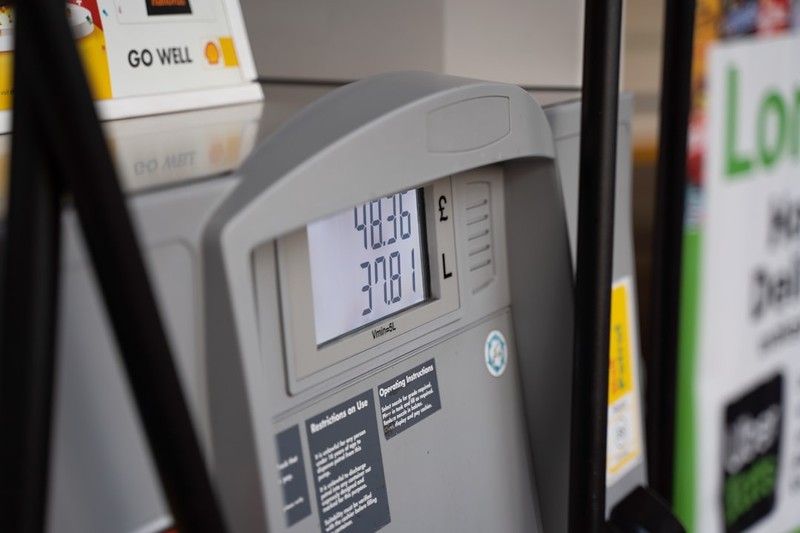
For three consecutive months, the index has fallen. For three months, Americans have watched the US-Israeli war with Iran choke off the Strait of Hormuz, through which roughly one-fifth of global oil trade passes. Gasoline prices have climbed $1.16 per gallon since the conflict began and are nearing all-time highs.
The war did what wars do: it arrived at the pump, and from there it spread everywhere.
The Numbers Behind the Nausea
The final May reading of 44.8 represents a five-point plunge from April’s 49.8 — itself a record low at the time. Both sub-components hit all-time lows: current economic conditions fell to 45.8, down 22.2% from a year ago, and consumer expectations dropped to 44.1.
Fifty-seven percent of consumers spontaneously cited high prices as eroding their personal finances, up from 50% a month earlier. Personal finance assessments sank 13% in May alone. Lower-income households and those without college degrees posted the sharpest declines — the groups for whom fuel and food price increases are not abstract.
“Earlier this year, consumers may have reserved judgment about how long the Iran conflict would last,” said Joanne Hsu, director of the Michigan survey. “Three months into the conflict, consumers appear to be worried that supply disruptions are unlikely to be resolved quickly.”
Even a ceasefire announced on April 8 has done little to restore Hormuz shipping traffic to pre-war levels. The International Energy Agency has called the disruption the largest in the history of the global oil market.
The Number That Matters Most
Here is where the data shifts from grim to alarming. Year-ahead inflation expectations rose to 4.8% — up from 3.4% in February, before the war. Five-year expectations jumped to 3.9%, the highest since the early 1980s.
Economist Paul Krugman, writing on his Substack, put it plainly: “So we’re starting to get the thing that everyone in the economics biz fears, which is entrenched inflation.”
A temporary price spike is manageable. What terrifies central bankers is a wage-price spiral — businesses raising prices because they expect competitors to do the same, workers demanding higher wages to keep up, inflation feeding on itself. The five-year figure at 3.9% suggests that process may be getting underway.
Fed Governor Christopher Waller acknowledged that while longer-term expectations “appear well anchored,” movements in the one-to-five-year horizon are “concerning.” The political split is notable: independents and Republicans showed the largest jumps in long-run inflation expectations, with Republican respondents’ expectations now more than double their February 2025 reading.
Krugman’s diagnosis was blunt: the policy failures of the past 18 months — tariffs, then a mishandled war — have created the kind of environment that defined the late 1970s. “We are going to be paying the price for these misadventures for years to come,” he wrote.
A Resilient Economy Nobody Feels
The dissonance is stark. The stock market keeps hitting new highs. Broad macroeconomic data tells a story of resilience. The survey tells a different story entirely.
“The American consumer is treading water here,” wrote Christopher Rupkey, chief economist at FwdBonds. “The stock market record highs are having no effect whatsoever on cheering consumers up.”
The 30-year Treasury yield hit its highest level since before the 2008 financial crisis. The 10-year touched levels not seen in over a year. The Fed has signaled it is less inclined to cut rates — meaning no relief from that quarter.
Global Ripples
The squeeze extends well beyond the US. Jet fuel in North America has spiked 95% since the war began. Spirit Airlines ceased all operations on May 2, citing fuel costs. Amazon, FedEx, and the US Postal Service have all implemented fuel surcharges. Analysts have warned that oil could reach $100 per barrel if Hormuz remains restricted, potentially adding 0.8% to global inflation.
The current sentiment level sits below the index’s reading at the start of all six US recessions since the survey’s inception. That does not guarantee a recession. But American consumers drive roughly 70% of US GDP, and they are in no mood to spend.
A consumer who will not spend is a problem that does not stop at any border.
Sources
- Consumer sentiment hits fresh record low in May as Iran war fuels inflation worries — CNBC
- High gas prices, cost of living send US consumer sentiment to all-time low — CNN via KEYT
- A Whiff of Stagflation — Paul Krugman | Substack
- Michigan Consumer Sentiment: Falls Further to Another Record Low — Advisor Perspectives
- 2026 Iran war fuel crisis — Wikipedia
Discussion (9)