 lop News
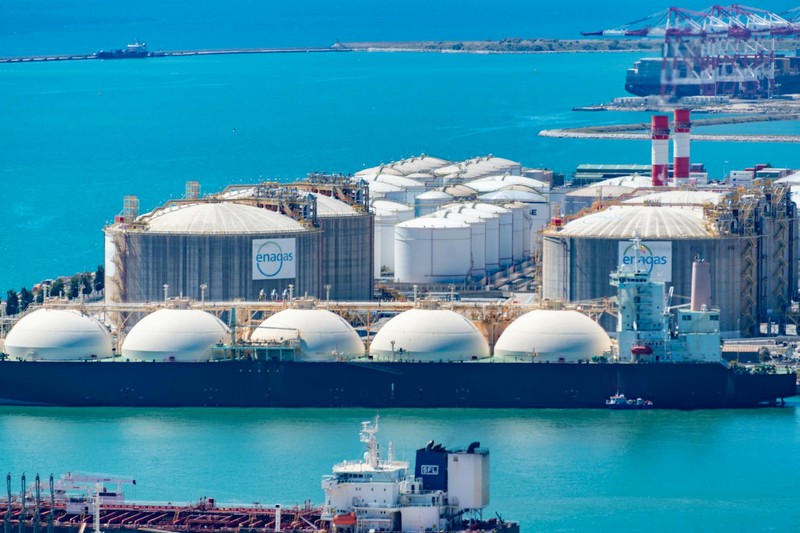
The last tankers that cleared the Strait of Hormuz before the war began reached their ports in Malaysia and California around April 20. Since then, the world has been drawing down reserves — and according to the International Energy Agency, it will keep doing so for at least two more years.
While diplomats shuttle between capitals and military planners count aircraft carriers, the IEA delivered a blunt assessment on Friday that received far less attention than the latest ceasefire rumor. The global natural gas market, the agency said, will remain tight through 2026 and 2027. The cumulative loss of LNG supply could reach 120 billion cubic meters by the end of the decade.
The shooting war may end. The energy war has only started.
‘The Biggest Crisis in History’
IEA executive director Fatih Birol did not hedge. In an interview with France Inter radio this week, he called the Hormuz disruption “the biggest crisis in history.” Karen Young, a senior research scholar at Columbia University’s Center on Global Energy Policy, told PBS the same thing in different words: “This is the largest supply shock to energy markets that we have ever experienced.”
The numbers support the superlatives. Roughly 600 million barrels of oil have failed to reach their destinations since the US and Israel attacked Iran in late February, according to Young’s estimates. The Strait of Hormuz, which normally handles about 20 million barrels of crude per day plus four to five million barrels of refined products, has come to a virtual standstill.
Iranian strikes on Ras Laffan Industrial City — Qatar’s flagship LNG export terminal — reduced capacity by 17 percent, Qatar’s energy minister confirmed. Repairs could take up to five years.
“Damage to LNG liquefaction infrastructure in Qatar is set to reduce projected supply growth and delay the impact of the anticipated global LNG expansion wave by at least two years,” the IEA said in its quarterly report.
A Misleading Calm
In wealthy nations, the crisis has produced discomfort rather than catastrophe — so far. Brent crude futures edged above $105 a barrel on Friday; the US benchmark, West Texas Intermediate, sat at $94.40. The S&P 500, in a disconnection that has drawn its own commentary, closed at a record high.
Petrol is pricier, but Western households can still afford to drive. Airlines have begun cancelling summer flights in anticipation of jet fuel shortages, and consumers will soon feel the pinch on everything from plastic packaging to medical devices. The full inflationary wave has not yet crested.
The real emergency is unfolding far from the futures markets of London and New York.
“A number of Asian countries are undertaking demand-side and fuel-switching measures to reduce the use of natural gas,” the IEA noted. Young described governments telling citizens “not to go to work, not to drive on certain days, to basically diminish their energy demand” — a rationing regime already underway in parts of East and Southeast Asia where governments lack the strategic reserves or fiscal capacity to subsidize fuel.
The Economist reported that by April 20, the last buffer of pre-war tanker arrivals had been exhausted, just as seasonal demand from holiday drivers begins to climb. There is no cushion left.
The Pakistan Track
Against this backdrop, US envoys Steve Witkoff and Jared Kushner are traveling to Pakistan on Saturday for talks the White House hopes will draw Iran back to the negotiating table. Iranian Foreign Minister Abbas Araghchi arrived in Islamabad with a small team. Pakistani mediators are described as “cautiously optimistic,” though no direct US-Iran talks are confirmed.
US Defense Secretary Pete Hegseth said Iran still has an “open window” to strike a deal and abandon its pursuit of a nuclear weapon in “meaningful and verifiable ways.” European Council President Antonio Costa demanded the strait reopen “without restrictions and without tolling.”
The diplomatic calendar moves slowly. The military picture does not. The US now has three aircraft carriers in the Middle East for the first time since the 2003 Iraq invasion. Two drones launched from Iraq struck Kuwaiti border posts on Friday. Israel is fighting on multiple fronts, with six Hezbollah fighters killed in southern Lebanon and at least 12 Palestinians killed in Gaza, according to local officials.
The Vase Is Broken
Even if Hormuz reopened tomorrow, recovery would be neither quick nor complete. Kuwait’s petroleum corporation has estimated that restarting production could take three to four months. Ships must first clear stored oil before wells can resume pumping. Refined product supply chains — jet fuel, diesel, naphtha — would take longer still.
Birol put it plainly: “The vase is broken, the damage is done — it will be very difficult to put the pieces back together.”
He predicted the crisis would permanently alter the energy landscape, accelerating the shift toward renewables and nuclear power as governments lose trust in fossil fuel supply chains. “I still cannot understand that the world was so blind-sided,” he told The Guardian, “that the global economy can be held hostage to a 50km strait.”
More than 50 governments will meet next week in Colombia for the first international conference on transitioning away from fossil fuels. The agenda has acquired an urgency that no planning committee anticipated.
Sources
- IEA says Iran war will keep the global natural gas market tight for two years — CBS News
- The damage is done: global oil crisis has changed fossil fuel industry for ever, IEA chief says — The Guardian
- Hormuz standoff the ‘largest supply shock’ ever experienced, says global energy expert — PBS NewsHour
- Iran war: What’s happening on day 57 as US envoys head to Pakistan? — Al Jazeera
- Global Energy Markets Are on the Verge of Disaster — Political Wire
Discussion (10)