 lop News
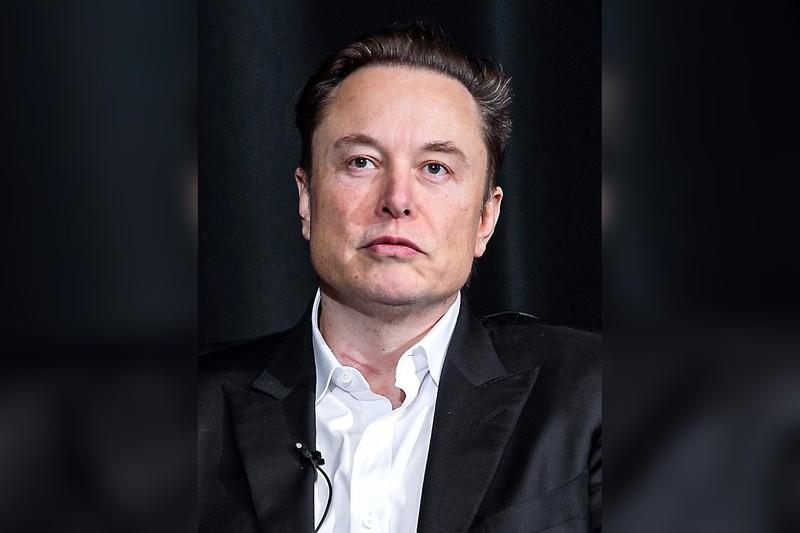
The five biggest banks on Wall Street want a piece of the largest initial public offering in history. The price of admission is a subscription to Elon Musk’s chatbot.
Morgan Stanley, Goldman Sachs, JPMorgan Chase, Bank of America, and Citigroup — the active bookrunners for SpaceX’s IPO — have each been told that working on the deal means purchasing Grok, the AI chatbot that now sits inside SpaceX after Musk merged his xAI startup into the rocket company in February. Musk is requiring not just banks but law firms, auditors, and other advisers to become Grok customers as a condition of participation, according to four people with knowledge of the confidential discussions who spoke to The New York Times.
Some banks have already agreed to spend tens of millions of dollars a year on the chatbot and have begun integrating it into their IT systems, three of those people said.
The Numbers Behind the Leverage
The deal at stake is staggering. SpaceX is targeting a valuation above $2 trillion, according to Bloomberg, and aims to raise as much as $75 billion — which would dwarf the $29 billion debut of Saudi Aramco in 2019, still the largest IPO on record. Advisory fees on a deal that size could exceed $500 million, split among the lead banks.
Musk also asked the banks to advertise on X, his social network, though he was reportedly less insistent on that point.
None of the five lead banks, nor law firms Gibson Dunn and Davis Polk — which are advising on the deal — would comment. Musk and SpaceX did not respond to requests for comment from multiple outlets.
Cross-Company Cross-Pollination
What makes the Grok mandate notable isn’t the dollar amount. Tens of millions is a rounding error for banks handling a $75 billion offering. The structural audacity is the point. Musk controls the rocket company, the AI product, and the social media platform, and he is using access to one to generate revenue at the others.
The timing is strategic. Grok competes in a crowded AI market against OpenAI, Google, and Anthropic. Forcing Wall Street’s biggest institutions to adopt it gives Musk something his rivals cannot replicate: Fortune 500 reference customers secured not through product superiority but through deal leverage.
This is not the first time Musk has tested the boundaries between his companies. xAI acquired X in March 2025, folding the social network into the same corporate family. The February merger that brought xAI into SpaceX valued the rocket company at $1 trillion and the AI startup at $250 billion — a combined $1.25 trillion. Weeks later, the IPO target has climbed above $2 trillion, a roughly 60 percent markup that has reignited debate over how much of SpaceX’s value comes from Starlink’s cash-generating satellite business versus more speculative bets like Starship and space-based AI.
Saudi Arabia’s Public Investment Fund is in discussions to take a $5 billion anchor stake in the offering, Reuters reported.
The Concentration Problem
Musk owns approximately 43 percent of the combined SpaceX-xAI entity, according to Forbes. At a $2 trillion valuation, that stake would be worth roughly $860 billion — pushing his already-estimated $809 billion net worth toward the $1 trillion mark and making him the first person to cross that threshold.
Banks routinely make concessions to win IPO mandates — favorable research coverage, reduced fees, promises to steer orders to preferred clients. But requiring advisers to purchase a specific product from the company going public blurs the line between professional services and vendor relationships. Whether securities regulators see this as standard deal-making or something more problematic is an open question.
SpaceX submitted confidential IPO paperwork to the Securities and Exchange Commission this week and is targeting a market debut later this year. The valuation could still shift as investor feedback comes in.
For Wall Street, the calculus is simple enough. Half a billion in fees buys a lot of Grok subscriptions. The banks will pay, integrate, and move on — because the alternative is watching the biggest payday in IPO history land on a competitor’s books.
Sources
- Big Banks Seeking a Piece of SpaceX’s I.P.O. Must Subscribe to Elon Musk’s Grok — The New York Times
- Elon Musk insists banks working on SpaceX IPO must buy Grok subscriptions — Ars Technica
- Musk asks SpaceX IPO banks to buy Grok AI subscriptions, NYT reports — Reuters
- SpaceX targets more than $2 trillion valuation in IPO, Bloomberg News reports — Reuters
- Musk Reportedly Requires Banks Behind SpaceX IPO To Buy Grok Subscriptions — Forbes
Discussion (8)