 lop News
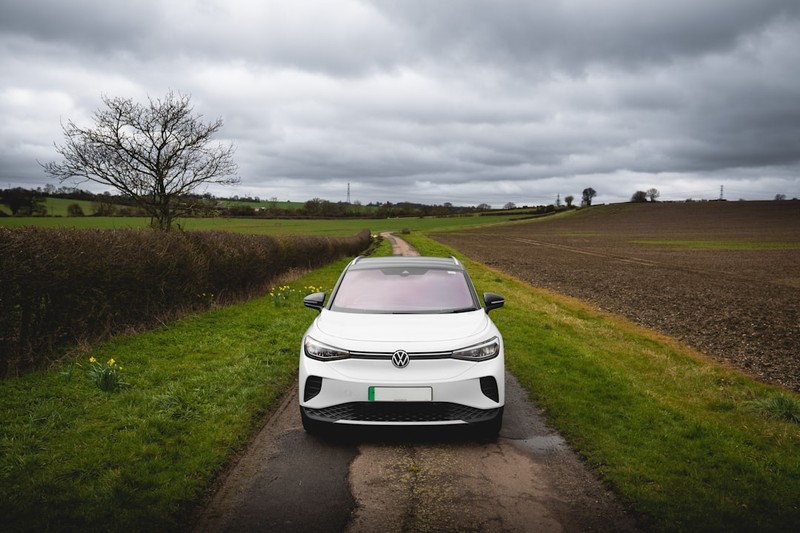
Mid-April. That’s when Volkswagen’s only electric vehicle built on American soil rolls off its final production line in Chattanooga, Tennessee. By summer, the factory retools to stamp out a second generation of gas-powered Atlas SUVs instead.
The ID.4 isn’t technically dead — existing US inventory should last into 2027, and VW promises a future version for North America. But make no mistake: the writing on the factory wall says combustion engine, three rows of seats, and no plug.
The Numbers Tell the Story
Volkswagen began building the ID.4 in Chattanooga in 2022, pricing the mid-size electric crossover around $45,000. Sales topped 37,000 units in 2023 — respectable, if not revolutionary. Then demand collapsed. ID.4 sales dropped 55% in 2024, according to company data reported by TechCrunch. Sales recovered 31% to 22,373 units in 2025, though still below 2023 levels.
But the recovery masked a grisly fourth quarter. After the Trump administration allowed the $7,500 federal EV tax credit to expire on September 30, 2025, VW sold just 248 ID.4s in the entire US market during Q4, according to Cox Automotive data cited by Electrive.
Two hundred forty-eight vehicles. For a country of 340 million people. That’s not a slowdown — that’s a market signal, and Volkswagen heard it.
Follow the Margins
The Atlas, by contrast, is Volkswagen’s second-best-selling model in the United States, trailing only the gas-powered Tiguan. It’s a 5.12-metre, three-row SUV — the kind of vehicle American families actually buy, and the kind that carries healthy margins.
The business case writes itself. Chattanooga has finite production capacity. VW can allocate it to an electric crossover that moved fewer than 250 units last quarter, or to a gas SUV that sells in volume. The Trump administration’s tariffs on foreign-built vehicles add another variable: producing the Atlas domestically insulates VW from import costs that would bite harder on models built in Mexico or Germany.
Volkswagen Group of America CEO Kjell Gruner called the Chattanooga plant “a cornerstone” of VW’s US strategy and framed the pivot as positioning “for long-term success and future product opportunities.” That’s corporate-speak for: we’re building what sells.
Two Continents, Two Directions
The irony is that Volkswagen’s European operation is running the opposite play. The company delivered roughly 382,000 all-electric vehicles worldwide in 2025 — essentially flat year-over-year, down just 0.2%, according to figures VW released in January. EU regulations continue to push automakers toward electrification, with fleet emissions targets that make selling EVs a compliance necessity, not a choice.
So Volkswagen is bifurcated: push EVs in Europe because regulators demand it, build gas SUVs in America because consumers do. It’s a strategy that works for a company with factories on both continents. But it raises an uncomfortable question for the broader EV transition. If one of the world’s largest automakers — the company that literally named its electric line “ID.” to signal a new identity — won’t bet on electric volume in the world’s second-largest car market, who will?
What Comes Back, and When
VW says a future version of the ID.4 is planned for North America but offered no timeline. According to German trade union IG Metall, the model may be rebranded as the “ID. Tiguan,” produced in Germany, and styled to evoke the popular gas-powered Tiguan. If that happens, it would arrive as an import — subject to the same tariffs that make domestic gas production more attractive right now.
The next all-electric VW model built for the US isn’t expected until the end of the decade, when the company’s new SSP platform arrives. In the meantime, the resurrected Scout brand is planning electric and range-extended pickups and SUVs for American buyers.
For now, Chattanooga builds the Atlas. The ID.4 becomes a waiting game. And the mass EV transition in America loses another major player — at least until the economics make sense again.
Discussion (8)