 lop News
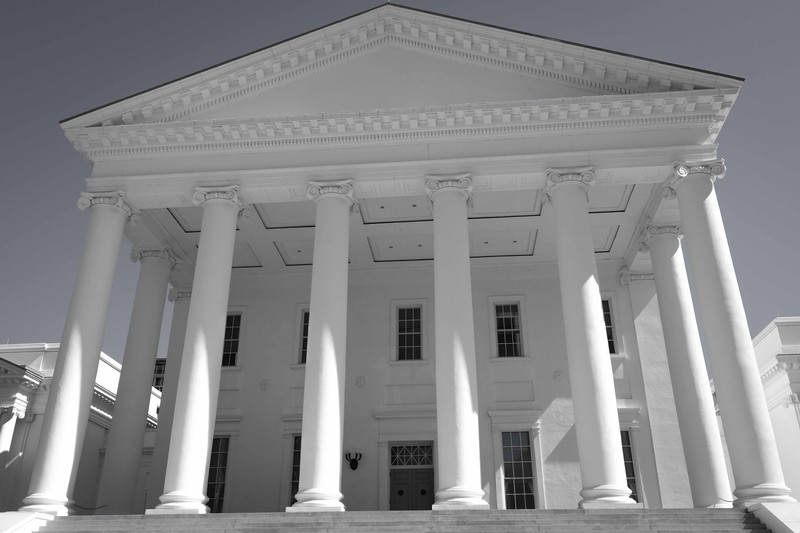
Virginia voters just shifted four seats in the US House of Representatives — and may have moved the needle on American defense spending, military aid to Ukraine, and the fragile ceasefire with Iran.
On Tuesday, a narrow majority of Virginians approved a ballot measure allowing the Democratic-led state legislature to redraw congressional districts before November’s midterm elections. With an estimated 95% of votes counted, the “yes” campaign led by roughly three percentage points, according to a race call by the Associated Press, cited by NPR. The new map could let Democrats win 10 of Virginia’s 11 House seats, up from the six they currently hold.
That is a seismic shift in a chamber where control may come down to a handful of seats.
The Redistricting Arms Race
Virginia’s vote did not happen in isolation. It is the latest move in a national redistricting battle triggered last year when President Donald Trump urged Republican-led states to redraw congressional maps mid-decade — breaking with the American tradition of adjusting boundaries only after the decennial census.
Texas moved first, adopting a map that could add up to five Republican seats, according to BBC News. California responded with Governor Gavin Newsom suspending the state’s independently drawn maps to, in his words, “fight fire with fire.” California voters approved new districts in a November referendum, potentially netting Democrats five additional seats.
Missouri and North Carolina Republicans also drew new GOP-friendly districts, giving the party a slim national edge. Virginia’s result erases that advantage, according to NPR.
What a Flipped Congress Means for the World
Control of the US House matters far beyond Washington. The chamber holds the power of the purse — approving or blocking defense spending, foreign aid packages, and sanctions regimes. A Democratic majority would likely push for renewed military assistance to Ukraine, scrutinize the Trump administration’s handling of the Iran ceasefire, and exercise oversight of a presidency that has so far enjoyed a compliant Republican Congress.
Trump said Monday that if Democrats win a House majority, “it’s going to be a disaster,” the BBC reported. He and House Speaker Mike Johnson also held a telephone rally urging Virginians to reject the ballot measure, with Trump warning that “the whole country is watching,” according to France 24.
The irony is structural: a state-level referendum, decided by roughly three points, could determine whether the United States continues funding allies abroad or retreats further into the transactional unilateralism of Trump’s second term. Virginia Governor Abigail Spanberger, a Democrat, framed the result as a direct rebuke. “Virginia voters have spoken, and tonight they approved a temporary measure to push back against a President who claims he is ‘entitled’ to more Republican seats in Congress,” she said in a statement reported by France 24.
Money, Courts, and Florida
The campaign was the most expensive redistricting fight in Virginia’s history. Groups on both sides raised nearly $100 million, much of it from nonprofit organizations that do not publicly disclose their donors, according to France 24. The pro-redistricting campaign, Virginians for Fair Elections, accounted for roughly $65 million of that total, France 24 reported, citing The Hill. Former President Barack Obama recorded a video message urging a yes vote, telling Virginians they could “push back against the Republicans trying to give themselves an unfair advantage.”
But the new map faces legal headwinds. The Virginia Supreme Court has yet to rule on challenges that could block the redrawn districts from being used in this year’s elections. “Virginians disenfranchised by today’s vote will have their day in court,” Jason Miyares and Eric Cantor, co-chairs of the group Virginians for Fair Maps, said in a statement reported by NPR.
Florida may yet scramble the equation. Governor Ron DeSantis has called a special legislative session for late April to draw more Republican-friendly districts — without a voter referendum, despite a 2010 state ballot measure that prohibits partisan map-drawing, NPR reported.
The Map Is Not the Territory
For all the strategic calculations, new boundaries do not guarantee Democratic victories in November. University of Virginia political scientist Larry Sabato cautioned that even well-drawn maps can surprise their architects. “Sometimes constituencies shock the map makers,” he told AFP. “You know, they don’t vote the way the map makers thought they would vote.”
Sabato’s warning applies well beyond Virginia. Governments in Kyiv, Tehran, and Brussels are watching the same map — and calculating what a changed Congress might mean for them.
Discussion (9)