 lop News
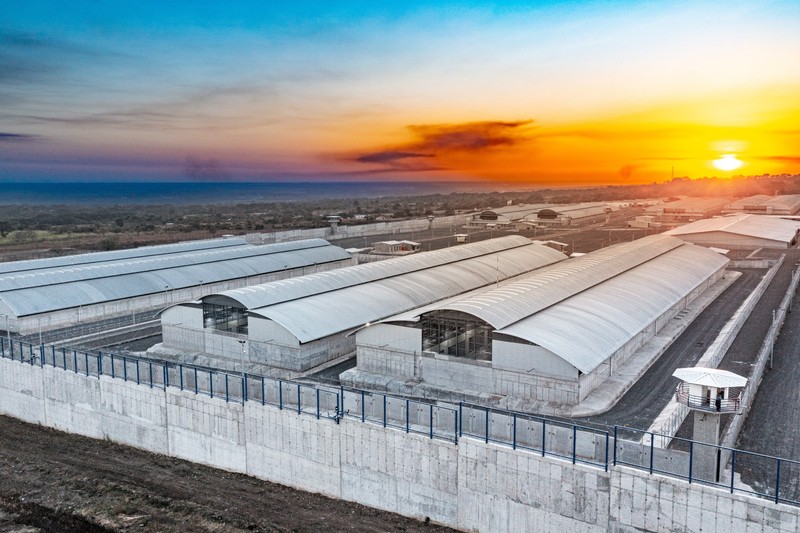
The prison director told them they had “arrived in hell.” The only way out, he said, would be in a “black bag.”
One year later, 18 of those men — Venezuelan nationals deported from the United States without charge and delivered to El Salvador’s Terrorism Confinement Center, known as CECOT — are demanding that Salvadoran authorities face international accountability for what happened next.
A petition filed Thursday before the Inter-American Commission on Human Rights alleges systematic torture, sexual assault, and medical neglect at the mega-prison. Backed by a coalition including Robert F. Kennedy Human Rights, the Center for Gender & Refugee Studies, and the Cornell Law School Transnational Disputes Clinic, it is the first international case seeking to hold El Salvador responsible for abuses against detainees transferred under a secret bilateral agreement with the United States.
Beatings from the Tarmac
The 18 men were among 288 Venezuelans and Salvadorans transferred to CECOT in March 2025, after the Trump administration invoked the 1798 Alien Enemies Act — a wartime statute — to rapidly expel Venezuelan migrants. Many were asylum seekers with no criminal records, accused of Tren de Aragua gang membership based on scant evidence including innocuous tattoos.
The testimony, corroborated by independent medical experts from Physicians for Human Rights, describes abuse from the moment of arrival. “When I got off the plane, I fell, and two riot police from El Salvador picked me up with blows to the ribs,” one man testified. “They lifted me up by the handcuffs. This was an unimaginable pain.”
He was beaten dozens of times over four months. In neighboring cells, detainees were beaten more than 100 out of 125 days. “We could hear them screaming in pain.”
The men were held in windowless cells under bright lights that remained on 24 hours a day, sleeping on metal bunks without mattresses — except during visits from international observers. A single tank of water, sometimes contaminated with worms, served a cell of 10. Detainees staged a hunger strike that ended when one participant was beaten and dragged from his cell “half dead.” Others cut their wrists in what they called a “blood strike.” “Neither the guards nor the doctors cared,” one testified.
The message from guards was explicit: “Human rights did not exist in CECOT.”
Scars That Remain
Documented injuries include broken ribs, dislocated shoulders and jaws, head wounds, and lasting marks from shackles. One man said the clanking of keys still triggers panic — guards would bang keys against cells to keep detainees awake. “This was torture,” another wrote. “I felt like a chicken raised in a cage with constant light.”
After four months, 252 Venezuelans were released and returned home — where many confronted the same persecution they had originally fled. Andry Hernández Romero, a gay makeup artist who left Venezuela over his sexuality and political views, told the Guardian that some employers believed the US government’s claim he was a gang member, making it difficult to find work.
The Question of Consequences
The petition asks the IACHR, a body within the Organization of American States, to declare that the US-El Salvador transfer agreement violated El Salvador’s obligations under the American Convention on Human Rights, ratified in 1978. It seeks criminal investigations into the abuse, official recognition that the men had no gang ties, compensation, psychological rehabilitation, and a public apology.
Whether El Salvador will comply is uncertain. Previous administrations have obeyed the inter-American human rights system. But President Nayib Bukele has governed under a state of exception since 2022, suspending due process rights and incarcerating roughly 1.4 percent of the Salvadoran population without trial.
The 36 Salvadorans transferred under the same agreement remain unaccounted for, their families unable to confirm whether they are alive. Human Rights Watch, in a separate report, found that relatives have been refused any information from authorities — a situation the organization’s Americas director, Juanita Goebertus, compared to “the darkest days of dictatorships in Latin America.”
Legal challenges are also advancing in US courts. The ACLU and Democracy Forward have sued over the administration’s use of the Alien Enemies Act. This month, the legal aid group ImmDef filed claims against the Department of Homeland Security on behalf of six deportees, and one former detainee, Neiyerver Adrián León Rengel, filed a federal lawsuit seeking at least $1.3 million in damages.
“Outsourcing migration control does not erase the United States’ responsibility,” said Isabel Carlota Roby, senior staff attorney at Kennedy Human Rights. “At the same time, El Salvador, and other third countries, cannot accept these transfers while ignoring their own legal obligations to protect human rights and ensure due process.”
The petition is part of a broader legal effort challenging US transfers of deportees to third countries — including Costa Rica, Panama, and Eswatini. The thread connecting them is the same: two governments collaborated to send people to a facility with a documented record of abuse, and neither has acknowledged responsibility. The men who survived CECOT are now asking the only international body that might listen to do what their governments will not.
Sources
- Venezuelans deported by US detail fresh claims of torture and abuse at El Salvador mega-prison — The Guardian
- One Year On: Venezuelans File New Case Seeking Justice for Torture in El Salvador’s CECOT Prison — Robert F. Kennedy Human Rights
- US/El Salvador: Deportees Forcibly Disappeared — Human Rights Watch
Discussion (11)