 lop News
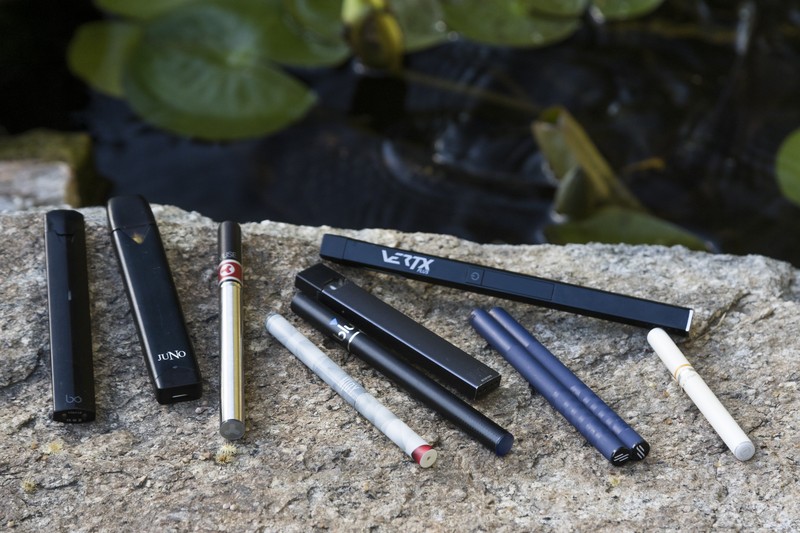
E-cigarettes likely cause lung and oral cancer. That is the conclusion of the most comprehensive assessment of vaping’s carcinogenic potential to date — a review that synthesised nearly a decade of animal studies, human case reports, and laboratory evidence rather than waiting the decades that traditional epidemiology would demand.
Published Monday in the journal Carcinogenesis, the review was led by cancer researchers at the University of New South Wales in Sydney. It did not attempt to quantify how many vapers might develop cancer — the devices have only been widely used for about 20 years, far too short a window for long-term population studies to capture outcomes with latency periods of 10 to 30 years. Instead, the researchers asked a different question: does vaping produce the biological changes known to precede cancer?
The answer, across multiple lines of evidence, pointed yes.
What the evidence shows
Studies of people who vape have detected DNA damage, oxidative stress, epigenetic changes, and inflammation in oral and lung tissue — all recognised hallmarks of cancer development. Biomarkers in blood and urine reveal vape-derived metabolites linked to carcinogens including nicotine-derived nitrosamines, volatile organic compounds, flavour-derived agents, and heavy metals such as nickel.
Animal studies reinforce the picture. In one experiment cited in the review, mice exposed to e-cigarette aerosols developed lung tumours at significantly higher rates than unexposed control groups, along with bladder changes consistent with cancer development.
The review also documents human case reports, including dentists who identified oral cancers in patients who had vaped but never smoked. One case involved a 19-year-old man who vaped heavily and died from a treatment-resistant oral squamous cell carcinoma, with no other identified risk factors.
The century-long lesson
Epidemiologist Freddy Sitas, a co-author of the review, noted that it took roughly a hundred years of accumulating evidence before the US Surgeon General formally recognised smoking as a cause of lung cancer in 1964. Calvin Cochran, a research fellow at the University of Otago who was not involved in the study, said nearly 8,000 studies were ultimately assessed to reach that conclusion — despite earlier warning signs that were often dismissed or discredited.
“We risk repeating that same fate with vaping if we don’t take emerging research and warning signs seriously,” Cochran said.
Sitas was more direct: “We should not wait another 80 years to decide what to do.”
Measured against cigarettes, or on its own terms
A notable feature of the review is that it deliberately avoided framing vaping solely against cigarettes. Co-author Bernard Stewart, an adjunct professor at UNSW, said the habit of comparing the two had delayed understanding of vaping’s independent health effects — likening it to studying the safety of knives by comparing them to machine guns.
“We’ve always assumed that vapes are safer than cigarettes, but what we are showing is that they might not be safe after all,” Sitas said.
Stephen Duffy, a professor at Queen Mary University of London, cautioned that it would be an “overinterpretation” to conclude vaping is equally harmful to smoking, noting that cigarettes expose users to combustion products with “massive carcinogenic effects.” Becky Freeman, a tobacco control researcher at the University of Sydney, agreed that long-term smokers using pharmacy-access vapes to quit should continue — cigarettes kill two in three people who persist with them.
But for people who have never smoked, the calculus is starkly different. One in five Australians aged 16 to 24 currently vapes, according to the Cancer Institute NSW. And for dual users, Sitas cited recent US epidemiological data showing those who both vape and smoke face an additional four-fold increased risk of developing lung cancer beyond either habit alone.
The global vaping industry, valued at $30 billion to $46 billion, now faces questions the review’s authors argue regulators cannot afford to defer. “It’s not an alternative to smoking […] it is dangerous, and that’s the message,” Stewart said.
Sources
- Vaping likely to cause lung and oral cancer, Australian researchers find in new review of evidence — The Guardian
- Scientific review finds e-cigarettes likely cause lung and oral cancer — Los Angeles Times / Bloomberg
- ‘It’s dangerous, and that’s the message’: Aussie study finds vaping likely causes cancer — Sydney Morning Herald
- The carcinogenicity of e-cigarettes: a qualitative risk assessment — Carcinogenesis (Oxford Academic)
Discussion (10)