 lop News
The ceasefire between the United States and Iran is not yet three days old, and it is already coming apart. The Strait of Hormuz — the narrow waterway through which roughly one-fifth of the world’s traded oil once flowed — remains effectively blocked. Israel killed at least 182 people in strikes across Lebanon on Wednesday — many of them in central Beirut — making it the deadliest day of its war with Hezbollah. Iran’s parliament speaker has called the ceasefire “unreasonable.”
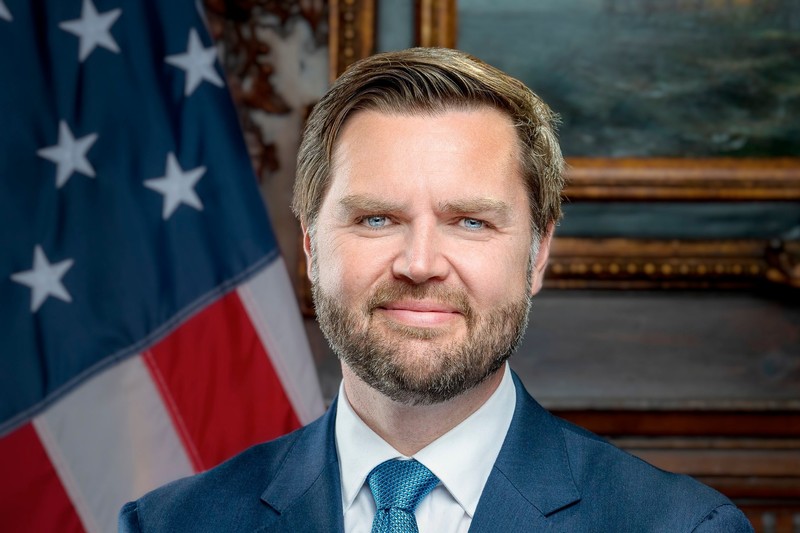
Vice President JD Vance departed Washington on Friday morning aboard Air Force Two, headed for Islamabad to lead the most significant American diplomatic engagement with Iran since Barack Obama phoned then-president Hassan Rouhani in 2013. He was joined by Trump’s special envoy Steve Witkoff and the president’s son-in-law, Jared Kushner — a delegation that carries political loyalty but little obvious diplomatic experience with Tehran.
“We’re looking forward to the negotiation. I think it’s gonna be positive,” Vance told reporters before boarding. Then the warning: “If the Iranians are willing to negotiate in good faith, we’re certainly willing to extend the open hand. If they’re gonna try to play us, then they’re gonna find that the negotiating team is not that receptive.”
Why Islamabad
The choice of Pakistan as host was deliberate. According to Dawn newspaper, citing sources familiar with the discussions, the request for Islamabad to serve as venue came from Washington itself.
Pakistan shares a 900-kilometre border with Iran and has maintained diplomatic relations with Tehran throughout the Islamic Republic’s 47-year history. It is a Muslim-majority nuclear power and nominal US ally with long-cultivated relationships in Tehran. Prime Minister Shehbaz Sharif formally offered Islamabad as a venue, writing that Pakistan was “ready and honoured to be the host” for negotiations. Trump shared the post on his own platform.
Deputy Prime Minister Ishaq Dar confirmed Thursday that Pakistan was facilitating “indirect US-Iran talks,” relaying messages including a 15-point American proposal now being deliberated in Tehran. The Netherlands’ foreign minister endorsed the arrangement after speaking with Dar, adding European backing to a setup that would have seemed improbable a year ago.
A ceasefire buckling under its own contradictions
Almost immediately after the White House and Iran announced the temporary ceasefire on Tuesday evening, the agreement began to fray.
Iran insisted that an end to Israel’s war in Lebanon was part of the deal. Israel and the United States said it was not. Netanyahu then launched the deadliest barrage of the Lebanon campaign, striking central Beirut and hitting the last bridge over the Litani River to the southern city of Tyre.
Iran kept the Strait of Hormuz under its control. Maritime intelligence firm Windward reported only 11 vessels transited the strait on Wednesday, essentially unchanged from prior days. All ships must still coordinate passage with Iranian authorities, who are demanding tolls of up to $1 per barrel of outbound oil, paid in cryptocurrency. Radio broadcasts from Iran warned that vessels transiting without approval would be attacked.
Trump responded in kind. “Iran is doing a very poor job, dishonourable some would say, of allowing Oil to go through the Strait of Hormuz,” he wrote on Truth Social. “That is not the agreement we have!”
Semiofficial Iranian news agencies published charts suggesting the Revolutionary Guard laid sea mines in the strait during the war — meaning its reopening is a military problem, not merely a political one.
Tehran’s calculus
Iranian Parliament Speaker Mohammad Bagher Qalibaf declared Wednesday that the ceasefire was “unreasonable,” accusing the United States of violating three of Tehran’s ten conditions for ending the fighting. Two preconditions for formal talks, he said, were a ceasefire in Lebanon and the release of Iran’s blocked assets.
Vance framed the disagreement as progress: frustration over three issues “actually means that there’s a lot of agreements,” he told reporters, before questioning Qalibaf’s English comprehension.
Iran’s strategy is built on leverage. It has demonstrated it can hold the world’s most important oil chokepoint hostage. Its proxy forces — Hezbollah in Lebanon, militias across the region — continue to operate under sustained attack. Foreign Minister Abbas Araghchi has been careful to distinguish between messages relayed through mediators and actual negotiations, telling reporters that an exchange of messages “does not mean negotiations with the US.”
Even under the ceasefire, Iran’s military continues to project force. Kuwait reported that seven Iranian drones targeted National Guard facilities on Thursday, wounding personnel and causing significant damage.
The economic shockwaves
The conflict’s economic effects are already cascading. The S&P 500 leaped 2.5 per cent when Trump announced the ceasefire — a gain built on relief, not confidence, and one that could evaporate if talks collapse. UK Prime Minister Keir Starmer stressed the importance of reopening Hormuz and voiced rare criticism of Donald Trump, saying he was ‘fed up’ with the impact of global actions on energy prices.
The Strait of Hormuz once carried 20 per cent of all oil and natural gas traded worldwide. Its effective closure has forced rerouting and driven up shipping costs. If Iran normalizes toll-collection on the waterway — or if the strait remains militarized — the consequences for global energy markets will compound.
A vice president’s gamble
The Islamabad mission is the most significant diplomatic test of Vance’s career. A Marine Corps veteran of the Iraq War with just over one year as vice president, Vance has been an outspoken skeptic of foreign interventions. That skepticism may make him more acceptable to Tehran — Jonathan Schanzer, executive director of the Foundation for Defense of Democracies, noted that the Iranians “probably prefer him knowing that his perspective on foreign intervention is one of skepticism.”
But Schanzer added: “I don’t think he’s ever been engaged in negotiations with this kind of weight, this kind of seriousness. This is as serious as it gets.”
Joel Goldstein, a Saint Louis University law professor and expert on the vice presidency, put it more starkly: he said he did not recall a situation where a vice president had been sent to negotiate a ceasefire or peace in connection with a war the United States was involved with.
Trump is keeping the military option front and center. He told the New York Post on Friday that the navy was “loading up the ships with the best ammunition, the best weapons ever made,” and that the world would know within 24 hours whether diplomacy had succeeded.
The Soufan Center, a New York-based think tank, offered the clearest assessment of the moment: the ceasefire “hovers on the verge of collapse.”
That is the world Vance is flying into.
Sources
- Vance warns Iran not to ‘play’ the US as he departs for negotiations aimed at ending their war — Associated Press
- Iran accuses US of violating parts of deal framework, says ceasefire is ‘unreasonable’ — Associated Press
- US-Iran War Live Updates: US sends Vance, Witkoff and Kushner to Islamabad for Iran negotiations — CNBC TV18
- Vance previews Iran negotiations as he departs for Islamabad: ‘Extend the open hand’ — The Hill via MSN
- Is Pakistan hosting US-Iran talks? Here’s what we know so far — Dawn