 lop News
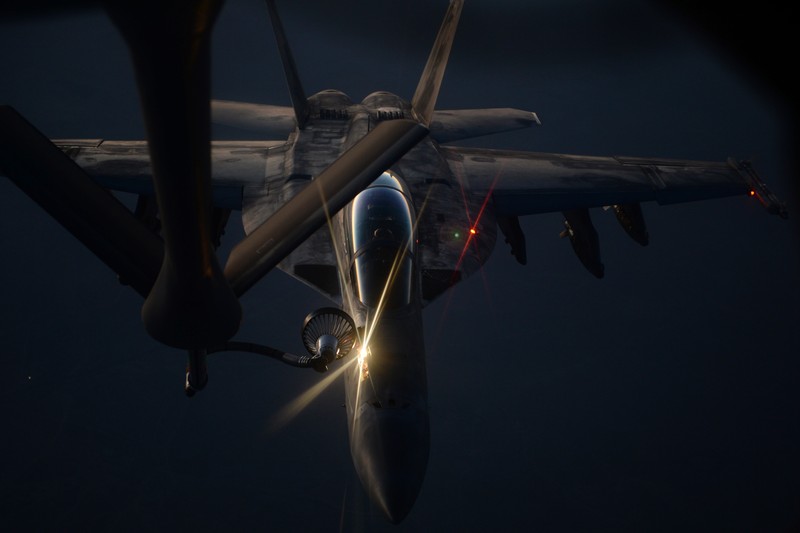
American warplanes struck Iranian radar and drone command sites over the weekend while, a few time zones and a Situation Room session away, President Donald Trump was hardening the terms of a peace memorandum designed to end the very conflict those strikes are fuelling. This is the central contradiction of day 93 of the US-Iran war: the bombs and the diplomacy are not sequential. They are simultaneous, and each complicates the other.
The Weekend Strikes
US Central Command said the strikes targeted an Iranian radar site and drone command-and-control facilities in Goruk and on Qeshm Island. CENTCOM described the operations as “self-defence” carried out in response to Iran’s shootdown of a US MQ-1 drone — the latest in an escalating cycle of tit-for-tat attacks near the Strait of Hormuz.
Last week, US forces shot down five Iranian attack drones and struck a ground control station in the port city of Bandar Abbas, home to key Iranian naval forces. The US military also said it had disabled a Gambia-flagged vessel attempting to sail towards an Iranian port, drawing accusations from Tehran that Washington was betraying diplomacy by maintaining its naval blockade.
The spillover keeps spreading. Kuwait’s military said its air defences intercepted “hostile missile and drone attacks” early Monday, with air raid sirens sounding across the country despite a nominal ceasefire. The Kuwaiti army advised citizens that any sounds of explosions were the result of interception systems at work.
Iran’s deputy army commander for coordination, Rear Admiral Habibollah Sayyari, warned that any further attacks on Iranian territory would be met with a response “even more forceful than before,” according to Press TV.
A Deal Rewritten by Hand
Through backchannel negotiations mediated by Pakistan, US and Iranian negotiators had reportedly reached a preliminary memorandum of understanding. The framework, as described by Axios and the New York Times, would extend the ceasefire for 60 days, require Iran to clear naval mines from the Strait of Hormuz within 30 days, guarantee unrestricted commercial shipping, and open negotiations on Iran’s nuclear programme. In return, the US would lift its naval blockade on Iranian ports in proportion to restored shipping traffic and discuss sanctions relief.
Then Trump convened a Situation Room session on Friday and sent the draft back with revisions.
A senior administration official told Axios that the president wanted “more specifics about how the US gets the material and the timing” — referring to Iran’s stockpile of roughly 440kg of uranium enriched to 60 percent, well above the 3 to 5 percent needed for civilian energy and a short technical step from weapons grade. A second source said Trump also sought changes to language governing the reopening of the Strait of Hormuz.
The New York Times reported that the president has expressed concern about provisions that would unfreeze Iranian assets. Iran has said it needs the release of $12 billion in frozen assets before engaging substantively on nuclear issues.
“There will be a deal. The imminence of it, we’ll see,” the senior administration official told Axios. “We’re willing to wait so the president gets what he asks for. It could be a week. It could be less. It could be more.”
Trump himself told Fox News he is “in no hurry,” saying the US is getting what it wants “slowly but surely.” His one non-negotiable demand: “The one guarantee that I have to have is that there will be no nuclear weapons.”
Tehran Pushes Back
Iran’s response has been firm. Chief negotiator Mohammad Bagher Ghalibaf said on state television: “We will not approve any agreement until we are certain that the rights of the Iranian people have been upheld.”
Tasnim, the IRGC-affiliated news agency, reported that Iran would also propose amendments, with sources noting that “the application of amendments by Trump does not mean that Iran accepts them.” The same sources added that Iran is “fully prepared for a lack of understanding” between the parties.
Foreign Minister Abbas Araghchi dismissed the public discussion of deal terms as premature, telling state TV that “until a clear conclusion is reached…everything that is being said now is speculation.”
Iran has also rejected Trump’s assertions that its enriched uranium stockpile would be destroyed, with Iranian media calling the claim “baseless.” Supreme Leader Mojtaba Khamenei has reportedly issued a directive that the stockpile should not be sent abroad.
The Lebanon Front
The deal faces a second complication. Israel’s expanding ground invasion of Lebanon — where it is fighting Iran-backed Hezbollah — continues to reshape the battlefield.
Israeli forces seized Beaufort Castle in southern Lebanon on Sunday, a Crusader-era fortress offering commanding views of the surrounding territory. It marks the deepest Israeli incursion into Lebanon in 26 years. The Israeli military has warned civilians south of the Zahrani River to evacuate and says it is conducting expanded ground operations that have crossed the Litani River.
Lebanese Prime Minister Nawaf Salam accused Israel of pursuing a “scorched-earth policy.” More than 3,300 people, including dozens of children, have been killed in Lebanon since fighting escalated on March 2, according to the Associated Press. Roughly one million people have been displaced.
Iran has insisted that any agreement with Washington must also end the fighting in Lebanon — a demand that injects a variable over which US negotiators have limited control. A US-brokered ceasefire in Lebanon has largely failed to hold, and Israel’s security calculus operates on its own logic.
The Stakes at Hormuz
For readers tracking the Strait of Hormuz since early March, when Iran first restricted shipping through the narrow waterway, the consequences of delay are tangible. Roughly 20 percent of the world’s oil and liquefied natural gas passes through Hormuz in peacetime. During the conflict, Iran has allowed select vessels through only after extracting tolls of up to $2 million per ship, according to Al Jazeera. The US responded with its own naval blockade on Iranian ports in April. Global energy markets have been distorted for three months.
The memorandum, if signed, would begin to unwind the blockade. But every day of delay adds another layer of military escalation, and every strike makes the political cost of compromise harder for leaders on both sides to absorb.
At the Shangri-La Dialogue in Singapore, Defense Secretary Pete Hegseth framed the US posture plainly: “We are capable of resuming strikes if it becomes necessary…we are entirely ready for this.”
Pakistan’s Deputy Prime Minister Ishaq Dar is expected to meet Secretary of State Marco Rubio in Washington this week to continue mediation. But as one US official acknowledged to Axios, even communicating with Tehran is slow: “They’re literally in caves and they’re not using email.”
The war is 93 days old. The memorandum remains unsigned. The strikes have not stopped.
Sources
- US launches weekend strikes on Iran as Trump reportedly tightens framework of draft deal — Euronews
- Iran war day 93: Trump won’t ‘rush’ deal; Israel expands Lebanon invasion — Al Jazeera
- US-Iran 60-day proposal: What we know — Al Jazeera
- Donald Trump asks for amendments to agreed upon draft of US-Iran deal — Jerusalem Post
- Israeli forces make historic push inside Lebanon and complicate an Iran deal — Associated Press
- Trump Tightens Demands for Iran War-Ending Deal — Kyiv Post
Discussion (13)