 lop News
Pedro Abreu first heard the news from friends. Messages arrived with links to pro-government media in Costa Rica, reporting that he and four colleagues had been barred from entering the United States. The outlets listed their names, dates of birth, and visa expiration dates. Abreu checked his email — nothing. He searched a US government website and entered his information. The word that came back was “revoked.”
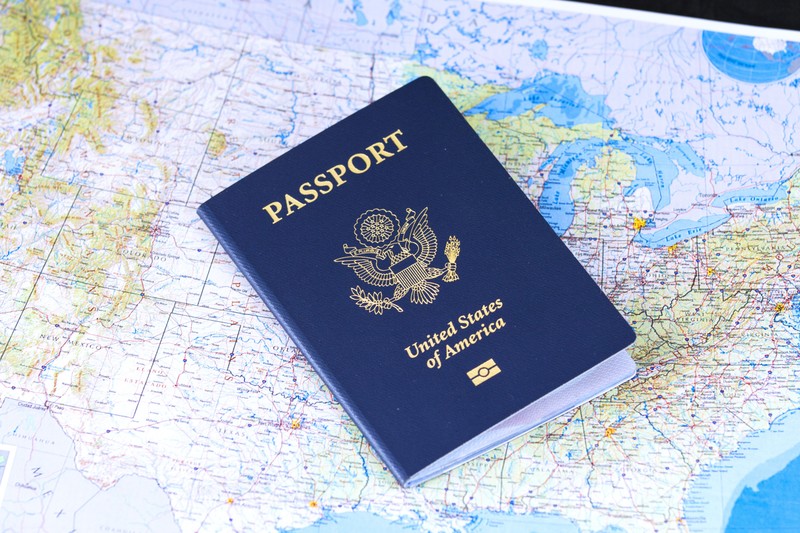
Five of seven board members of La Nación, Costa Rica’s most influential newspaper, have had their US tourist visas cancelled without explanation. The affected executives include board chairman Pedro Abreu Jiménez, vice chairman Luis Javier Castro Lachner, and directors Carmen Montero Luthmer, Luis Carlos Chaves Fonseca, and Daniel Lacayo Abreu. The remaining two hold passports from countries that do not require US visas.
“This is completely unprecedented,” Abreu told the International Consortium of Investigative Journalists. “We see it as an indirect attack on press freedom because of the effect it can have on an independent media outlet and on those who have the institutional responsibility to protect it.”
The Reporting That Drew a Target
La Nación has spent years in the crosshairs of outgoing President Rodrigo Chaves. During his 2022 campaign, the paper published exposés documenting allegations of sexual misconduct against Chaves during his tenure at the World Bank, where he was formally reprimanded. It also reported on allegations of illegal campaign financing, which Chaves denied.
Chaves responded by vowing to “cause the destruction of the corrupt structures of La Nación.” He branded the paper “despicable press” and “political assassins,” withdrew a sanitation permit for an event space run by its parent company, and systematically restricted access to public information, according to Reporters Without Borders.
A Broader Pattern of Visa Revocations
The board members are hardly the first Costa Ricans to lose US travel privileges. Nobel Peace Prize laureate and former President Óscar Arias had his visa revoked last year after criticizing Trump on social media. His brother Rodrigo Arias, then president of the Legislative Assembly, was also banned. Opposition lawmakers Francisco Nicolás and Cynthia Córdoba, both vocal Chaves critics, lost their visas in recent months. Constitutional Court Judge Fernando Cruz — an advocate for migrant rights who was unable to travel to the US to receive an award from Northwestern Law School — was also targeted.
Former Costa Rican communications minister Mauricio Herrera described “a persistent pattern” of revocations aimed at those who are “political opponents or critics of the government.” He told the Associated Press there was “no doubt” the La Nación cancellations came at the request of the Costa Rican government.
The pattern traces to Secretary of State Marco Rubio’s visit to Costa Rica last year, when he praised Chaves for a decree barring Chinese companies from the country’s 5G network and promised to “impose costs on those within the country who use their positions of authority to undermine the interests of the people of Costa Rica.” Weeks later, opposition members who had criticized the decree found their visas revoked.
The Trump-Chaves Alliance
The diplomatic alignment between Washington and San José has only deepened since. Chaves agreed to accept up to 25 third-country deportees per week from the US, participated in Trump’s Shield of the Americas summit, and closed the Costa Rican embassy in Havana. When asked on television this week whether he had requested the visa revocations, Chaves laughed. “If this were true, then that would make me the president with the most influence over the most powerful country in the world,” he said.
The Committee to Protect Journalists noted that the Trump administration has previously revoked visas for international journalists and commentators in connection with their critical coverage — including British commentator Sami Hamdi, detained at San Francisco International Airport in October 2025, and Australian writer Alistair Kitchen, denied entry at Los Angeles last June. But Costa Rica is the only country where the US has targeted media outlet owners and executives, according to the ICIJ.
What Comes Next
Chaves leaves office on May 8, handing power to his handpicked successor, Laura Fernández, who won February’s election on a platform of continuity. Reporters Without Borders lowered Costa Rica two notches in its 2026 press freedom index, ranking the country 38th — a sharp decline for a nation once considered a regional democratic model.
Herrera said his fear is that visa revocations will soon extend to opposition legislators and university rectors. “I would like to think that this is going to stop,” he said. “But nothing indicates that it will.”
The State Department has not responded to repeated requests for comment from multiple outlets. Abreu, who is married to an American and visits his father in the US twice a year, said the implications extend well beyond personal inconvenience. “The message is clear,” he told the ICIJ. “It is an attack on the media outlet.”
Sources
- US cancels visas for board of Costa Rica newspaper critical of Trump ally — The Guardian
- Costa Rica’s top newspaper says US revoked visas of its executives, prompting press freedom concerns — Associated Press
- US revokes visas for prominent Costa Rican newspaper directors in apparent retaliation — Committee to Protect Journalists
- US bars executives of Costa Rica’s leading newspaper La Nación from entry — International Consortium of Investigative Journalists
- Costa Rica Press Freedom Under Scrutiny After US Visa Revocations — Tico Times
Discussion (10)