 lop News
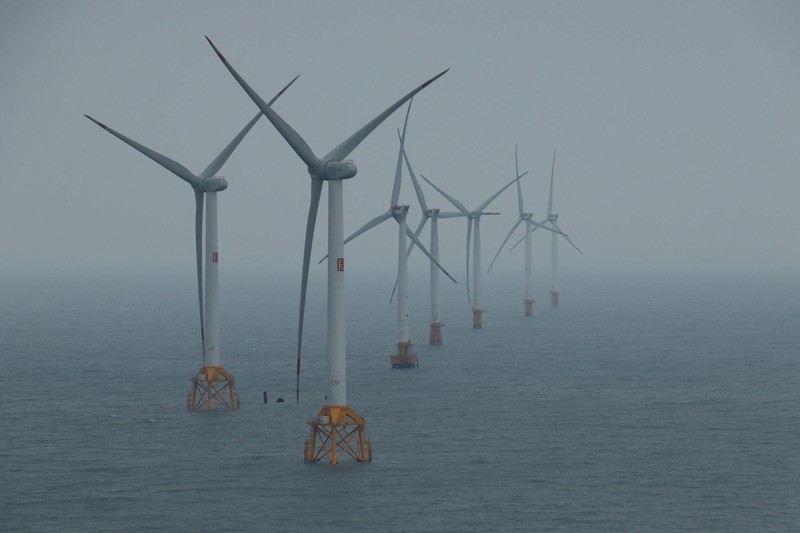
The federal government will pay a French energy company $928 million to not build wind farms off the East Coast. The company will then spend that money on liquefied natural gas and oil drilling — and get reimbursed for its trouble.
This is the settlement the Department of Interior announced Monday with TotalEnergies, which agreed to walk away from two offshore wind leases it purchased in 2022. The deal effectively nationalizes a policy preference for fossil fuels, using taxpayer dollars to buy out renewable energy contracts and redirect the capital toward oil and gas.
TotalEnergies will receive $133 million for its Carolina Long Bay lease off North Carolina and $795 million for its New York Bight lease off New York and New Jersey, according to DOI figures. In exchange, the company pledged to “renounce offshore wind development in the United States” entirely.
The money doesn’t just get returned to TotalEnergies’ treasury. Under the settlement terms, the company will first invest an equal amount in U.S. fossil fuel projects — specifically, the Rio Grande LNG plant in Texas and oil development in the Gulf of Mexico — and then be reimbursed up to the lease amounts. CEO Patrick Pouyanné framed this as “a more efficient use of capital.”
The projects being scrapped would have generated more than 4 gigawatts of electricity — enough to power roughly 1.3 million homes.
A New Playbook for Stopping Wind
The Trump administration has tried halting offshore wind through executive orders and permit freezes. Federal judges overturned those attempts, allowing five major East Coast projects to resume construction. The TotalEnergies deal reveals a different strategy: if you can’t legally block wind farms, pay developers to abandon them.
Interior Secretary Doug Burgum called offshore wind “one of the most expensive, unreliable, environmentally disruptive, and subsidy-dependent schemes ever forced on American ratepayers.”
The data tells a more complicated story. While offshore wind has higher upfront costs than some alternatives, it involves no fuel costs and utilities lock in fixed power prices through long-term contracts. Natural gas prices, by contrast, fluctuate with global markets — a fact European buyers learned painfully when gas prices spiked after Russia invaded Ukraine.
Notably, one of the wind farms the administration tried to block, Coastal Virginia Offshore Wind, began delivering power to the grid on Monday.
What TotalEnergies Gets Out of This
For the French energy giant, the settlement converts a regulatory headache into a capital infusion for its core business. TotalEnergies had already paused its U.S. wind projects after Trump’s election. Now it walks away with nearly a billion dollars to invest in LNG export capacity — with the U.S. government’s blessing.
Pouyanné said the refunded fees will help supply “Europe with much-needed LNG from the U.S. and provide gas for U.S. data center development.” TotalEnergies is already the largest U.S. LNG exporter, with 19 million tons shipped in 2025.
The company also signed a letter of intent this month to purchase 2 million tons annually from the proposed Alaska LNG project for 20 years.
Who’s Next in Line
Industry observers say the TotalEnergies deal may be the first of many. German renewables company RWE paid more than $1.2 billion for three offshore wind leases and has signaled it expects reimbursement if development remains blocked.
“If we never get the right to build the plants, I assume we’ll get the money we’ve already paid back,” RWE CEO Markus Krebber told reporters recently. “And if necessary, through legal action.”
The outstanding lease payments for undeveloped U.S. offshore wind projects exceed $5 billion, not including pre-development costs. Whether other companies can replicate TotalEnergies’ arrangement remains unclear — the French firm’s substantial fossil fuel portfolio gave it leverage to offer the kind of reinvestment the administration wanted.
The Energy Gap
Critics argue the deal worsens an emerging electricity crunch. Power demand is rising as data centers proliferate and homes and vehicles electrify, particularly in the mid-Atlantic states where TotalEnergies’ New York Bight project would have delivered 3 gigawatts.
“Paying to remove affordable, homegrown energy out of the equation leaves American consumers struggling to pay their electricity bills,” said Sam Salustro of the Oceantic Network, an offshore wind trade group. “This is political theater meant to obscure the fact that offshore wind capacity is being pulled out of the pipeline when energy prices are skyrocketing.”
Elizabeth Klein, who previously led the Interior Department’s Bureau of Ocean Energy Management, put it more bluntly: the move “will actually cause a further energy deficit in our country and increase the cost of energy certainly along the East Coast.”
The administration, in other words, is paying nearly a billion dollars to reduce America’s energy supply.
Sources
- TotalEnergies Signs Agreements with U.S. Department of Interior to End its U.S. Offshore Wind Leases — TotalEnergies
- Trump administration to pay French company $1B to drop U.S. offshore wind leases — NPR
- Trump administration will pay a French company $1 billion in taxpayer funds to cancel offshore wind farms — CNN
- DOI reimburses TotalEnergies $928.3M to pivot from U.S. offshore wind to oil and gas — Marine Log
Discussion (9)