 lop News
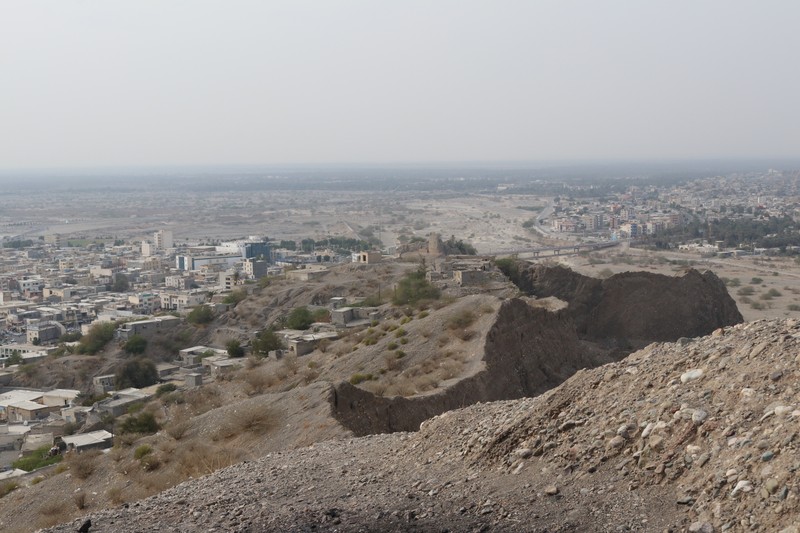
At least 168 people died when a US Tomahawk cruise missile struck the Shajareh Tayyebeh elementary school in Minab, Iran, on February 28. Roughly 110 were children. A preliminary US military investigation has now determined the attack was the result of a targeting mistake — officers at US Central Command used outdated intelligence data that failed to distinguish between the school and an adjacent Islamic Revolutionary Guard Corps base, according to officials briefed on the findings.
The school building had been physically separated from the IRGC compound since at least 2016. Satellite imagery reviewed by Reuters shows boundary walls and separate gated entrances constructed by mid-2015, with painted murals visible on the school’s exterior by 2018. The building’s status as a functioning school was verifiable through open-source material, including a public website featuring photographs of students in the courtyard.
And yet the missile struck anyway.
A failure of verification
The New York Times first reported that the preliminary investigation found US officers created target coordinates using data from the Defense Intelligence Agency that apparently did not reflect the school’s decade-long separation from the military installation. Officials emphasized the findings remain preliminary, with significant unanswered questions about why the information was not verified before the strike.
Amnesty International, which conducted its own analysis of satellite imagery and video evidence, concluded the school building was “directly struck” with a precision-guided weapon. The organization said this points to a failure by US forces to take feasible precautions to avoid civilian harm — a potential violation of international humanitarian law.
“If the attackers failed to identify the building as a school and nevertheless proceeded with the attack, this would indicate gross negligence in the planning of the attack,” said Erika Guevara-Rosas, Amnesty’s senior director for research, advocacy, policy and campaigns. She added that if US forces were aware of the school’s proximity and attacked without precautions — such as striking at night or issuing warnings — this “would amount to recklessly launching an indiscriminate attack” and should be investigated as a war crime.
The human cost
The scale of the loss is difficult to comprehend. Iranian officials said the dead included 66 boys, 54 girls, 26 teachers, and four parents. The strike consisted of two missiles in quick succession, hitting during school hours.
At an emergency session of the UN Human Rights Council in Geneva on Friday, a grieving mother named Mohaddeseh Fallahat described her final morning with her two children.
“That morning was like any other,” Fallahat said. “There was no sign that this would be the last time. As they walked out the door, they simply said, ‘Mum, come pick us up after school.’ That simple sentence now repeats in my mind 1,000 times, and each time my heart burns with pain.”
UN High Commissioner for Human Rights Volker Türk said the bombing “evoked a visceral horror” and called for Washington to conclude its investigation promptly and publish the results.
“Whatever differences countries have, we can all agree they will not be solved by killing schoolchildren,” Türk told the council.
Political fallout in Washington
The investigation has created immediate political complications for the Trump administration. President Trump initially suggested Iran might have attacked its own school and claimed Tehran could possess Tomahawk missiles — an assertion military experts dismissed as extremely unlikely, given that only US forces in this conflict use the weapon.
Trump later said he would “certainly” accept the investigation’s conclusions: “Whatever the report shows, I’m willing to live with that report.”
Defense Secretary Pete Hegseth announced on March 13 that the Pentagon had elevated the investigation to a higher-level probe, known as a 15-6 administrative review, to be led by a general officer from outside Central Command. Such a move typically signals an effort to ensure independence. Hegseth declined to comment on preliminary findings, stating: “We’re not going to let reporting lead us or force our hand into indicating what happened.”
Nearly every Senate Democrat signed a letter to Hegseth demanding answers about the strike, including whether old or faulty target analysis led to the school being hit. The letter also questioned whether Hegseth had complied with rules designed to prevent war crimes, citing his earlier vow that there would be no “stupid rules of engagement” in the conflict.
Questions about precision warfare
The strike has exposed a troubling gap between the rhetoric of precision warfare and its reality. The Tomahawk is among the most accurate conventional weapons in the American arsenal. Yet precision guidance means little when the target itself is misidentified.
UN Special Rapporteur on the right to education, Farida Shaheed, noted that journalists and civil society groups using only open-source information quickly established that the school had been separated from the military compound and was visibly marked.
“The US military, with all its tools at its disposal, surely could have done so prior to the attack,” Shaheed told the Human Rights Council. “They had an obligation to do so.”
Amnesty International has called for the investigation to examine how artificial intelligence may have been employed in intelligence gathering, targeting decisions, and precautionary measures. CENTCOM Commander Admiral Brad Cooper confirmed on March 11 that US forces are using advanced AI tools to process large amounts of data related to the operations.
Iran’s response
Iranian officials have rejected the notion of a mistake. Foreign Minister Abbas Araghchi told the UN council that the attack was “deliberate and intentional,” arguing that given American and Israeli technological capabilities, “no one can believe that the attack on the school was anything other than deliberate.”
He claimed the strike resulted from “silence in the face of earlier manifestations of lawlessness and atrocities in occupied Palestine, Lebanon and elsewhere.”
The dispute over intent versus error will shape how this incident is remembered — and whether it becomes a catalyst for escalation or restraint. What is already clear is the human magnitude. According to Shaheed’s office, more than 600 schools and education facilities have been destroyed or severely damaged by US-Israeli attacks in Iran since the conflict began, with at least 230 children and teachers killed.
What comes next
If US responsibility is confirmed, the Minab school strike would rank among the worst single incidents of civilian casualties in decades of American military operations in the Middle East. The precedent for accountability is not encouraging: previous investigations into civilian deaths have often resulted in administrative reprimands rather than criminal prosecutions.
The elevated 15-6 investigation can become the basis for disciplinary action if warranted, but there is no guarantee its findings will be made public in full. Türk and Shaheed have both called for transparency.
For families in Minab, the abstract questions of international law and military procedure have already become brutally concrete. As Fallahat told the council: “No mother ever thinks she will send her child off to school with a smile, only to be met with silence. No mother is prepared to hear the words: ‘Your child is not coming back.’”
Sources
- U.S. at Fault in Strike on School in Iran, Preliminary Inquiry Says — The New York Times
- USA/Iran: Those responsible for deadly and unlawful US strike on school that killed over 100 children must be held accountable — Amnesty International
- Pentagon elevates investigation into Iran school strike — Reuters
- UN human rights chief calls on US to conclude probe into Iran school strike — BBC News
- UN rights chief urges US to conclude probe into deadly Iran school attack — Al Jazeera
Discussion (12)