 lop News
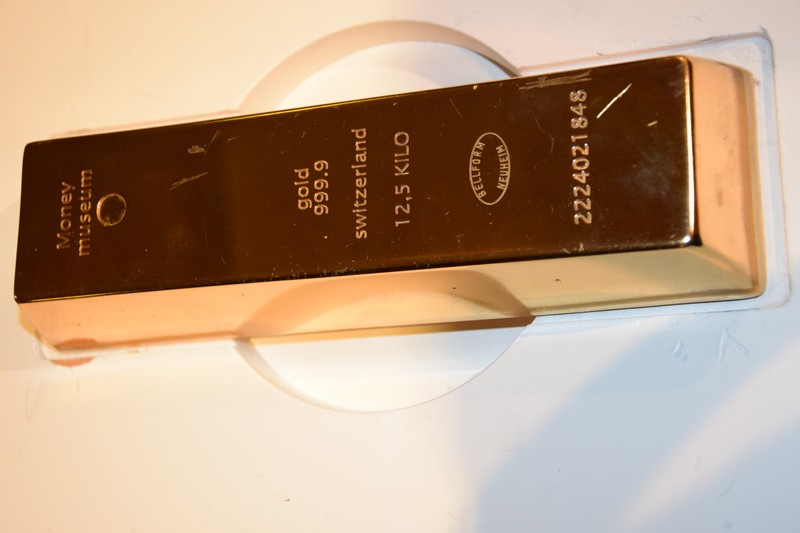
The institution responsible for stamping authenticity onto American currency was, for a period of time, laundering drug cartel gold and selling it as something it wasn’t.
A New York Times investigation published this week traced gold from Colombian cartel-controlled mines through a chain of intermediaries all the way to the U.S. Mint, where it was rebranded and sold as American-sourced bullion. The supply chain failure is staggering in its simplicity: cartel gold went in one end, and “American” gold came out the other.
Following the Gold
The investigation, led by Times reporters who spent months tracing the provenance of gold purchases, identified mining operations tied to Colombian criminal networks — including one cartel mine located on a military base. From those mines, the gold moved through intermediaries that obscured its origins before reaching U.S. government buyers. The Mint, which produces coins and bullion marketed partly on their American pedigree, purchased the material without detecting its true source. It was then refined, stamped, and sold to consumers who had every reason to believe they were buying domestically sourced gold. Secondary coverage of the Times findings described the Mint’s gold supply chain as tied to criminal networks in Colombia — underscoring just how porous the procurement process had become.
The Price-Pressure Problem
Gold prices have been on a historic run. Soaring gold prices have drawn fresh waves of investors seeking safe-haven assets — but supply chain questions have shadowed that rally from the start. When gold surges, demand outpaces the capacity of legitimate mining operations. That gap is where criminal enterprises thrive. Artisanal and small-scale gold mining — much of it unregulated, some of it controlled by cartels — becomes economically attractive at high price points. The gold is easy to extract, difficult to trace, and lucratively sold through intermediaries who wash provenance the way a casino washes cash. For the Mint, the pressure to source sufficient gold to meet demand appears to have outpaced the rigor of its supply chain verification. The institution that literally puts its stamp on American authenticity was, in effect, operating on trust in a market where trust is the first casualty of rising prices.
What Consumers Bought
The practical question is straightforward: if you bought gold coins or bullion from the U.S. Mint during the period in question, what exactly do you own? Gold is gold, chemically speaking. An ounce of cartel-sourced gold is indistinguishable from an ounce of legitimately mined gold once it’s been refined. The value of the metal itself hasn’t changed. But the value proposition of Mint products extends beyond the metal content. Consumers pay premiums for American gold coins precisely because of the provenance guarantee — the implicit promise that the U.S. government vouches for where this stuff came from. That premium is now undercut. Anyone who paid above-spot prices for “American” gold has a reasonable grievance, even if their metal holds its market value.
Institutional Credibility on the Line
The Mint has not, according to available reporting, detailed how it plans to overhaul its sourcing verification. The Times investigation puts the institution in an uncomfortable position: it must either defend a procurement process that failed to catch cartel gold, or admit that the safeguards meant to prevent exactly this situation were inadequate. Neither option is flattering for an agency whose core function is the manufacture of trusted currency. Supply chain transparency remains a broader industry problem, not one limited to the Mint. The gold industry has long struggled with provenance verification, and criminal networks have become adept at exploiting the gaps. But most gold buyers aren’t the federal government. The standard is — and should be — higher.
The Money Trail Writes Itself
The irony is structural. The United States spends billions interdicting drug cartel operations — tracking cocaine shipments, freezing assets, prosecuting money laundering networks. Meanwhile, one of its own agencies was purchasing cartel product, transforming it into a legitimate commodity, and distributing it into the retail market. You don’t need a conspiracy theory here. You need a procurement office that didn’t ask enough questions, intermediaries who knew exactly what they were obscuring, and a price environment that made volume more pressing than verification. The result is the same either way: cartel gold became American gold, the U.S. government served as the final launderer, and consumers who trusted the stamp got something they didn’t bargain for.
Sources
- U.S. Mint Buys Drug Cartel Gold and Sells It as ‘American’ — The New York Times
Discussion (9)