 lop News
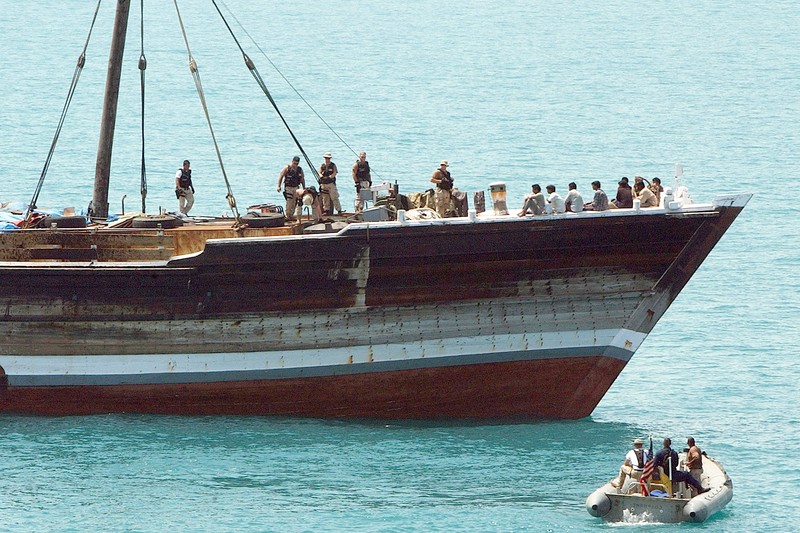
The same day he threatened to destroy “every single Power Plant, and every single Bridge” in Iran, Donald Trump announced that US Marines had seized an Iranian-flagged cargo ship attempting to run a naval blockade near the Strait of Hormuz.
It is the first concrete military action following the president’s escalation from diplomatic pressure to overt threats of mass infrastructure destruction — and it lands in the middle of an already fragile ceasefire set to expire Wednesday.
The boarding of the Touska
Trump announced the seizure in a post on his Truth Social platform on Sunday. The vessel, named Touska, was reportedly trying to evade a US naval blockade when it was intercepted.
“Our Navy ship stopped them right in their tracks by blowing a hole in the engineroom,” Trump wrote. He added that Marines had taken custody of the ship and were “seeing what’s on board!”
Details about the vessel — its cargo, crew composition, and destination — remain undisclosed. The Pentagon has not yet issued an independent statement on the operation, and the circumstances of the boarding have not been independently verified beyond the president’s account.
From threats to force
The seizure escalates what had been, until now, a war of words. On Sunday, Trump accused Iran of violating the ceasefire after at least two ships reported being fired upon while approaching the Strait of Hormuz on Saturday.
“Iran decided to fire bullets yesterday in the Strait of Hormuz — A Total Violation of our Ceasefire Agreement!” Trump wrote. “That wasn’t nice, was it?”
He then reiterated his infrastructure-destruction threat: “We’re offering a very fair and reasonable DEAL, and I hope they take it because, if they don’t, the United States is going to knock out every single Power Plant, and every single Bridge, in Iran. NO MORE MR. NICE GUY!”
The boarding of the Touska turns that rhetoric into a demonstrated willingness to use kinetic force against Iranian maritime assets — a significant step up the escalation ladder from the blockade itself.
Iran pulls back from the table
Iran’s response has been to move further from the negotiating table. Iranian state media reported Sunday that Tehran has “no plans” to participate in a second round of talks in Islamabad, scheduled for Monday evening.
The Tasnim news agency was more specific: Iran will not send a delegation “as long as there is a naval blockade.” The Fars news agency, citing anonymous sources, reported that lifting the blockade is a precondition for any renewed negotiations.
Iranian Foreign Ministry spokesman Esmaeil Baghaei called the blockade “not only a violation of Pakistani-mediated ceasefire but also both unlawful and criminal,” citing a UN General Assembly resolution. He accused the US of “deliberately inflicting collective punishment on the Iranian population.”
The first round of talks on April 11, led by Vice President JD Vance, lasted 21 hours without a breakthrough. Iranian parliament speaker Mohammad Bagher Ghalibaf said afterwards that the US “ultimately failed to gain the trust of the Iranian delegation.”
The Strait of Hormuz pendulum
The seizure complicates an already volatile situation for commercial shipping through one of the world’s most critical waterways. Iran briefly reopened the Strait of Hormuz on Friday following a ceasefire in Lebanon, only to reverse course within 24 hours when Trump refused to lift the blockade.
At least 20 ships have been attacked since the conflict began on February 28, according to the UN’s maritime agency. Germany’s TUI Cruises managed to pass two vessels through the strait on Sunday with reduced crews and government approvals, but those appear to be exceptions. German Chancellor Friedrich Merz said Friday that Germany was prepared to supply mine clearance and maritime reconnaissance to help secure the passage.
Adding another layer of risk, Yemen’s Houthi rebels threatened Saturday to close the Bab al-Mandab Strait, another critical shipping chokepoint connecting Europe to Asia via the Suez Canal. A senior Houthi official wrote that “if Sanaa decides to close the Bab al-Mandeb, then all of mankind and jinn will be too helpless to open it.”
Wednesday’s deadline
The ceasefire expires in days. Trump is sending a delegation — including Vance, envoy Steve Witkoff, and Jared Kushner — to Islamabad. Iran, for now, is not sending one.
The Touska sits in US military custody, its contents unknown. Trump himself acknowledged the odd logic of the dual chokehold, writing that Iran’s closure of the strait was “strange” because “our BLOCKADE has already closed it.”
Neither side, at this point, appears willing to be the first to step back.
Sources
- Iran war: Trump says US seized Iranian-flagged cargo ship — Deutsche Welle
Discussion (10)