 lop News
One page. Fourteen points. Sixty-eight days of war that shut the world’s most important oil chokepoint, killed thousands, and drove fuel prices to levels that rattled governments on every continent.
That is the improbable arithmetic of peace between the United States and Iran. According to multiple reports, Washington and Tehran are closer to an agreement than at any point since the war began on February 28 — and the instrument that could end it all is a single-page memorandum of understanding.
Axios first reported the details on May 6, citing two US officials and two other sources briefed on the discussions. Reuters subsequently confirmed elements of the account through a Pakistani source involved in the mediation. “We will close this very soon. We are getting close,” that source said.
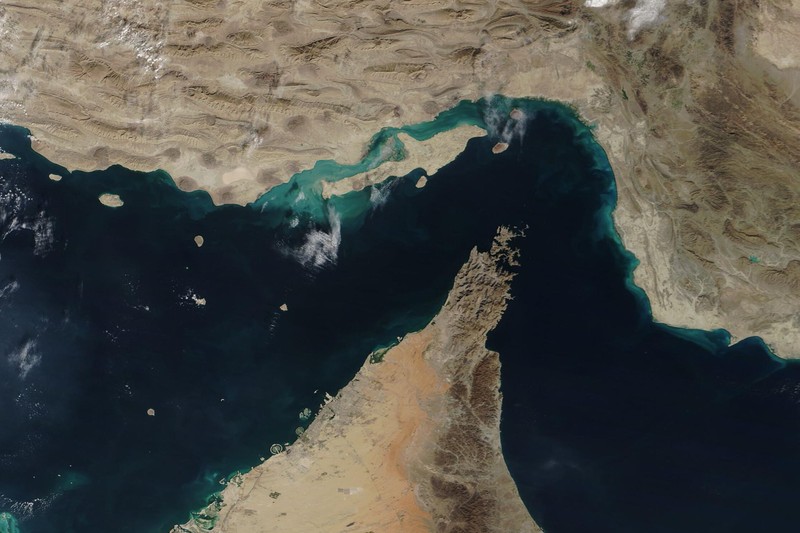
The simplicity of the format — one page, 14 bullet points — sits in jarring contrast to the scale of what it attempts to resolve. Since late February, Iran has effectively closed the Strait of Hormuz to all commercial shipping except its own. The US imposed its own blockade of Iranian ports in April. US-Israeli strikes and the invasion of Lebanon have killed thousands and displaced roughly a million more, according to the Straits Times. Dozens have died in the Gulf and Israel from Iranian retaliatory fire.
And now the exit ramp is a memo.
What the Framework Reportedly Covers
According to the Axios report, confirmed in part by the Jerusalem Post and independently reported by the Straits Times, the memorandum would:
- Declare an end to hostilities
- Open a 30-day window for negotiating a final comprehensive agreement
- Require both countries to lift their respective blockades on the Strait of Hormuz
- Commit Iran to a 15-year moratorium on uranium enrichment
- Arrange for Iran to transfer its stockpile of highly enriched uranium outside its borders, potentially to the United States
- Require the US to lift sanctions and release billions in frozen Iranian funds
The US has given Iran 48 hours to respond to the key points, according to Axios. An Iranian Foreign Ministry spokesperson told CNBC the proposal was being “evaluated.”
Several critical terms, however, remain contingent on that future comprehensive agreement — meaning the memo is less a peace deal than an agreement to try to negotiate one.
From Escalation to Backchannels
The path to this moment has been anything but linear.
On May 3, Trump announced “Project Freedom,” a US naval mission to escort ships through the Strait of Hormuz by force. The operation lasted barely two days before he reversed course, citing “great progress” in negotiations. During those two days, Iranian drones and missiles struck several commercial vessels in and around the strait, including a French container ship whose injured crew had to be evacuated on May 5, according to the Straits Times.
Iran responded by expanding its controlled area to include stretches of the UAE coastline and striking Emirati oil infrastructure beyond the chokepoint. The Pentagon said US forces struck several small Iranian boats during the mission.
Trump’s reversal came after appeals from Pakistani Prime Minister Shehbaz Sharif and Saudi Crown Prince Mohammed bin Salman, who both asked him to shelve the forced reopening to give negotiations room. Sharif publicly thanked Trump for his “courageous leadership and timely announcement,” revealing the Saudi role in the diplomatic push.
Pakistan has served as the primary mediator, hosting one round of peace talks in April after a ceasefire paused the US-Israeli bombing campaign on April 8. The US negotiating team — Trump special envoys Steve Witkoff and Jared Kushner — could hold further talks in Islamabad or Geneva, according to Axios.
The Gap Between “Close” and “Signed”
This is where the tension lives. Multiple sources describe the parties as closer than ever. None describe them as done.
Secretary of State Marco Rubio, who told reporters the US offensive phase was “over,” also called the negotiations “highly complex and technical” and warned of fractures in Iran’s leadership, adding that some of its top figures are “insane.”
General Dan Caine, chairman of the Joint Chiefs of Staff, told reporters at the Pentagon that the US assessed the hardline Islamic Revolutionary Guard Corps was in control of Iran’s government rather than nominal Supreme Leader Mojtaba Khamenei.
That internal split was on full display when Seyed Mohammad Marandi, an Iranian academic who was part of the delegation that traveled to Pakistan for the initial round of peace talks, dismissed the Axios report on X as “a tool for White House market manipulation.” He added that “the Islamic Republic is fully prepared for a potential major attack before Trump’s trip to China” scheduled for May 14–15.
In Beijing, Iranian Foreign Minister Abbas Araghchi met China’s top diplomat Wang Yi on May 6 but made no mention of the emerging deal, saying only that Tehran sought “a fair and comprehensive agreement.” He also spoke with Saudi Arabia’s foreign minister about preventing escalation.
And in Israel, skepticism runs deep. A survey by the Israel Democracy Institute found that 59 percent of Israelis oppose ending the war at this stage, with nearly two-thirds expecting a return to large-scale conflict.
What’s Still at Stake
News of the potential deal sent Brent crude oil futures falling roughly 1.7 percent to below $108 a barrel, according to the Straits Times — its lowest point in two weeks, and still far above pre-war levels. The economic toll has been a persistent political liability for the Trump administration ahead of midterm elections in November, with rising petrol prices hitting American consumers directly.
Throughout the conflict, Trump has repeatedly cited “progress” in talks without providing specifics, often when announcing reversals in military tactics. His pause of Project Freedom fits that pattern — though this time, the claim is backed by detailed reporting on a concrete negotiating document.
Iranian President Masoud Pezeshkian accused Washington of pursuing a policy of “maximum pressure” and expecting Iran to submit to unilateral demands. The gap between that public posture and the quiet work of the negotiators in Islamabad and Geneva is where the deal will either come together or fall apart.
A one-page memo. A 30-day clock. A strait that carries a fifth of the world’s oil. The simplicity of the format does not reflect the complexity of what it must contain — or the number of actors who could still blow it apart.
Sources
- US, Iran nearing one-page war-ending agreement — The Jerusalem Post
- US, Iran ‘getting close’ to agreeing deal to end war after 67 days — New York Post
- US media report points to memorandum to end war after Trump pauses mission to open strait — The Straits Times
Discussion (12)