 lop News
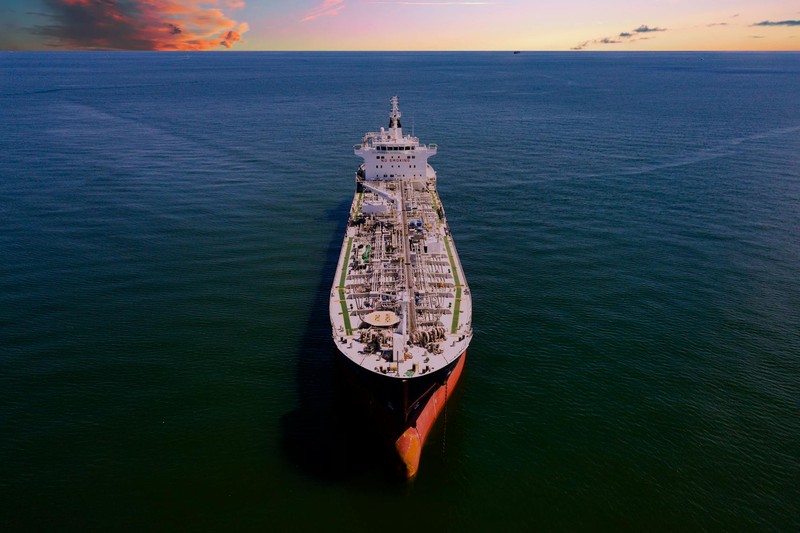
The United States shot the rudder off an Iranian-flagged oil tanker in the Gulf of Oman on Wednesday. Hours later, President Donald Trump told reporters that Washington and Tehran were on the verge of a peace agreement.
This is the war in miniature: military escalation and diplomatic outreach running on parallel tracks, with no apparent coordination between them.
US Central Command confirmed that a fighter jet disabled the tanker after it attempted to sail toward an Iranian port in violation of the American blockade. “American forces issued multiple warnings and informed the Iranian-flagged vessel it was in violation of the US blockade,” Central Command wrote on X, adding that the jet shot out the vessel’s rudder.
Meanwhile, Trump struck an altogether different tone. “They want to make a deal badly. And we’ll see if we get there,” he told reporters in the Oval Office on Wednesday. He described “very good talks” over the previous 24 hours but declined to elaborate on timing. When pressed on a deadline for Iran’s response, he offered: “Never a deadline. It’ll happen. It’ll happen. But never a deadline.”
The same day, he posted a starkly different message on Truth Social: “If they don’t agree, the bombing starts, and it will be, sadly, at a much higher level and intensity than it was before.”
A one-page memo against a 14-point plan
The US has presented Iran with a one-page memorandum outlining terms to end the conflict. Details remain sparse, though reported provisions include a moratorium on Iranian uranium enrichment, the lifting of US sanctions, the distribution of frozen Iranian funds, and the reopening of the Strait of Hormuz to commercial shipping, according to Euronews.
It is unclear how this document differs from the 14-point plan Iran submitted last week. Iran has not yet formally responded. Foreign Ministry spokesman Esmaeil Baqaei told local media that the proposal is under review and that Tehran would communicate its position to Pakistan after finalizing its views.
Chief negotiator Mohammad Bagher Ghalibaf offered a blunter assessment on Wednesday, warning that the US is seeking to force Iran to surrender “through a naval blockade, economic pressure and media manipulation.”
The contradiction is not lost on anyone watching the region. The United States is enforcing a blockade that has choked off one of the world’s most critical shipping lanes while simultaneously asking the blockaded party to sign a peace document drafted on a single page.
The strait that moved the markets
The Strait of Hormuz, through which roughly a fifth of the world’s oil normally transits, has been effectively closed since late February, when the US and Israel launched strikes on Iran. The closure has sent oil prices soaring. Brent crude, the international benchmark, surged above $114 a barrel on Monday, gaining nearly 6%. Before the conflict began, it was trading near $70.
The disconnect is surreal: investors are pricing in peace while shots are still being fired at tankers in the waterway whose reopening depends on that very peace.
Kaho Yu, head of energy and resources at risk intelligence firm Verisk Maplecroft, offered a dose of realism. “Refiners, shippers and commodity traders will remain cautious until there is clearer evidence that Hormuz disruptions will not re-escalate,” he said.
A cargo ship, a denial, and a suspended project
Adding to the confusion, a separate incident has further muddied the diplomatic waters. The Panama-flagged HMM Namu, a South Korean cargo vessel carrying 24 crew members, was struck by a blast and fire on Monday in the Strait of Hormuz. Trump claimed Iran had “taken some shots” at the vessel and urged Seoul to join American escort operations.
Iran’s embassy in Seoul denied any involvement. In a statement on Thursday, it “firmly rejects and categorically denies any allegations regarding the involvement of the armed forces of the Islamic Republic of Iran.” The embassy warned that “safe passage through the Strait of Hormuz requires full compliance with applicable regulations” and that any disregard for these requirements “may lead to unintended incidents.”
South Korea said it would “review its position” on joining US escort operations, but National Security Adviser Wi Sung-lac subsequently said the suspension of the programme, known as “Project Freedom,” had made that review unnecessary.
What credibility looks like from Tehran
For a deal to hold, both sides need to believe the other will honor it. The past 48 hours have given Tehran reason to question Washington’s commitment to the diplomatic track, and Washington equal reason to question Tehran’s willingness to police its own waters.
The markets, ever optimistic, are betting on peace. The oil price data, ever stubborn, says otherwise. One of them is wrong.
Discussion (10)