 lop News
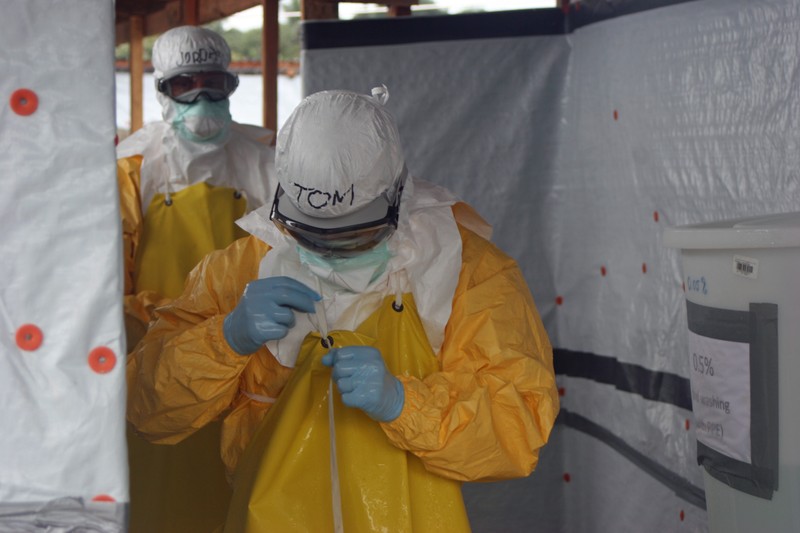
The United States has built a 50-bed Ebola quarantine facility in Kenya for American citizens exposed to the outbreak in the Democratic Republic of Congo — rather than bringing those citizens home. A Kenyan court blocked the plan the day before it was to open.
The center, reportedly on or near an airbase in Laikipia County, central Kenya,it was designed to provide “access to high-quality care for Americans who would need to quickly get out of DRC and quarantine without the risks of a lengthy transport back to the US,” a White House official told The Guardian. Staffed by American medics, it was scheduled to begin operations on May 29.
Justice Patricia Nyaundi of the Kenyan High Court had other ideas. She issued an interim order barring any foreign-government Ebola facility from operating in Kenya, responding to a petition from the Katiba Institute, a rights group, which warned of “grave and imminent risks” to public health.
Barred from returning
The Kenya facility is one piece of a broader policy. The CDC has banned green card holders who visited DRC, Uganda, or South Sudan in the past 21 days from reentering the US, according to Politico. Other recent travelers to those countries face similar restrictions. American citizens must enter through Washington Dulles International Airport, where enhanced screening is in place.
What the White House has not clarified is whether Americans can choose to return home instead of being sent to Kenya. A White House official declined to answer that question.
Jennifer Nuzzo, an epidemiologist who directs the Pandemic Center at the Brown University School of Public Health, warned the approach could backfire. “Without adequate plans for the safe quarantine of exposed individuals and prompt isolation of those who become infected, I fear these facilities could amplify the spread of the virus,” she told The Guardian. Blocking Americans from returning home, she added, might discourage people from disclosing exposure — driving cases underground.
“Telling health workers they can’t come home”
Jeremy Konyndyk, president of Refugees International and former executive director of the USAID Covid-19 taskforce, was more blunt. “That’s basically telling any American health worker who might go and work on the effort to contain this outbreak that if they get sick, they can’t come home,” he told The Guardian. “It disincentivizes people from going.”
Konyndyk helped lead the US response to the 2014–2016 West Africa Ebola epidemic. During that crisis, he said, the government specifically resisted travel bans. “We fought really hard not to put a travel ban in place because we knew that would ultimately be counterproductive to the goal of ending the outbreak.”
The current outbreak involves the Bundibugyo strain of Ebola, which has no approved vaccines or specific treatments. The WHO declared it a Public Health Emergency of International Concern on May 17, citing significant uncertainty about its true scale. Congolese authorities report more than 900 suspected infections and at least 220 deaths. Uganda has confirmed nine cases and one death.
“If it is too dangerous for America”
Kenya has recorded zero Ebola cases, and the country’s largest doctors’ union accused its own government of “backdoor negotiations” to trade national biosecurity for foreign aid.
“If it is too dangerous for America, it is too dangerous for Kenya,” the Kenya Medical Practitioners, Pharmacists and Dentists Union stated. Secretary general Davji Bhimji Atellah said Kenya would not be treated as “a containment colony for a lethal pathogen that we did not generate.” The union also objected to the facility being staffed by Americans rather than Kenyan healthcare professionals, warning it would “not tolerate an apartheid healthcare model on Kenyan soil.”
US Secretary of State Marco Rubio spoke with Kenyan President William Ruto on May 28, announcing $13.5 million in aid for Kenya’s Ebola preparedness — part of a $112 million regional commitment. Ruto said Kenya would “act transparently, responsibly, and decisively to protect lives.” He did not mention the quarantine facility.
Against WHO advice
The US approach sits in direct tension with WHO guidance. The organization’s May 17 emergency declaration explicitly advised that “no country should close its borders or place any restrictions on travel and trade,” calling such measures fear-driven and scientifically baseless. It also urged countries to “facilitate the evacuation and repatriation of nationals (e.g. health workers) who have been exposed.”
The United States is doing the opposite. The country that operates some of the world’s most advanced biocontainment facilities is telling its citizens those facilities are not available to them — and the people the US needs most, the health workers willing to deploy into an outbreak caused by a virus with no approved treatments, are the ones most directly penalized.
On Friday, the WHO confirmed that the first Ebola patient in the current outbreak had recovered and been discharged from a care center in the DRC after two negative tests. A small sign of progress. Whether enough American medical personnel will deploy to help contain this crisis depends, in part, on whether their government will allow them to come home.
Sources
- US building Ebola quarantine center in Kenya for Americans amid outbreak — The Guardian
- Kenya court halts opening of US Ebola quarantine facility in the country — BBC News
- Epidemic of Ebola Disease caused by Bundibugyo virus in the Democratic Republic of the Congo and Uganda determined a Public Health Emergency of International Concern — World Health Organization
- CDC says green card holders who were recently in countries where Ebola is spreading can’t reenter US — Politico
Discussion (10)