 lop News
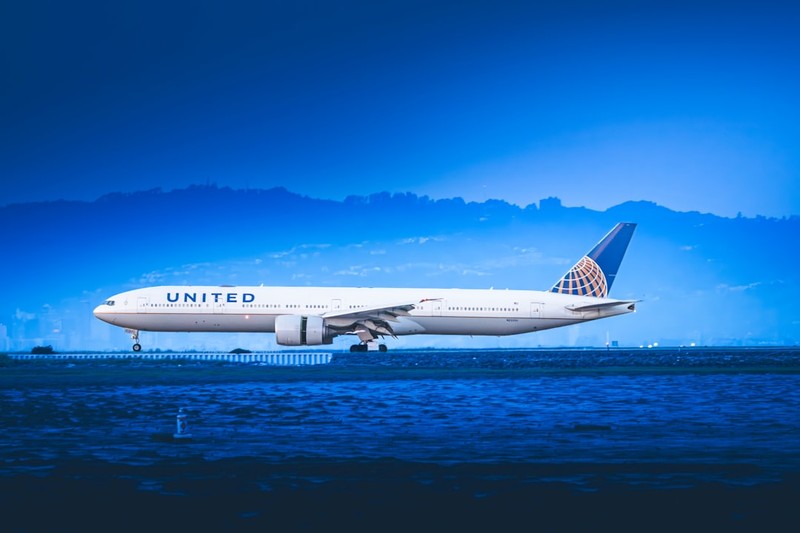
United Airlines just told Wall Street something it didn’t want to hear: the Iran war is going to cost the airline billions, and passengers are going to pay for it.
On Tuesday, United slashed its 2026 earnings forecast from $12–$14 per share to $7–$11 — a direct hit from jet fuel prices that have more than doubled since the US and Israel attacked Iran in late February. The carrier expects fuel to average $4.30 per gallon in the second quarter, compared with $2.39 the day before the strikes began, according to Platts pricing data.
The cut landed despite a strong first quarter: revenue rose more than 10% to $14.61 billion, beating Wall Street estimates, with net income up 80%. None of that matters when your potential extra fuel bill exceeds your best-ever annual profit by more than two to one.
United is the canary. The coal mine is the entire global aviation industry.
A Systemic Crisis, Not a Company Problem
Nineteen of the world’s 20 largest airlines have cut flights scheduled for May, according to aviation analytics firm Cirium. Global planned capacity has dropped three percentage points since early March, reversing expectations of 4–6% growth into a potential 3% decline.
Lufthansa is cutting 20,000 short-haul flights through October. KLM has canceled 160 flights. Ryanair is considering route reductions. AirAsia has slashed 10% of its flights and raised fares by 30–40%. Air New Zealand is dropping 1,100 flights. SAS cut roughly 1,000 April flights. Even carriers with fuel hedges — easyJet has 70% of its summer fuel locked in at $706 per metric ton — will see those protections unwind by late summer.
“This is already happening in parts of Asia,” said Willie Walsh, director general of the International Air Transport Association, warning that by the end of May, Europe could see cancellations driven not just by cost but by outright shortages.
The Strait of Hormuz Chokepoint
The mechanism is brutally simple. Over 20% of global seaborne jet fuel passed through the Strait of Hormuz last year, with roughly two-thirds of that headed to Europe, according to energy data firm Kpler. The strait’s closure has trapped fuel from Kuwait and Bahrain and severed a critical supply artery.
The EU produces 60–70% of its own jet fuel but imports the remaining 30–40%, with about half those imports transiting Hormuz. Fatih Birol, executive director of the International Energy Agency, warned on April 16 that Europe may have as little as six weeks of jet fuel supply remaining. EU Energy Commissioner Dan Jørgensen said the crisis was shifting from one of high prices to one of supply.
EU transport ministers met Tuesday to discuss collective fuel-stock management and potential purchases from the US. The Netherlands, home to some of Europe’s largest refineries, estimated the bloc has at least five months of supply — though even that assumes no further disruptions.
Follow the Hedges
The airlines best positioned to weather this crisis share one trait: they locked in fuel prices before the war. Delta Air Lines owns a refinery in Pennsylvania, giving it what CEO Ed Bastian called “a fairly significant hedge,” though he conceded “it’s not going to cover the crack entirely.” easyJet’s summer hedging at $706 per metric ton protects near-term pricing — but those hedges unwind toward autumn.
Airlines that abandoned hedging in recent years are fully exposed. Yi Gao, an associate professor of aviation at Purdue University, noted that carriers have been subtly urging consumers to buy tickets now for years, aware that energy shocks would hit fares with little notice.
United CEO Scott Kirby put the math in stark terms for employees: if prices remain at current levels, the airline faces an extra $11 billion in annual fuel costs. “For perspective, in United’s best year ever, we made less than $5B,” he wrote in a March memo.
What This Means for Your Boarding Pass
The pass-through to passengers has already begun. Alaska Airlines has raised fares by about $25 per ticket, according to CEO Ben Minicucci. Last-minute walk-up fares from the US to the Caribbean are up 74% from earlier this month, per Deutsche Bank data, while fares to Hawaii are up 21%. AirAsia CEO Bo Lingam said the carrier’s fuel surcharge has risen up to 20%, with overall ticket prices up 30–40%.
easyJet reports that travelers are booking later and shifting toward domestic and western Mediterranean destinations, with a slight move away from the eastern Mediterranean, though travel to Cyprus, Egypt and Turkey is slowly recovering. Bookings for the July-to-September quarter are only 30% sold.
The discount carriers that supply cheaper seats face existential risk. Spirit Airlines, which has filed for bankruptcy twice in 18 months, warned in March that fuel costs could push it into liquidation. Fitch Ratings cautioned that “financially weaker airlines that may struggle to absorb these combined pressures could default and/or return aircraft early.” A shakeout that removes budget capacity would push fares higher across the board.
Even if a ceasefire holds and the Strait of Hormuz reopens tomorrow, the math is locked in for summer. “It’s going to take until at least July,” said Matt Smith, head US analyst at Kpler, referring to the timeline for normal supplies to resume. Airlines plan routes and set fares months in advance. The flights being cut now won’t come back until the fuel does.
Sources
- United Airlines slashes 2026 forecast as fuel costs surge — CNBC (via MSN)
- Airlines are about to run out of jet fuel because of the Iran war — CNN Business
- World’s Biggest Airlines Cancel Flights Due to Rising Fuel Prices — Business Insider
- Iran war: Jet fuel crisis deepens as Lufthansa cuts 20,000 flights — Deutsche Welle
- Airlines cut flights as Iran war sends jet fuel costs soaring — USA Today
Discussion (9)