 lop News
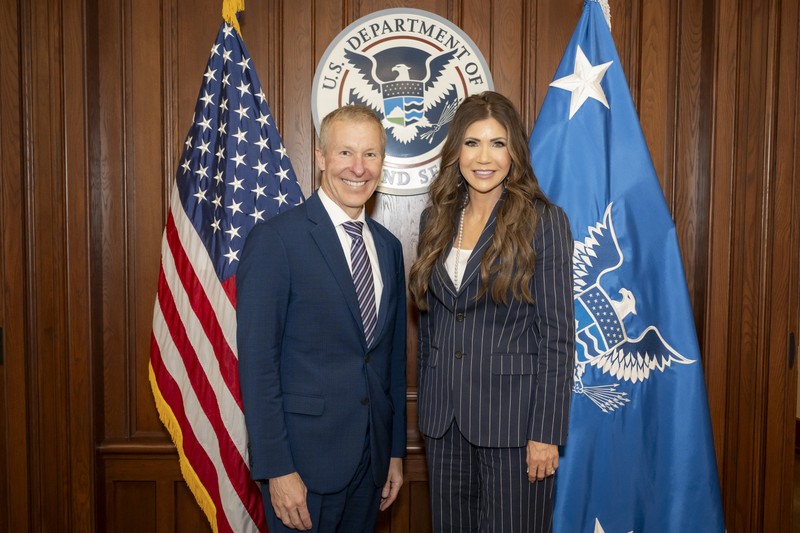
The pitch happened in late February, face-to-face with the president. Scott Kirby, CEO of United Airlines, floated the idea of merging with American Airlines — a deal that would create the largest airline on the planet and eliminate one of the four carriers that dominate US skies.
Trump, according to Transportation Secretary Sean Duffy, “loves to see big deals happen.”
That, apparently, was enough of a signal to try.
A Deal That Would Reshape Global Aviation
United and American together control more than a third of the US domestic market. A combined carrier would serve roughly 30 percent of all domestic air traffic, according to industry estimates cited by Simple Flying. Its fleet, route network, and loyalty program would dwarf anything else in commercial aviation.
The market noticed. When Bloomberg broke the story on April 13, American Airlines shares jumped roughly 5 percent; United rose about 1 percent. American, with a market capitalization of roughly $7.2 billion, has the most to gain. It carries more than $30 billion in net debt and posted a net profit margin of just 0.20 percent last year, according to TradingView data. United, valued at over $30 billion, earned $3.3 billion in net profit on $59 billion in revenue.
Whether Kirby is serious or simply testing the boundaries of what this administration will permit remains unclear. It is unclear whether United has made a formal takeover approach to American, according to Reuters and Bloomberg. Neither airline has commented publicly.
The Personal and the Political
For Kirby, the idea carries some history. He served as president of American Airlines before departing in 2018 after being told he had no path to the CEO seat. He joined United as president and rose to the top job. He has since been publicly critical of American’s strategy, arguing the carrier was too slow to add premium products.
The broader context is a US airline industry squeezed by rising jet fuel costs, driven by the US-Iran conflict and the effective closure of the Strait of Hormuz. Kirby told employees in a memo last month that United would benefit from any industry shakeout. “We’ll be there to pick up some of those assets, might be a win-win for them,” he said in a March 24 Bloomberg Television interview.
He was talking about distressed competitors. Whether he meant buying the entire company is another matter. “We’ll see, there’s lots of rumors about that,” he said when pressed.
The Regulatory Long Shot
Under any conventional antitrust framework, a United-American merger would be dead on arrival. The two carriers dominate overlapping markets in Chicago, Los Angeles, and the New York area — concentrations that would almost certainly trigger Justice Department objections. The DOJ blocked JetBlue’s attempted acquisition of Spirit Airlines, a deal involving far smaller players, before Spirit filed for bankruptcy.
Antitrust lawyer Seth Bloom told Reuters the deal would be unlikely, noting: “The administration has said it really cares about the issues that affect the consumer’s pocketbook, and this would give the airlines more pricing power.”
Duffy, the Transportation Secretary, acknowledged the tension. He told CNBC on April 7 that if two larger airlines merge, they would have to “peel off” assets to avoid concentrating too much market power. He said the government would evaluate the impact on competition and ticket prices.
But he also said, plainly: “Is there room for some mergers in the aviation industry? Yeah, I think there is.”
What Passengers Should Expect
Previous airline mega-mergers — United with Continental, American with US Airways — led to fare increases of 5 to 10 percent on overlapping routes, according to the Air Traveler Club. Consumer advocates warn that eliminating a major competitor would make it easier for the remaining carriers to coordinate fare increases and baggage fees.
Merged airlines also tend to cut service to less profitable cities. And integrating two massive operations — reservation systems, loyalty programs, labor contracts — typically means months of disruption for passengers.
There is also the systemic risk. A carrier responsible for one-third of US domestic air traffic would pose a concentrated vulnerability. A financial crisis or labor dispute at a merged United-American could paralyze national transportation, potentially requiring a taxpayer bailout.
The Real Play
Kirby may be genuinely testing whether the Trump administration would greenlight the biggest airline merger in history. He may be laying groundwork for a smaller acquisition — JetBlue has been widely discussed as a more realistic target. Or he may simply be signaling to competitors and investors that United sees itself as the industry’s apex predator.
The fact that all three readings are plausible tells you something about the current moment. When the Transportation Secretary says the president “loves to see big deals happen,” and a Fortune 500 CEO shows up at the White House to propose the biggest deal in aviation history, the message is not subtle.
Whether it becomes policy is another matter. Midterm elections loom, consumer inflation hit 3.3 percent in March, and even a business-friendly administration would face pressure to explain why fewer airlines should mean better outcomes for passengers.
Sources
- United CEO Has Pitched Possible Combination With Rival American — Fortune / Bloomberg
- Wild: United CEO Scott Kirby Proposes Merger With American To Trump Officials — One Mile at a Time
- United-American Merger: CEO Kirby Proposes World’s Biggest Airline To Trump — Simple Flying
- Top Reasons a United Airlines and American Merger Is Unlikely to Happen — TradingView / Invezz
Discussion (9)