 lop News
Pancreatic cancer rarely announces itself early. By the time most patients learn they have it, the disease has spread. Median survival with chemotherapy sits around a year, and roughly 3% of those diagnosed at stage 4 survive five years, according to the American Cancer Society.
A drug called daraxonrasib may finally be moving those numbers. A phase 3 trial presented ahead of the ASCO annual meeting found that patients receiving the daily pill alongside chemotherapy survived a median of 13.2 months — nearly double the 6.7 months for chemotherapy alone. Separately, a 168-patient phase 1/2 trial published in the New England Journal of Medicine showed median overall survival of 13.1 months, with cancer stabilized or reduced for a median of 8.5 months.
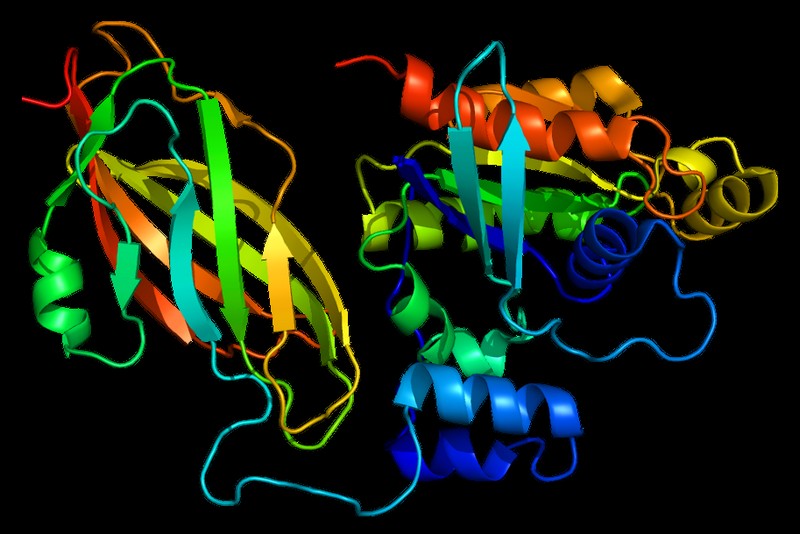
The target is RAS — specifically the KRAS variant that drives more than 90% of pancreatic cancers. These proteins command cells to divide without stopping, and for decades researchers called them “undruggable,” their smooth molecular surface offering almost nothing for a drug to latch onto.
Daraxonrasib solves this with a biochemical trick: it acts as molecular glue, binding to a common cellular protein called cyclophilin A and using it as a handle to clamp onto RAS and shut it down. Unlike earlier RAS inhibitors approved for lung and colorectal cancer, which target only one rare mutation, daraxonrasib works across the most common KRAS mutations found in pancreatic tumors.
Roughly 30% of patients experienced severe adverse events, most commonly rash, mouth sores, nausea, and diarrhea. But trial lead Dr. Brian Wolpin of Dana-Farber Cancer Institute told NBC News that most patients found the pill far more tolerable than chemotherapy infusions.
The FDA has granted daraxonrasib Breakthrough Therapy designation and opened expanded access. “I don’t use the word ‘groundbreaking’ lightly,” said Dr. Sekhar Padmanabhan, a surgical oncologist at Vanderbilt University Medical Center.
This is not a cure. But for a disease that has resisted nearly every pharmacological approach, a drug that reaches the protein at the root of most cases qualifies as genuine progress.
Sources
- RAS(ON) Inhibitor Daraxonrasib Shows Promising Results in Advanced Pancreatic Cancer Phase 1/2 Study — Dana-Farber Cancer Institute
- ‘A watershed moment’: A pancreatic cancer drug is set to transform treatment — NBC News
- New Hope for Pancreatic Cancer With Targeted KRAS Drug — Memorial Sloan Kettering Cancer Center
Discussion (6)