 lop News
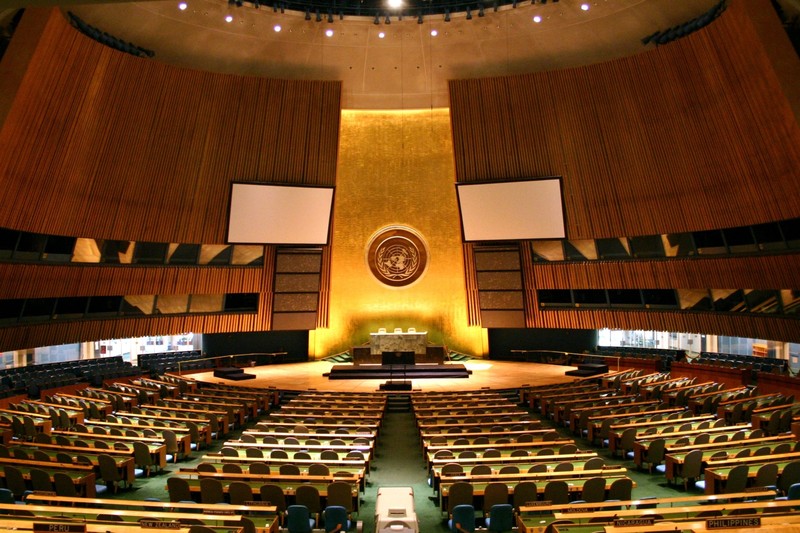
One hundred twenty-three nations. Three opposed. Fifty-two abstentions. After decades of diplomatic effort, the United Nations General Assembly has voted to declare the transatlantic slave trade “the gravest crime against humanity” — language that backers hope will transform abstract historical acknowledgment into concrete reparatory justice.
The resolution, proposed by Ghana and backed by the African Union and Caribbean Community, passed Wednesday in New York. It represents the furthest the UN has ever gone in recognising the slave trade’s unique place in history and in explicitly calling for reparations.
“This marks the first vote on the floor of the UN,” said Justin Hansford, a law professor at Howard University. “I cannot overemphasise how large of a step that is.”
Language as a Pathway to Justice
The resolution’s power lies in its specificity. It describes “the trafficking of enslaved Africans and racialised chattel enslavement of Africans” as the gravest crime against humanity “by reason of the definitive break in world history, scale, duration, systemic nature, brutality and enduring consequences that continue to structure the lives of all people through racialized regimes of labour, property and capital.”
For Ghana’s President John Dramani Mahama, the language itself is part of the remedy.
“Truth begins with language, with the power that words hold to shape consciousness, to shift perspective, to propel action,” Mahama told the General Assembly ahead of the vote. “This resolution is a safeguard against forgetting.”
The text calls on member states to engage in dialogue on reparations — including formal apologies, return of stolen artefacts, financial compensation, and guarantees of non-repetition. It affirms that claims for reparations represent “a concrete step towards remedying historical wrongs.”
Decades of Diplomatic Work
The vote culminates years of coordinated advocacy. The African Union designated 2025 as its “Year of Reparations” and has been working to codify chattel slavery as a crime requiring not just acknowledgment but remedy. Caribbean nations, through Caricom, have established a reparations commission pushing for European accountability.
“The main point is not to introduce a hierarchy of crimes,” said Kyeretwie Osei, head of the AU’s economic, social and cultural council. “It is rather an attempt to properly situate that particular chapter in history… how it was so world-breaking in its impact that it essentially created the platform for every atrocity and crime against humanity that then followed.”
The UN first acknowledged slavery as a crime at a 2001 conference in Durban, South Africa. But scholars say that framework treated slavery as a “retroactive moral judgment rather than a continuous legal reality” — a limitation this resolution aims to overcome.
Opposition and Abstention
The diplomatic victory came with notable absences. The United States, Israel and Argentina voted against the resolution. The entire European Union and United Kingdom abstained.
US representative Dan Negrea called the text “highly problematic in countless respects,” arguing the UN “was not founded to advance narrow specific interests and agendas.” The United States “does not recognise a legal right to reparations for historical wrongs that were not illegal under international law at the time they occurred,” he said.
The EU raised similar concerns about retroactive application of international law, with representative Gabriella Michaelidou arguing the bloc would have supported a resolution highlighting the “scale of the atrocity” but had “legal and factual” concerns about the current text.
Both Washington and Brussels also objected to what they saw as an implied hierarchy among crimes against humanity.
From Recognition to Remedy
The resolution is not legally binding — no nation is compelled to pay reparations or return artefacts. But supporters argue that political recognition at the highest level creates pressure that legal mechanisms alone cannot.
“History does not disappear when ignored, truth does not weaken when delayed, crime does not rot… and justice does not expire with time,” said Ghana’s foreign minister Samuel Ablakwa.
UN Secretary-General António Guterres called for “far bolder actions by many more States,” including commitments to respect African countries’ ownership of their natural resources and ensuring their equal participation in global financial institutions.
Barbados’ first poet laureate Esther Philips offered a simpler measure of success. “There are spirits of the victims of slavery present in this room at this moment,” she told delegates, “and they are listening for one word only: justice.”
The question now is whether Wednesday’s vote represents a ceiling or a floor.
Sources
- UN resolution urges reparations for slavery’s ‘historical wrongs’ — UN News
- UN adopts Ghana’s slavery resolution, defying resistance from US, Europe — Reuters
- UN votes to recognise slavery as ‘gravest crime against humanity’ — BBC
- UN votes to describe slave trade as ‘gravest crime against humanity’ — The Guardian
- Speech: President Mahama at a high-level event on reparatory justice at the UN — Ghana Presidency
Discussion (10)