 lop News
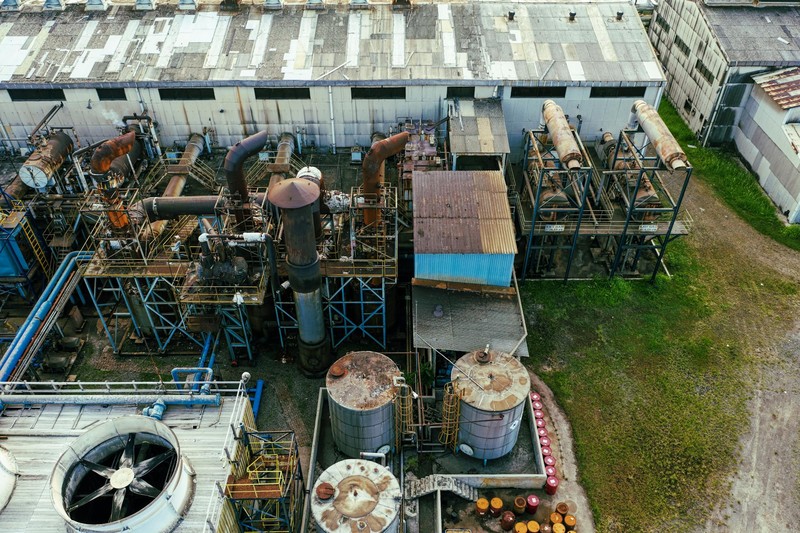
Five refineries. Two weeks. Nearly a quarter of Russia’s oil refining capacity — offline.
That is the concrete picture emerging from a Reuters exclusive published Tuesday, which details the extent to which Ukraine’s long-range drone campaign has crippled central Russia’s fuel processing infrastructure. The plants in Kirishi, Moscow, Nizhny Novgorod, Ryazan, and Yaroslavl — clustered in the industrial heartland surrounding the capital — have either shut down entirely or are running at a fraction of normal output.
The details are stark. The Ryazan refinery, which processed 13.1 million metric tons of crude oil in 2024 and supplies a significant share of Moscow’s fuel, suspended operations completely on May 15. The Moscow refinery, which produced 2.9 million tons of gasoline and 3.2 million tons of diesel in 2024, shut down two days later — officially, according to Reuters’ sources, “to reduce risks.” The Kirishinefteorgsintez plant, one of Russia’s largest with an annual capacity of 20 million tons, has been fully offline since May 5. Yaroslavnefteorgsintez is running at roughly one-quarter capacity. And on May 20, Ukrainian drones struck the Nizhny Novgorod refinery, a 17-million-ton plant whose operational status remains unclear.
Taken together, the affected facilities represent more than 83 million metric tons in annual processing capacity — approximately 238,000 tons per day, or nearly one-quarter of Russia’s total. They accounted for more than 30% of the country’s gasoline production and around a quarter of its diesel output.
What Sanctions Couldn’t
For years, Western governments coordinated an elaborate sanctions regime designed to degrade Russia’s ability to fund its war machine. Export controls, price caps, banking restrictions — the toolkit was comprehensive. Yet Russian oil continued to flow, often through intermediary networks that blunted the measures’ impact.
Ukraine’s drone campaign has accomplished in months what those sanctions could not. According to Reuters, cumulative infrastructure damage has forced an estimated 300,000 to 400,000 barrel-per-day reduction in Russian crude output — a volume comparable to the entire daily production of several mid-sized OPEC member states. Russian refinery throughput has fallen to levels not recorded since 2009.
At current Brent crude prices above $100 per barrel, that shortfall translates to roughly $12.8 billion in annualized revenue disruption, according to analysis by Discovery Alert.
A Saturation Strategy
The campaign’s logic is methodical. Ukraine has doubled the number of refineries targeted since the start of 2026, Reuters reported, distributing strikes across Russia’s vast geography rather than concentrating them. The Institute for the Study of War has assessed that Russia faces an irresolvable air defence dilemma: comprehensive protection of thousands of kilometres of critical infrastructure is logistically impossible, and Ukraine deliberately exploits this by stretching defences thin.
Even high intercept rates cannot prevent damage across a dispersed target network. Russian authorities reported intercepting 26 drones over Moscow during a single night earlier this month, yet confirmed strikes on major facilities continued regardless.
In April alone, at least 21 confirmed strikes targeted Russian energy infrastructure, nine of them hitting processing facilities specifically. The Tuapse refinery on the Black Sea was struck three times within two weeks — a deliberate repetition strategy designed to prevent recovery and repair.
The Domestic Squeeze
Russia has banned gasoline exports through July 31. Deputy Prime Minister Alexander Novak justified the measure by citing “turbulence in the global market” driven by the parallel crisis involving Iran. But the timing coincides with a domestic supply crunch that has been building for months — and is now accelerating.
Sales of gasoline and diesel from the Ryazan refinery on the St. Petersburg International Mercantile Exchange have been suspended since last Friday, exchange data showed. The Yaroslavnefteorgsintez plant has nearly halted gasoline sales on the exchange since May 8, with diesel volumes dropping by a factor of 2.5.
Last September, multiple Russian regions reported fuel shortages. In occupied Crimea, roughly half of gas stations suspended gasoline sales, according to the pro-Kremlin outlet Kommersant. Novak conceded at the time that Russia faced a “small deficit” of petroleum products.
Other refineries that might have compensated for the lost central output are themselves under attack and operating below capacity, Reuters reported. There is no easy redundancy left.
The Arithmetic of Asymmetry
Ukraine’s long-range drones are, by military standards, cheap. The refineries they are disabling represent billions of dollars in infrastructure and generate the revenue sustaining Russia’s war. The asymmetry is the entire point.
For Moscow, the math keeps worsening. Global oil prices are elevated — driven not only by the Iran crisis but by the very supply disruptions Ukraine has engineered. Roughly 40% of Russia’s oil export capacity has been halted by the combination of drone strikes, tanker seizures, and pipeline damage, according to the Kyiv Independent — a historic low.
A gasoline export ban may stabilize domestic supply temporarily. It also forgoes revenue the Kremlin cannot spare. What is happening in central Russia is not a passing disruption. It is the cumulative result of a sustained campaign designed to turn energy infrastructure from an asset into a vulnerability — and it is working.
Sources
- Drone Strikes Force Central Russian Refineries to Halt or Cut Output — The Moscow Times (Reuters)
- Drone attacks halt operations at Moscow and Ryazan oil refineries in Russia — Rubryka
- Russia announces gasoline export ban as Ukrainian strikes hammer oil infrastructure — Kyiv Independent
- Ukraine Drone Strikes on Russian Oil Facilities: The New Logic of Energy War — Discovery Alert
Discussion (9)