 lop News
Russia launched 273 drones at Ukrainian cities on the same night President Volodymyr Zelenskyy was in Doha, selling the expertise his country developed shooting them down. Five people were killed in strikes on Odesa, Poltava, and Kryvyi Rih. Sixty drones targeted the southern port of Odesa alone, damaging critical infrastructure.
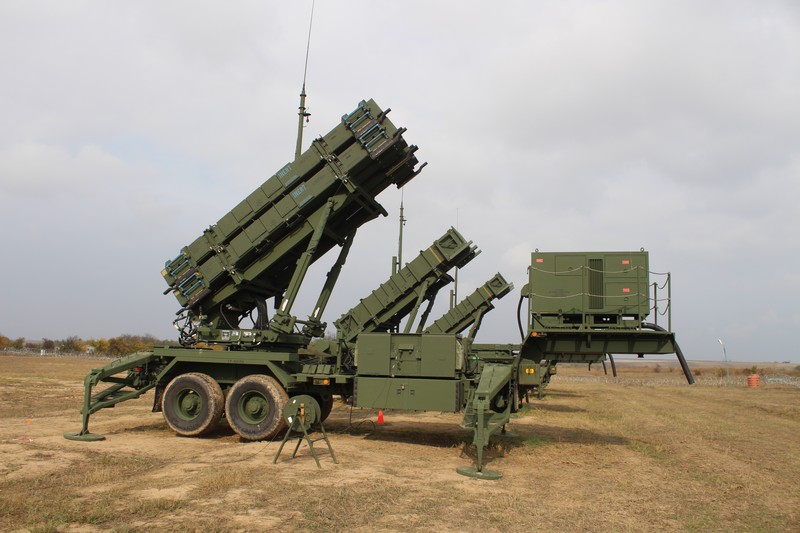
The juxtaposition is stark. Ukraine has spent four years defending against Iranian-designed Shahed drones, fired by Russia in their thousands. Now those same drones are striking Gulf states, fired by Iran. Kyiv has the counter-tactics. The Gulf has Patriot missiles — the scarce, expensive interceptors Ukraine needs but cannot manufacture.
Zelenskyy signed a defense cooperation pact with Qatar on Saturday, part of a Gulf tour that has already produced a similar agreement with Saudi Arabia and is expected to yield one with the United Arab Emirates shortly. He arrived in Jordan on Sunday for the next round of talks.
“If they give them to us, we will give them interceptors,” Zelenskyy told reporters earlier this month, describing the trade in explicit terms.
A Drone-for-Missile Swap
Ukraine has deployed 228 counter-drone specialists across five Gulf partners — Jordan, Qatar, the UAE, Saudi Arabia, and Kuwait — according to Defense News. That figure has crept up from roughly 201 the previous week, suggesting an expanding commitment as the Iran war continues.
The Qatari defense ministry described the agreement as covering “collaboration in technological fields, development of joint investments and the exchange of expertise in countering missiles and unmanned aerial systems.”
Zelenskyy has said Ukraine’s defense industry can produce around 2,000 interceptor drones per day — machines costing roughly the price of a used car, engineered to last a single season before replacement by an upgraded model. That volume, if sustained, dwarfs the annual output of many premium missile-defense production lines.
Patriot Advanced Capability-3 interceptors, by contrast, cost millions per shot and cannot be manufactured fast enough to meet global demand.
The Iran War Reshuffles the Queue
The calculus shifted when the US-Israeli air campaign against Iran began last month. In the conflict’s first three days, the United States and its Gulf partners burned through more than 800 Patriot interceptors — more than Ukraine received all winter — even as American forces struck over 2,000 targets inside Iran, according to Defense News.
That consumption rate has pushed Kyiv further down the waiting list for the interceptors it needs most.
“Interceptors like Patriot, forget it,” said Ed Arnold, a senior research fellow at the Royal United Services Institute. “The Ukrainians aren’t getting any more now because they’re all going to go to the US military — either Middle East or Taiwan.”
The Washington Post reported that the Pentagon is considering diverting weapons intended for Ukraine to the Middle East. Asked about the report, US President Donald Trump was blunt: “We do that all the time. Sometimes we take from one, and we use for another.”
Oil, Disinformation, and Risk
The Iran war complicates Ukraine’s position beyond weapons. Brent crude has surged above $100 per barrel since the conflict began, bolstering Russian oil revenues. A senior Kyiv official, speaking anonymously, described the price spike as “throwing a massive lifeline to Putin,” warning the effect would hit Ukraine within months.
The strategy also carries military risk. An Iranian member of parliament declared on March 14 that Ukraine’s support to Gulf states made it Iran’s “legitimate war target.” Tehran separately claimed to have destroyed a Ukrainian anti-drone depot in the UAE — an assertion Kyiv flatly denied.
“This is a lie, we officially refute this information,” a Ukrainian foreign ministry spokesman said.
There are bureaucratic obstacles at home, too. Ukrainian drone manufacturers say they have received inquiries from Gulf states but cannot export without government approval due to wartime restrictions. Yaroslav Filimonov, CEO of the electronic warfare firm Kvertus, told the BBC his company had been approached by Saudi Arabia and Kuwait but was waiting for clearance.
The deployment of specialists is a workaround — exporting knowledge without hardware, at least until permits catch up. For a country still absorbing nightly drone attacks, the calculation is brutally simple: Ukraine needs allies with Patriot stockpiles more than those allies need Ukrainian drone tactics. But the Shaheds keep flying in both directions, and Kyiv is betting that shared threats can build shared interests.
Sources
- Zelenskyy visits Doha as Ukraine, Qatar sign defense pact — Deutsche Welle
- Ukraine offers Gulf allies drone defense in bid for scarce Patriot missiles — Defense News
- Ukraine signs deal with Saudi Arabia offering drone expertise — BBC News
- Ukraine’s Zelenskyy visiting Jordan for next leg of Gulf ‘security’ talks amid Iran war — Channel News Asia
Discussion (8)