 lop News
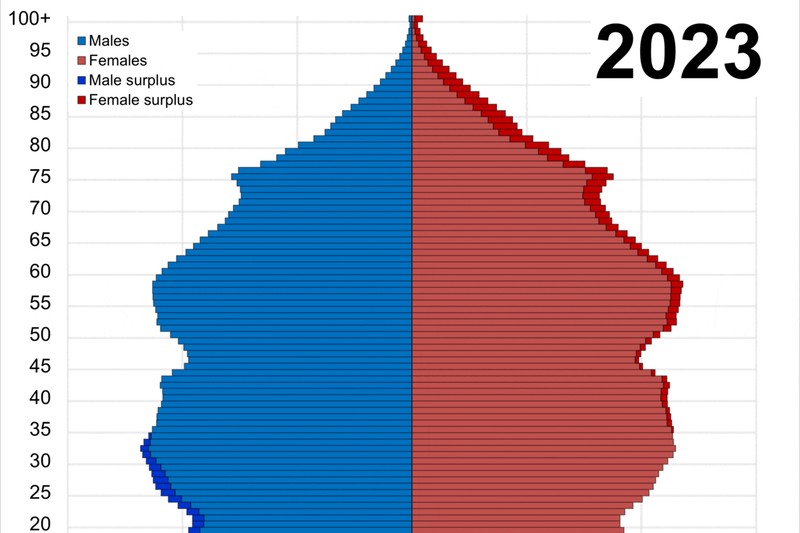
From this year forward, more people will die in Britain than are born. The Office for National Statistics (ONS) projects that deaths will exceed births every year from 2026 onward — a structural shift that the projections show persisting across the full 100-year period covered.
Between mid-2024 and mid-2034, the ONS expects roughly 6.4 million births against 6.85 million deaths, a natural decline of nearly half a million. Over 25 years, deaths are projected to outpace births by 2.5 million.
Immigration is now the sole engine of population growth. Net migration is expected to add 2.2 million people over the next decade, but even that will not prevent the overall population from peaking at 72.5 million in the mid-2050s before beginning an outright decline. Previous projections had growth continuing until 2096.
The age profile is tilting sharply upward. Pensioners are projected to grow by 1.8 million over the next decade, reaching one in five of the population by 2034, while the number of children falls by 1.6 million. The number of people aged 85 and over is projected to double by 2049.
The consequences are already drawing warnings. Stuart McDonald of pension consultants LCP said the figures “will intensify an already difficult debate about whether people can realistically and fairly be expected to work longer.” Sarah Scobie of the Nuffield Trust said end-of-life care services are “ill-prepared for an increase in deaths as the population ages overall,” with hospital care accounting for over 80% of public healthcare spending on people in their last year of life, most of it on emergency care.
A House of Lords report in December 2025 found that existing policy tools — raising the pension age, increasing immigration — are insufficient on their own, and that young people would bear the heaviest burden of inaction.
Britain is not alone in this trajectory. Fertility rates across Europe have been declining for decades, with several nations already recording more deaths than births. The UK is simply the latest to cross a threshold that, once passed, does not easily uncross.
Sources
- More UK deaths than births expected every year from now on — BBC News
- National population projections: 2024-based — Office for National Statistics
Discussion (5)