 lop News
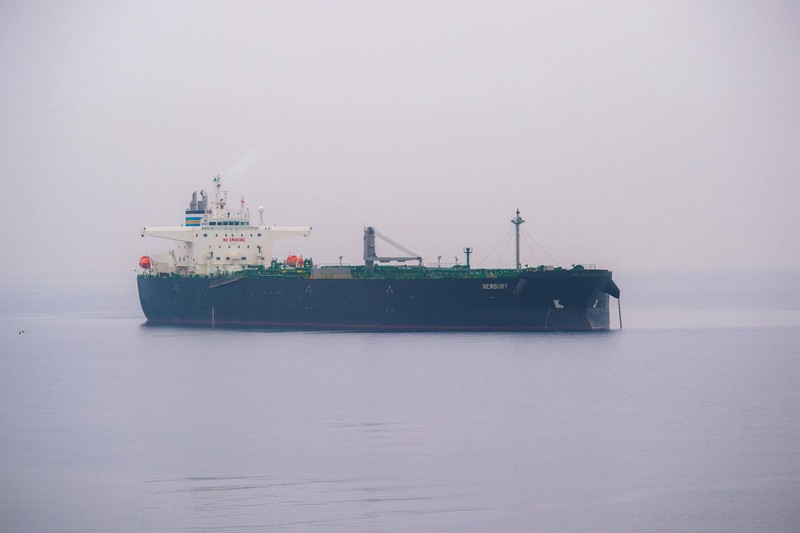
“Starve Putin’s war machine.” That was Prime Minister Keir Starmer’s declaration as he authorized British forces to board and detain ships from Russia’s so-called shadow fleet — the covert armada of aging tankers that Moscow uses to evade Western oil sanctions and keep its war economy afloat.
The move represents a significant escalation. For months, Royal Navy personnel have monitored these vessels from a distance. Now, under new legal authority, they can stop, board, and seize sanctioned ships transiting British waters — including the strategically vital English Channel.
A fleet in the shadows
The shadow fleet is exactly what it sounds like: a network of oil tankers operating in legal and financial darkness. Russia dispatches these vessels without valid national flags, registers them through obscure shell companies, and routes their cargoes through channels invisible to Western regulators.
According to the British government, roughly 75 percent of Russia’s crude oil is transported by these ships. They are typically old, often uninsured, and sometimes dangerously maintained — a floating environmental hazard that also happens to be a financial lifeline for the Kremlin.
Britain has sanctioned 544 vessels believed to be part of the shadow fleet. But a sanction is not a blockade. BBC Verify reported that dozens of sanctioned vessels sailed through the English Channel in the weeks after the legal mechanism for boardings was identified — a gap between policy and enforcement that the new authorization is designed to close.
Legal authority, military preparation
The legal groundwork was laid in January, when government lawyers determined that the 2018 Sanctions and Money Laundering Act provides sufficient basis for using military force against sanctioned vessels. The Defence Secretary, John Healey, and the Attorney General, Lord Hermer, have since met with counterparts across the Joint Expeditionary Force to coordinate legal frameworks for different scenarios.
No British forces have boarded a shadow fleet vessel yet. But the operational preparation is advanced.
Specialist military units — potentially including the Special Boat Service and the Royal Marines — have spent recent weeks training for boardings. The exercises included wargaming how to handle armed crews, a real possibility given that shadow fleet operators have little incentive to follow maritime law.
That training is now complete. Ministry of Defence officials are working on the assumption that the first boarding operation will happen “sooner rather than later.”
Ship-tracking technology allows British authorities to identify sanctioned vessels bound for UK waters weeks before arrival. Military planners are already monitoring these systems, selecting which ship will be the first to be stopped.
Coordinated pressure
The authorization coincides with Starmer’s arrival in Finland for the Joint Expeditionary Force summit in Helsinki — a gathering of ten northern European nations that has become a key forum for coordinating responses to Russian aggression.
“Putin is rubbing his hands at the war in the Middle East because he thinks higher oil prices will let him line his pockets,” Starmer said ahead of the summit. “That’s why we’re going after his shadow fleet even harder — not just keeping Britain safe but starving Putin’s war machine of the dirty profits that fund his barbaric campaign in Ukraine.”
The Royal Navy has already supported Finland, Sweden, and Estonia with monitoring and tracking operations in the Baltic and North seas. Earlier this year, British forces assisted U.S. troops in seizing the Marinera oil tanker, which American officials said was carrying oil for Venezuela, Russia, and Iran in violation of sanctions.
That operation demonstrated what boarding teams can do. The new authorization means Britain can now lead similar operations in its own waters.
Political fault lines
The Conservative opposition offered a response that was supportive in principle and critical in practice.
“Any effort to keep sanctioned ships out of our waters is important,” a party spokesperson said. “But Labour’s failure to back our armed forces with the resources they need shows he is in denial about the scale of the threats our country faces.”
The criticism reflects a broader debate over British defense spending — one that predates the current government but has intensified as threats multiply.
Ministers, meanwhile, are keen to emphasize that Russia remains a pressing concern even as Whitehall’s attention has been pulled toward the Middle East. The world, Starmer said, is “increasingly volatile and dangerous.”
The boarding authorization is a signal that Britain is prepared to do more than announce sanctions. It is prepared to enforce them — with force, if necessary.
Discussion (9)