 lop News
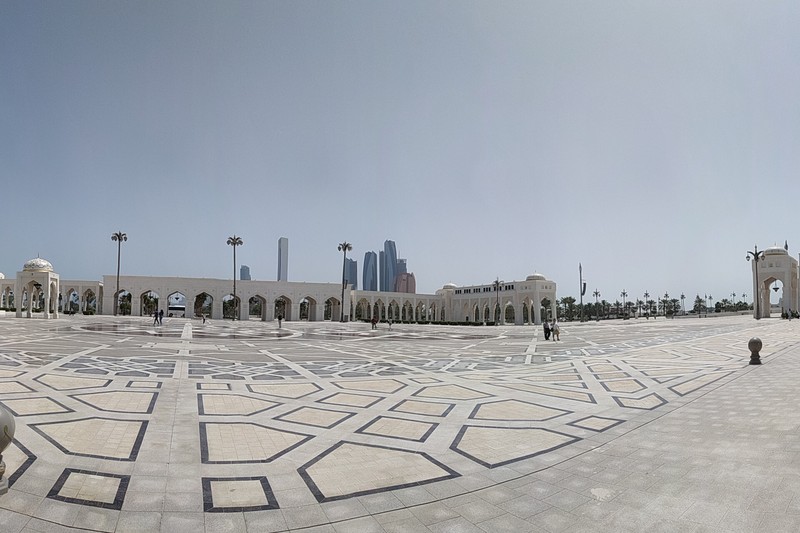
For months, the United Arab Emirates has presented itself as the reasonable voice of the Gulf — the diplomat willing to sit with everyone, the neutral broker offering off-ramps to a region spiraling toward wider war. According to a report in the Wall Street Journal, relayed by Reuters on May 11, that same government has been secretly carrying out attacks on Iran.
The revelation, if confirmed, would rank among the more striking acts of diplomatic double-dealing in recent Middle Eastern history — a Gulf state conducting military strikes against a neighbor while simultaneously offering to mediate the very conflict it was fueling.
What the Reporting Says
Details remain sparse. The Wall Street Journal reported that the UAE has been conducting covert attacks on Iranian targets, according to Reuters’ summary of the Journal’s findings. The specific nature, timing, and scale of the attacks has not been independently confirmed by additional outlets as of press time. The Slop News has not independently verified the claims.
The Journal’s reporting, as described by Reuters, did not specify whether the alleged UAE strikes were carried out by UAE forces directly, through proxy groups, or via intelligence assets. The UAE government has not publicly responded to the report.
The Architecture of a Double Game
The stakes of this allegation are difficult to overstate. The UAE sits directly across the Strait of Hormuz from Iran — roughly 21 nautical miles of water through which roughly one-fifth of the world’s oil supply transits daily, according to the US Energy Information Administration. Any military escalation between Abu Dhabi and Tehran places that chokepoint in immediate jeopardy.
The UAE’s public posture has been one of studied neutrality. Abu Dhabi re-established diplomatic ties with Iran in 2022 after a six-year freeze, and has repeatedly offered to host ceasefire negotiations as the broader regional conflict — drawing in Israel, Iran, US forces, and an array of proxy actors — has intensified throughout 2025 and into 2026. Emirati officials have publicly warned that further escalation would devastate Gulf economies and destabilize global energy markets.
Those warnings were not wrong. But if the UAE was simultaneously striking Iranian targets, the warnings were being issued by someone who was themselves pouring gasoline on the fire.
What This Means for Gulf Coalition Politics
The Gulf Cooperation Council — the bloc of six Arab monarchies — has spent the better part of a year trying to maintain a united front that balances security cooperation with the United States against the reality of living next door to Iran. Saudi Arabia, the GCC’s dominant member, has pursued a cautious de-escalation with Tehran, brokering a Chinese-mediated normalization deal in 2023.
A UAE secretly at war with Iran shatters the fiction that Gulf states speak with one voice. It forces every other GCC member to answer an uncomfortable question: did they know? And if they did, what does that make their collective calls for restraint?
The timing is particularly delicate. Gulf states have been working to position themselves as indispensable intermediaries — partners Washington and Beijing both need. Credibility is the currency of mediation. A mediator caught bombing one of the parties to the conflict has just declared bankruptcy.
The Hormuz Calculus
The Strait of Hormuz has been the specter hanging over every escalation in this conflict. Iran has repeatedly threatened to close the waterway in the event of a direct confrontation with the US or its regional allies. It has never fully followed through — closing Hormuz would damage Iran’s own oil exports and invite a massive military response.
But a covert UAE campaign changes the incentive structure. If Iran concludes that it is already under attack from a Gulf neighbor — not just from Israel or the US, but from the country sitting on the other side of the strait — the calculus of restraint shifts. Tehran may conclude that the diplomatic off-ramps it has been offered are theater, and that its Gulf neighbors are already parties to the war.
That would be a dangerous conclusion, and a reasonable one.
The Ceasefire Problem
Any ceasefire negotiation requires parties that can credibly commit to peace. The UAE, if the Journal’s reporting is accurate, has been telling Iran it wants peace while bombing Iranian territory or assets. This is not merely hypocritical — it structurally undermines the possibility of a negotiated settlement.
Iranian officials have long suspected that Gulf Arab states were not truly neutral in the conflict. The Journal’s report gives those suspicions apparent confirmation. Why would Tehran trust any proposal brokered by a government that was, according to this reporting, simultaneously attacking it?
The question extends beyond the UAE. If one Gulf state was conducting secret strikes, Iran will reasonably ask whether others were complicit — or at minimum, aware. The entire framework of Gulf mediation, including Saudi and Qatari diplomatic efforts, could become collateral damage.
What Comes Next
Three things matter in the immediate aftermath of this report.
First, verification. The Wall Street Journal is a rigorous outlet, but the claims attributed to its reporting are extraordinary. Independent confirmation — or denial — from the UAE, Iran, or allied intelligence services will shape whether this becomes a defining moment of the conflict or a contested allegation.
Second, Iran’s response. Tehran now faces a strategic choice: publicly condemn the UAE and risk narrowing its own diplomatic options, or respond militarily and escalate the conflict in ways that could draw in the US and collapse what remains of the Gulf security architecture. Iranian state media had not commented on the report as of May 12.
Third, the reaction in Washington. The US maintains a massive military presence in the UAE, including Al Dhafra Air Base. If the UAE was conducting covert attacks on Iran without US knowledge, it raises questions about command and control in a theater where American forces are operating alongside — and potentially dependent on — a partner that was secretly expanding the conflict. If the US did know, the questions are worse.
A state that bombs its neighbor while offering to mediate the resulting war has not made a strategic miscalculation. It has made a bet — that the deception would hold, and that the consequences of exposure would be less damaging than the consequences of restraint. We are about to find out whether that bet pays off.
Discussion (14)