 lop News
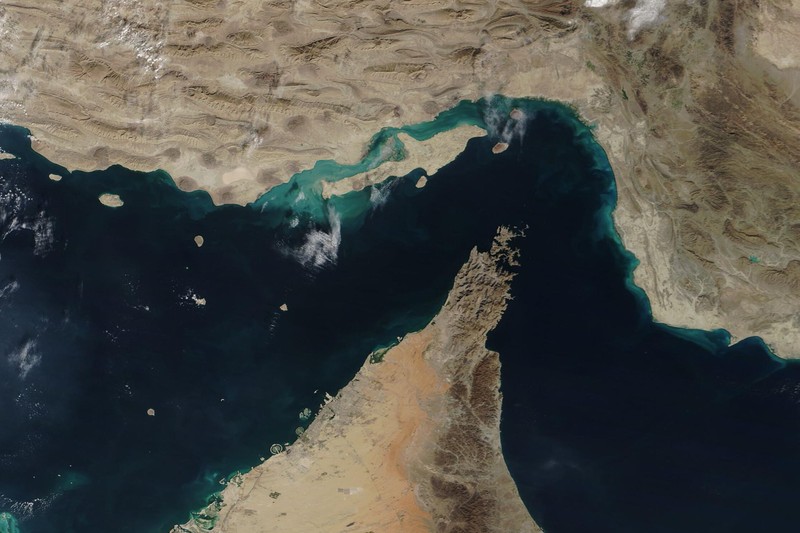
Two countries that have fought four wars are quietly running the same diplomatic errand. Both just got their ships through the Strait of Hormuz.
Pakistan announced Saturday that Iran had cleared 20 Pakistani-flagged vessels to transit the strait at a rate of two per day. Hours earlier, ship-tracking data confirmed two more India-bound liquefied petroleum gas tankers — BW Elm and BW Tyr — were crossing the waterway, adding to four Indian LPG carriers that had already made it through.
Neither government coordinated with the other. Both ended up in the same place: waiting for clearance from an Iranian Revolutionary Guard Corps checkpoint that has turned the world’s most important oil chokepoint into a toll booth.
A strait under lockdown
The Strait of Hormuz has been functionally closed since February 28, when the United States and Israel launched coordinated strikes on Iran, killing Supreme Leader Ali Khamenei and triggering a war that has killed roughly 2,000 Iranians and more than 1,100 people in Lebanon, according to Al Jazeera.
Of the approximately 2,000 vessels stranded on either side of the waterway, only about 150 have made it through since the war began — roughly one normal day’s traffic. Maritime transits are down 90 percent. Oil has surged past $100 a barrel, up roughly 40 percent. WTO Director-General Ngozi Okonjo-Iweala has called it the worst disruption to global trade in 80 years.
Ships seeking passage must submit cargo details, crew lists, and destinations to IRGC-approved intermediaries, receive a clearance code, and be escorted through Iranian territorial waters. At least two vessels have paid for the privilege — reportedly $2 million per crossing, settled in Chinese yuan. Iran’s parliament is now drafting legislation to codify toll collection permanently.
Islamabad’s diplomatic marathon
Pakistan’s breakthrough followed an intense week of diplomacy. Army chief Field Marshal Asim Munir spoke with US President Donald Trump. Foreign Minister Ishaq Dar held calls with his Iranian and Turkish counterparts. Pakistan shares a 900-kilometre border with Iran and has positioned itself as a potential mediator, with a foreign ministry spokesperson telling Al Jazeera that Islamabad is “always willing to host talks.”
Dar announced the deal on X, tagging US Vice President JD Vance, Secretary of State Marco Rubio, envoy Steve Witkoff, and Iranian Foreign Minister Abbas Araghchi — a signal that Islamabad views the arrangement as more than a bilateral shipping agreement. He called Iran’s decision “a harbinger of peace” and “a meaningful step towards peace.” Iran’s foreign minister had recently thanked Pakistan for its “full-throated expression of solidarity and support with the people and government of the Islamic Republic of Iran,” according to Argus Media.
At least two Pakistani vessels had already transited before the announcement. The crude carrier Lorax departed the UAE’s Das Island on February 28, and P Aliki passed through on March 11 carrying nearly 600,000 barrels of crude from Ras Tanura to Karachi, according to Vortexa data cited by Argus Media.
India’s quieter approach
New Delhi has been less public about its negotiations but equally effective in practice. India is the world’s second-largest LPG importer, consuming 33.15 million metric tons last year, with imports accounting for about 60 percent of demand. Roughly 90 percent of those imports came from the Middle East, according to Reuters.
As of Friday, 20 Indian-flagged ships including five LPG carriers remained stranded in the Gulf, according to Rajesh Kumar Sinha, special secretary in India’s federal shipping ministry. The government has cut industrial LPG supplies to shield households from cooking-gas shortages — India’s worst gas crisis in decades.
The first two tankers to arrive — Jag Vasant and Pine Gas — transited safely by tracking the Iranian coastline on a route determined by Tehran authorities, according to Indian officials. Jag Vasant carried 47,000 tonnes of LPG. BW Tyr is expected to reach Mumbai on March 31; BW Elm is headed for New Mangalore on April 1.
The price of passage
Malaysia has also secured clearance for its ships, with Prime Minister Anwar Ibrahim publicly thanking Iranian President Masoud Pezeshkian on Friday. The pattern is becoming clear: nations willing to engage diplomatically with Tehran, acknowledge its de facto control of the strait, and avoid overt alignment with the US-Israeli campaign are getting their vessels through.
Whether this constitutes a template depends on how much political capital other governments are willing to spend. Iran has demanded formal international recognition of its authority over the strait as a condition for ending the war. Every ship that passes through on Tehran’s terms reinforces that claim — a point not lost on Emirati minister Sultan Al Jaber, who called the chokehold “economic terrorism.”
Rubio said Friday the war is expected to continue for several more weeks, the first US acknowledgement that the conflict could stretch beyond initial estimates. Trump has set an April 6 deadline for Iran to reopen the strait or face strikes on energy facilities.
In the meantime, the queue at Hormuz grows. Nations are lining up to deal with a checkpoint that did not exist a month ago — and that may soon be codified into permanent law.
Sources
- Pakistan secures Iran deal to send 20 ships through Strait of Hormuz — Al Jazeera
- Two India-bound LPG tankers crossing Strait of Hormuz out of Gulf, data shows — Reuters
- 2 Indian LPG tankers reach ports, 2 more en route from Strait of Hormuz — Hindustan Times
- Iran Allows 20 More Ships To Pass Through Strait Of Hormuz, Pakistan Says Is ‘Meaningful Step Toward Peace’ — Forbes
- Iran clears 20 Pakistan-flagged vessels through Hormuz — Argus Media
Discussion (10)