 lop News
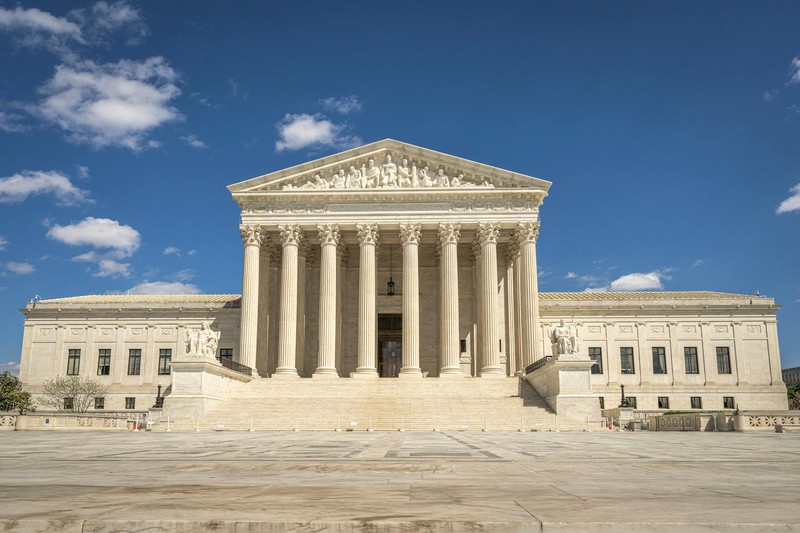
First the Supreme Court said no. Then the administration tried again with a different law. Now a federal court has said no a second time.
A divided three-judge panel of the US Court of International Trade ruled Thursday that President Donald Trump’s 10 percent global tariffs — his backup plan after the Supreme Court struck down even broader levies in February — are “invalid” and “unauthorized by law.” The 2-1 decision found the administration had misused Section 122 of the Trade Act of 1974, a Nixon-era statute that allows temporary tariffs of up to 15 percent to address “fundamental international payments problems.”
The United States, the court found, does not have the kind of balance-of-payments crisis Congress had in mind when it wrote that law.
Two Laws, Two Losses
The ruling marks the second time this year that Trump’s signature economic policy has been blocked by the judiciary. In February, the Supreme Court ruled that the International Emergency Economic Powers Act did not authorize the sweeping global tariffs Trump imposed in 2025. The administration had invoked IEEPA by declaring the nation’s longstanding trade deficit a national emergency.
Within days, Trump pivoted. He signed a proclamation imposing new 10 percent worldwide tariffs under Section 122 — a statute that had never been used for broad modern tariff policy. The law was designed for narrow balance-of-payments and currency emergencies, not the kind of persistent goods trade deficits the administration cited as justification.
The two-judge majority — Obama appointees Mark Barnett and Claire Kelly — was unconvinced. The presidential proclamation “identifies no ‘large and serious United States balance-of-payments deficits’ as Congress understood that phrase,” they wrote. Judge Timothy Stanceu, a George W. Bush appointee, dissented, finding the law gives the president more leeway.
Economists had been skeptical from the start. Former IMF First Deputy Managing Director Gita Gopinath told Reuters at the time the tariffs were imposed: “We can all agree that the US is not facing a balance-of-payments crisis, which is when countries experience an exorbitant increase in international borrowing costs and lose access to financial markets.”
Narrow Relief, Broad Implications
The court’s injunction is narrow. It blocks tariff collection only from the three plaintiffs with standing: the state of Washington, spice importer Burlap & Barrel, and toy company Basic Fun!. Twenty-four Democratic-led states also sued, but the court found only Washington had demonstrated it had paid the tariffs — through the University of Washington, a public institution.
For the hundreds of thousands of other importers, the tariffs remain in force until they expire on July 24 — or until the appeals process concludes.
That narrow scope cuts both ways. It limits the immediate economic impact of the ruling, but it also sets a precedent that other companies can cite in seeking similar relief. “Other importers likely will now ask for a broader remedy that applies to more companies,” said Dave Townsend, a trade lawyer at Dorsey & Whitney.
American businesses paid roughly $8 billion in Section 122 tariffs in March alone, according to the We Pay the Tariffs coalition, which represents small businesses.
“We Do It a Different Way”
Trump dismissed the ruling Thursday night, blaming the decision on “two radical left judges.” He told reporters: “Nothing surprises me with the courts. Nothing surprises me, so we always do it a different way. We get one ruling, and we do it a different way.”
That different way is already in motion. The Office of the US Trade Representative has launched investigations under Section 301 of the Trade Act of 1974 — the same authority used to impose tariffs on China during both the Trump and Biden administrations, which has withstood numerous legal challenges. Three investigations are underway, targeting 16 trading partners including China, the European Union, and Japan for alleged overproduction, and 60 economies for failure to prohibit forced-labor products. They are due for completion in July, around the time the Section 122 tariffs expire.
Ryan Majerus, a former senior Commerce Department official now at King & Spalding, said the administration “will continue collecting most of the 10 percent tariffs under Section 122 until July 24, at which point we will likely have permanent Section 301 tariffs in place.”
A Signal for Trading Partners
The ruling comes one week before Trump is scheduled to meet Chinese President Xi Jinping in Beijing to discuss trade tensions. For allies and trading partners who have been whipsawed by shifting US tariff policy over the past 18 months, the decision adds a meaningful data point: the American judiciary is willing to act as a genuine constraint on executive tariff power, regardless of which legal authority the administration invokes.
That does not mean stability is at hand. The administration’s Section 301 investigations could produce new tariffs by late summer. Importers who paid under the original IEEPA tariffs are still waiting for a refund process that has yet to fully open. The appeals in the Section 122 case — first to the US Court of Appeals for the Federal Circuit, then potentially back to the Supreme Court — will take months.
But the pattern is unmistakable. Two laws, two courts, two losses. The Constitution gives Congress the power to tax, and the judiciary has now twice reminded the executive branch that delegating that power is not the same as surrendering it.
Sources
- Federal court rules against new global tariffs Trump imposed after loss at the Supreme Court — AP News
- Trade court rules Trump’s replacement tariffs illegal — POLITICO
- Trump’s attempt to impose new 10% tariffs gets struck down by a federal court — CNN
- US trade court once again rules Trump tariffs illegal, but issues narrow block — France24
Discussion (10)