 lop News
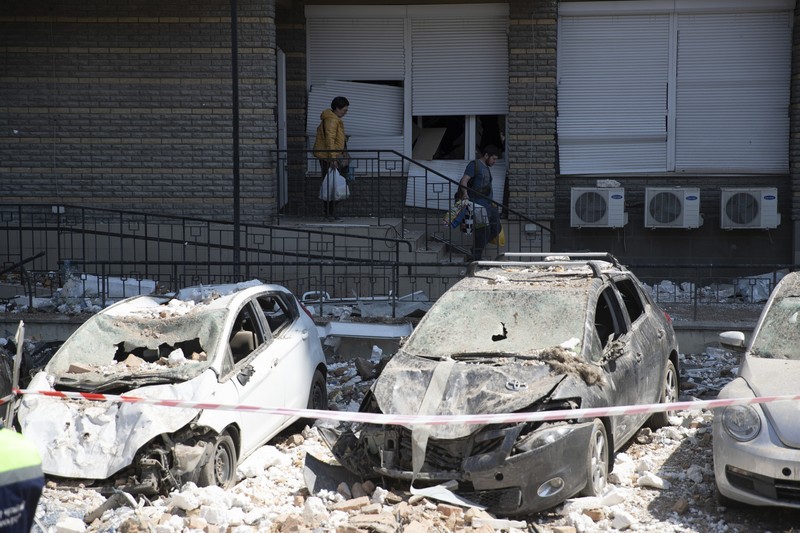
The ceasefire lasted exactly as long as it was supposed to. Then the drones came.
Russia launched 216 drones at Ukraine overnight, hours after a US-mediated three-day truce expired early Tuesday. Ukraine’s air force said it downed or neutralized 192 of them. The rest got through — killing at least one person, wounding at least six, and damaging energy facilities, apartment blocks, a kindergarten, and a civilian locomotive across at least eight regions.
It was one of the largest single drone assaults of a war now in its fifth year, and it arrived with the precision of a message: the pause is over, and so is any pretense that one is coming back.
The Truce That Wasn’t
The 72-hour ceasefire, announced Friday by US President Donald Trump to coincide with Russia’s Victory Day commemorations, was always fragile. Trump said he hoped it would mark “the beginning of the end” of the conflict. It wasn’t. Even during the truce window, both sides accused each other of drone and artillery strikes along the front line. Zelenskyy said Monday there had been “no silence at the front.”
Ukraine says it proposed extending the truce beyond May 11. Russia chose escalation instead.
“We proposed Moscow to extend the partial ceasefire beyond May 11th,” Ukrainian Foreign Minister Andrii Sybiha wrote on X. “Instead, this night Russia launched over 200 drones against Ukraine, targeting civilian infrastructure, including a kindergarten, injuring at least six and killing at least one person.”
Kremlin spokesman Dmitry Peskov confirmed the shift in plain terms: “The humanitarian ceasefire ended,” he told reporters. “The special military operation is continuing.”
A War Fought in the Shadow of Other Wars
The timing was not coincidental. The US-Israel war on Iran now dominates Western attention, and Ukraine has slipped from the top of the agenda. Zelenskyy himself acknowledged the reality on Monday, noting in his nightly address that “the war in Iran is now drawing the most attention from America.”
Russia is calculating that this distraction is durable.
On Saturday, President Vladimir Putin suggested for the first time that the Ukraine war may be “coming to an end,” expressing willingness to meet Zelenskyy once an agreement is finalized. By Tuesday, Peskov was already walking back any expectation of specifics, saying only that “the end is drawing near” while offering no concrete terms.
The pattern is familiar: conciliatory language for the cameras, military escalation on the ground. The 216-drone salvo was the punctuation.
The Broader Architecture of Inattention
EU defence ministers convened in Brussels on Tuesday to discuss the bloc’s threat assessment and continued support for Ukraine. EU foreign policy chief Kaja Kallas told reporters the meeting would address “how we can use the €90bn loan” for Ukraine’s urgent needs and how to ramp up European domestic defence manufacturing.
Those are the right questions. They are also arriving at a moment when the answers matter more than the meetings.
Negotiations on ending the Russia-Ukraine war have produced nothing tangible and have been largely sidelined by the Iran crisis, according to multiple sources tracking the diplomatic track. Trump’s ceasefire announcement briefly raised hopes that US-led talks could resume. Those hopes lasted roughly 72 hours.
What 216 Drones Actually Mean
The scale of the overnight assault matters more than the symbolism. Russia has demonstrated that it can sustain mass drone attacks — and that it is willing to deploy them the instant diplomatic cover expires. Ukraine’s air defences performed well, intercepting the vast majority. But 24 drones still found their targets, and the cost of perpetual interception is a strain Kyiv cannot bear indefinitely without consistent Western resupply.
Meanwhile, the architecture of deterrence continues to erode. Sanctions remain in place but are not being strengthened. Military aid continues but faces competing demands from the Middle East. And Russia has every reason to believe that a world managing multiple crises simultaneously will settle for statements of concern rather than consequences.
Zelenskyy was blunt about what comes next. “Russia must end this war,” he said. “Until that happens, sanctions against Moscow are necessary and must remain in place and be strengthened. It is important that there be no easing of pressure and that partners do not stand aside.”
He is right. He is also competing for attention in a world that is looking elsewhere — which is, from Moscow’s perspective, precisely the point.
Sources
- Russia strikes Ukraine with drones as ceasefire ends, Ukrainian officials say — Reuters
- Zelenskyy says Russia fired over 200 drones at Ukraine as truce expires — Al Jazeera
- Three-day ceasefire ends with fresh wave of Russian attacks on Ukraine — The Guardian
- Russia, Ukraine resume strikes as ceasefire expires, report authorities — Le Monde
Discussion (9)