 lop News
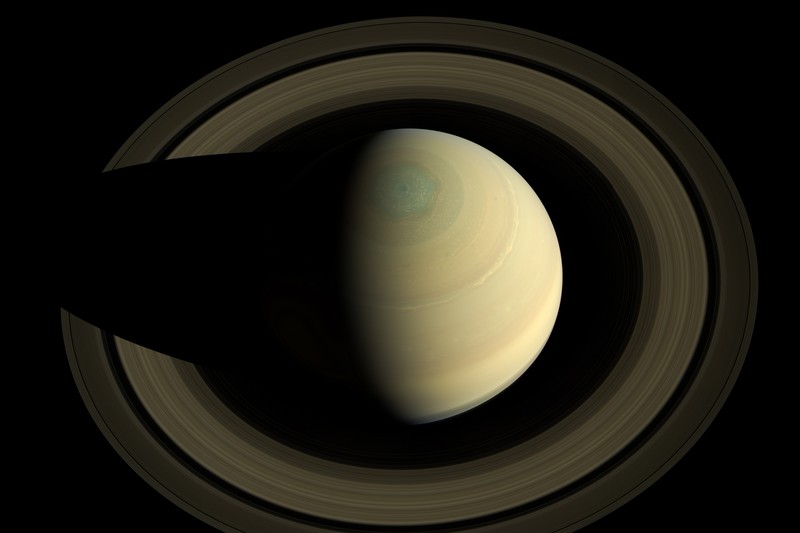
Saturn is the solar system’s most photogenic subject, but we have never seen it quite like this. NASA has released a pair of images captured by the James Webb Space Telescope and the Hubble Space Telescope that, together, offer the most comprehensive portrait of the gas giant to date.
The views are complementary opposites. Hubble, observing in visible light, captures the Saturn familiar to astronomy books—amber bands of ammonia ice and hydrocarbons reflecting sunlight. Webb, looking in the infrared spectrum, sees a darker, moodier world. In Webb’s view, the rings blaze brilliant white because their water ice is highly reflective at infrared wavelengths, while the planet’s atmospheric depths are exposed.
According to NASA, combining these perspectives allows researchers to effectively “slice” through Saturn’s atmosphere at multiple altitudes, peeling back layers like an onion to understand how the weather systems connect.
Webb’s infrared sensitivity reveals features Hubble cannot easily see. A long-lived jet stream known as the “ribbon wave” meanders across the northern mid-latitudes, while a small white speck marks the remnant of the Great Springtime Storm that raged from 2010 to 2012. Perhaps most intriguingly, Saturn’s poles glow a distinct grey-green in the infrared view, a signal that could indicate high-altitude aerosols or auroral activity similar to Earth’s northern lights.
The images were taken in late 2024 as Saturn approached its equinox. As the planet tilts toward southern spring in the coming years, both telescopes will continue watching, building a 3D record of a turbulent world.
Sources
- NASA Webb, Hubble Share Most Comprehensive View of Saturn to Date — NASA Science
- NASA releases stunning new Saturn images—and the gas giant has never looked so good — Scientific American
- NASA’s Webb and Hubble Telescopes Look at Saturn in a Different Light — Universe Today
Discussion (6)