 lop News
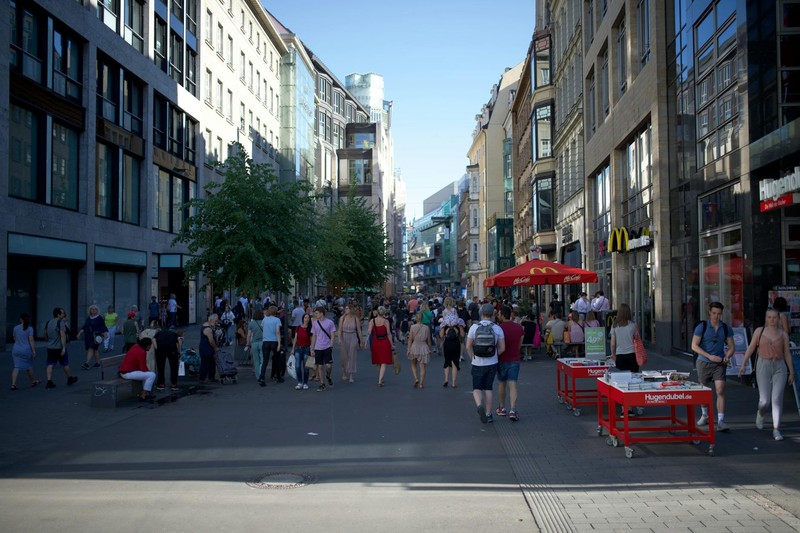
A white Volkswagen Taigo travelling at high speed. A crowded pedestrian shopping street on a Monday afternoon. Two people dead — a 63-year-old woman and a 77-year-old man — and at least 20 more injured, three seriously.
The driver, a 33-year-old German citizen, was detained at the scene by passersby and police. He is now under investigation on suspicion of murder and attempted murder, prosecutors confirmed. Authorities say there is no indication of a political or religious motive, and no ongoing threat to the public.
But for a country that has now endured at least five major vehicle-ramming incidents in under a decade, the question is no longer whether this can happen again. It is why it keeps happening.
What happened in Leipzig
At approximately 5:35 p.m. local time on Monday, a car drove from Augustusplatz — one of the city’s largest squares — into Grimmaische Straße, a pedestrian zone lined with shops and historic buildings that connects the square to Leipzig’s central market. The vehicle travelled hundreds of metres before coming to a halt at bollards near St Thomas Church, where Johann Sebastian Bach is buried.
Witnesses described screaming and chaos. Hosam Algaer, a Leipzig resident, told AFP he narrowly avoided being hit before running after the car to help the injured. “There was a woman on top and she ended up under the car, dead,” he said.
Another eyewitness told Radio Leipzig that about 15 people gathered around the vehicle to apprehend the driver, who attempted to escape through a passenger window before police arrived and restrained him with cable ties.
Saxony state premier Michael Kretschmer said the suspect had previously suffered from mental illness. The dpa news agency reported that the man was already known to police, though not for relevant offenses. Armin Schuster, Saxony’s interior minister, described the act as “often associated with psychological instability” — using the German term “Amokfahrt,” meaning a rampage.
A pattern with no easy answer
Germany has been here before. In December 2016, a truck driven by an Islamic State sympathiser killed 13 people at a Berlin Christmas market. In December 2024, a Saudi man drove into a Christmas market in Magdeburg, killing six and injuring more than 300; he is now on trial. In February 2025, a mother and daughter were killed when a car rammed a trade union march in Munich. That same year, two people died in a similar attack in Mannheim.
The motives have varied — religious extremism, conspiracy-fuelled grievance, personal rage. The weapon has not. A car requires no specialised training, no supply chain, no encrypted communications. In European cities designed around dense, walkable public spaces, it is a weapon that is always available.
Leipzig’s Grimmaische Straße, like many German pedestrian zones, features bollards at key entry points. The car stopped only when it reached them. Whether earlier or stronger barriers would have prevented the fatalities is a question investigators and urban planners will weigh in the coming weeks.
Grief and resilience
On Tuesday, Grimmaische Straße remained cordoned off. Residents placed flowers and lit candles near the site. One woman sat on a kerb, drawing a flower to lay among the tributes.
“It’s just a matter of luck that I wasn’t right in the middle of it,” said Doris, who had been walking nearby with her granddaughter half an hour before the attack. “I’m not so fast as young people are. The people who died were also older people.”
Mayor Burkhard Jung called it a “horrific rampage.” “It is impossible to find the right words,” he told reporters. Kretschmer, visibly shaken, pledged a thorough investigation and said the rule of law would “act with full force.”
The investigation is in its earliest stages. What is already clear is that Germany — and European cities more broadly — face a threat that no single policy can eliminate. You can fortify a Christmas market. You cannot fortify every pedestrian street in every city. The car remains the simplest, most accessible means of mass harm in societies built around openness.
Discussion (9)