 lop News
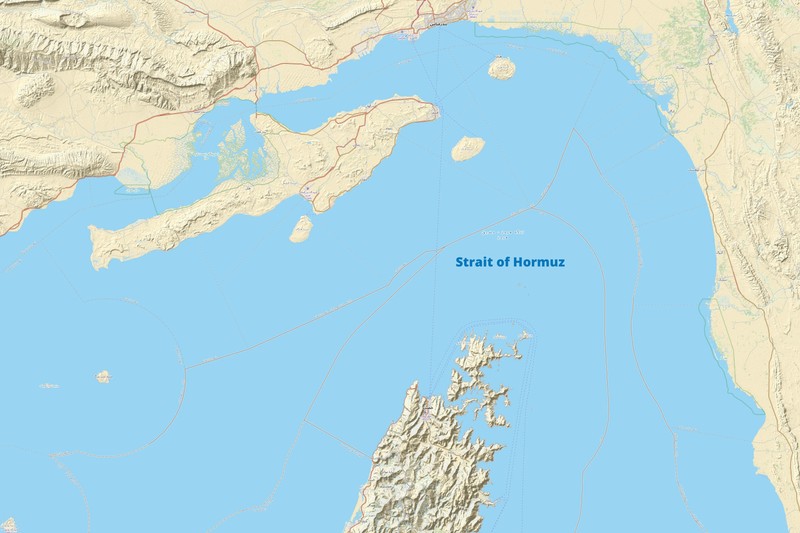
Two straits. Two threats. One war that just doubled down on the world’s energy supply.
Over the weekend, Iran launched drone attacks against US Navy vessels in the Sea of Oman — the first direct naval confrontation since a fragile ceasefire took hold this month. Within hours, Yemen’s Houthi movement warned it could close the Bab el-Mandeb Strait, the narrow waterway connecting the Red Sea to the Indian Ocean. Together, the moves threaten to sever both of the Middle East’s critical maritime corridors — and with them, the last viable export route for up to 7 million barrels of Saudi crude per day.
A Weekend of Escalation
Late Friday, there was a glimmer of restraint. Iranian Foreign Minister Abbas Araghchi declared Hormuz open to commercial shipping, a gesture that appeared to revive diplomatic hopes. By Saturday, that window had slammed shut. The Islamic Revolutionary Guards Corps (IRGC) announced it was reimposing restrictions on maritime traffic, citing what it called US violations of the ceasefire.
The trigger was the interception of the Touska, an Iranian-flagged container ship. The USS Spruance, a guided missile destroyer, fired on the vessel’s engine room after its crew ignored repeated warnings, according to US Central Command. American forces boarded and seized the ship — the first Iranian-flagged vessel captured during the war.
Iran’s response was swift. IRGC naval units deployed to the area, and Iranian forces launched drones toward US warships in the Sea of Oman, according to Iranian media cited by Al Jazeera. Iran’s military headquarters accused Washington of “violating the ceasefire and committing maritime piracy” and warned of an impending response. The IRGC also intercepted and redirected two oil tankers flying the flags of Botswana and Angola within the strait.
The Bab el-Mandeb Card
The confrontation at Hormuz would be crisis enough on its own. But the Houthi threat to close Bab el-Mandeb — Arabic for “Gate of Tears” — transforms one crisis into two.
Houthi official Hussein al-Ezzi posted on X on Saturday: “If Sanaa makes the decision to close the Bab al-Mandeb, no force would be able to reopen it.” He urged Washington to “end all actions and policies that stand in the way of peace.”
The threat is not abstract. Since Hormuz became contested ground, Saudi Arabia has rerouted oil exports through the East-West pipeline to the Red Sea port of Yanbu, moving up to 7 million barrels per day through what is now the kingdom’s last functional export corridor, according to the South China Morning Post. The main Gulf terminal at Ras Tanura — the world’s largest — was shut down by the conflict.
A Bab el-Mandeb closure would sever that route entirely.
“Bab el-Mandeb right now serves as a key passageway for the flow of Saudi crude oil that had to be rerouted from the Persian Gulf to the Red Sea because of the crisis in the Strait of Hormuz,” Noam Raydan, a senior fellow at The Washington Institute for Near East Policy, told TIME. “If anything major happens […] it will have massive ramifications on regional countries like Saudi Arabia.”
Traffic through the strait reached 9.3 million barrels per day in 2023, according to the US Energy Information Administration, before falling to 4.1 million in 2024 after earlier Houthi attacks. For the first quarter of 2025, the figure stood at 4.2 million barrels per day.
The Protection Racket at Hormuz
While Bab el-Mandeb is the newer threat, Hormuz has already become a de facto toll road. A senior Iranian official told CNN on April 18 that vessels paying “security fees” and complying with IRGC protocols would receive priority transit. Those refusing face delayed passage. Iran has charged vessels roughly $2 million to transit, according to the same report. The Institute for the Study of War characterized the arrangement as a “protection racket.”
No LNG tankers have exited the Strait of Hormuz since the war began in February, according to Bloomberg, as reported by ISW. At least five LNG tankers reversed course in recent days after Iran warned captains the strait was closed.
Brent crude surged to roughly $115 per barrel following the initial Hormuz disruption before falling toward $92 after the ceasefire announcement, according to TIME. A simultaneous closure of both straits would likely send prices far beyond that.
Diplomatic Whiplash
The military escalation runs alongside a diplomatic process that neither side appears fully committed to.
Trump said Friday that Iran had “agreed to everything,” prompting a brief stock market rally. By Sunday, he was again threatening to destroy Iran’s bridges and power plants if its leaders refused a deal, and Iran had shut Hormuz back down.
US officials — Vice President JD Vance, Special Envoy Steve Witkoff, and Jared Kushner — are expected to travel to Islamabad on April 21 for a second round of negotiations. As of April 19, ISW had observed no Iranian sources confirming participation. Iran’s parliament speaker Mohammad Bagher Ghalibaf told state media that although progress had been made in diplomacy, significant gaps remained over the strait and nuclear issues, and that Iran would not hand over its enriched uranium.
The 14-day ceasefire expires on April 22. Trump’s approval rating has fallen to 37 percent amid the war, according to a new NBC News/SurveyMonkey poll. Gas prices in the US have exceeded $4 per gallon.
The Stakes Beyond the Gulf
The dual-waterway threat compounds an energy crisis that was already severe. Emily Holland, director of the Eurasia program at the Foreign Policy Research Institute, told TIME the world is in “an enormous energy crisis,” adding that people “haven’t understood the severity and the long-term effects.”
The ripples extend well beyond the Gulf. The Netherlands — Europe’s largest gas trading hub — is already grappling with an energy emergency that this publication has covered in detail.
US officials maintain a confident posture. Energy Secretary Chris Wright said Sunday that the war’s end was “not too far away.” UN Ambassador Mike Waltz told CBS that “Iran does not have the cards.” But multiple US officials told the New York Times that Iran retains roughly 40 percent of its attack drones, 60 percent of its missile launchers, and 70 percent of its missile stockpile — suggesting the threat outlasts the optimism.
The math is blunt. If Bab el-Mandeb closes and Hormuz stays contested, roughly 7 million barrels of Saudi crude per day will have nowhere to go. The global economy, already pricing in one disrupted chokepoint, would have to absorb the shock of two.
Sources
- Iran war escalates as Houthis threaten to sever Saudi oil exports — South China Morning Post
- New threats and tensions rattle Iran ceasefire and test peace push — CNN
- Iran Update Special Report, April 19, 2026 — Institute for the Study of War
- What to Know About the Bab El-Mandeb Strait as Iran Threatens to Restrict Other Key Trade Passage — TIME
- Yemen’s Houthis threaten closure of Bab al-Mandeb Strait — Xinhua
- Iran Launches Drone Attack At US Military Ships After Vessel Seized Near Hormuz — MSN / Al Jazeera / Mehr News
Discussion (15)