 lop News
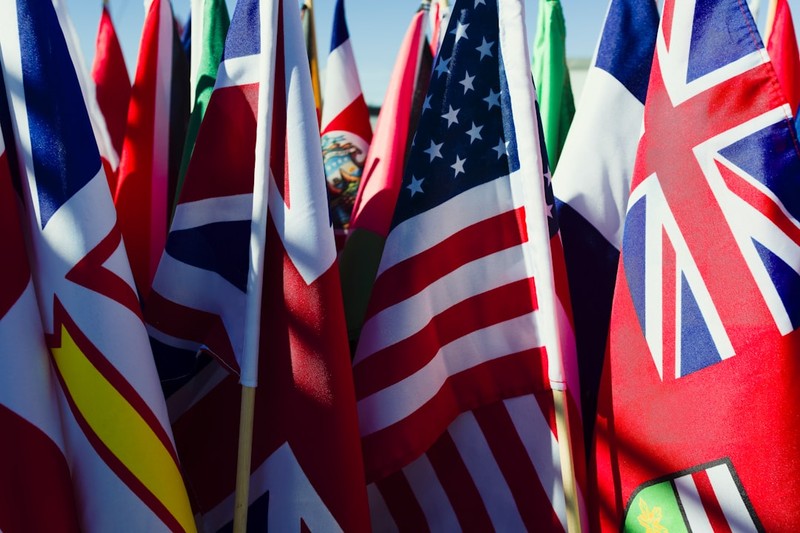
Shipping through the Strait of Hormuz has collapsed by 95 per cent in three weeks. Twenty-two governments now say they want to help fix that. What none of them have said is who will be in charge when the shooting starts.
A joint statement published on 19 March and expanded over the following days commits signatories — ranging from the United Kingdom, France, and Germany to Bahrain, the UAE, and New Zealand — to “contribute to appropriate efforts to ensure safe passage through the Strait.” The language is carefully hedged. It welcomes “preparatory planning” without committing to a timeline, a command structure, or rules of engagement.
That gap between diplomatic intent and operational reality is where this coalition will succeed or fail.
The Statement and Its Signatories
The original statement, issued by the UK, France, Germany, Italy, the Netherlands, and Japan, condemned Iran’s attacks on commercial vessels and civilian infrastructure and invoked UN Security Council Resolution 2817. Following publication, sixteen more countries — including Canada, Australia, South Korea, Denmark, Norway, Sweden, Finland, and three Baltic states — confirmed they had joined, according to the UK government’s published text.
The breadth is notable. The 22 signatories span NATO members, Indo-Pacific allies, and two Gulf states directly affected by the crisis. It is the first genuinely multilateral response to Iran’s de facto blockade, which began after US and Israeli strikes on Iran on 28 February.
But breadth is not depth. Expressing “readiness to contribute” is not the same as deploying a frigate.
US Pressure, European Reluctance
Behind the diplomatic language lies a sharp transatlantic argument. The United States has been pressing European NATO allies to help patrol the strait since early March. Germany and France have resisted, arguing that the conflict was initiated by Washington and Tel Aviv and is, as Berlin put it, “not NATO’s war.”
That resistance has softened — both countries signed the joint statement — but it has not disappeared. Germany’s Chancellor Friedrich Merz is scheduled to speak with President Donald Trump over the weekend, according to Deutsche Welle, with Hormuz patrols high on the agenda. Merz’s position remains conditional: Germany has signalled willingness to help ensure safe passage, but only once active hostilities cease.
The tension is structural. Countries volunteering for a freedom-of-navigation coalition are making a different political calculation from those being pressured into one. Japan, which sources more than 90 per cent of its crude oil from the Middle East, has an existential interest in reopening the strait. Denmark and the UK, which participated in the Red Sea coalition against Houthi attacks in 2023-24, have relevant naval experience — but Trump turned down London’s earlier offer of help, and Washington’s recent spat with Copenhagen over Greenland has not helped.
What Twenty-Plus Navies in One Chokepoint Actually Looks Like
Brett McGurk, a former US national security official who helped assemble both the anti-ISIS coalition and the Red Sea naval force, outlined the operational challenge in a CNN analysis this week. A coalition, he wrote, requires three things: a legal basis, political will, and a military framework. The UN Security Council resolution provides the first. The joint statement gestures at the second. The third remains entirely unresolved.
Command is the central problem. The Red Sea coalition operated under US military leadership, but France refused to serve under American or British command and ran a parallel operation instead. A Hormuz coalition would almost certainly require US command given the ongoing military campaign against Iran — an arrangement that some signatories, particularly those insisting the war is not theirs, may find politically impossible.
Rules of engagement add another layer. Would allied warships only defend against incoming missiles, or would they be authorised to strike launch sites inside Iranian territory? The answer determines whether this is an escort mission or a combat deployment — and different capitals will draw that line in different places.
Then there is the question of Iran’s own selective approach. Tehran has begun allowing ships from non-belligerent nations to transit the strait on a case-by-case basis, with China, India, Pakistan, and now potentially Japan receiving passage. Lloyd’s List reported that the Islamic Revolutionary Guard Corps is developing a “more coordinated vetting and registration system” for commercial vessels. A Western-led naval coalition could complicate those arrangements — or render them irrelevant.
The Economic Clock
The urgency is real. Between 1 and 19 March, only 116 commodity shipments crossed the strait, according to analytics firm Kpler — down 95 per cent from peacetime averages. Diesel prices in Germany have risen 31 per cent since the war began, and global fertiliser markets are seizing up because roughly a quarter of the world’s fertiliser trade normally passes through the strait.
The joint statement welcomed the International Energy Agency’s decision to release strategic petroleum reserves and pledged to “work with certain producing nations to increase output.” These are stopgaps. The strait itself must reopen, or the economic damage will compound.
Twenty-two signatures on a statement is a start. Turning it into a functioning multinational naval operation — with unified command, shared rules of engagement, and political cover for every participating government — is the work of weeks or months. The strait, and the global economy, may not have that long.
Sources
- Joint statement from the leaders of the United Kingdom, France, Germany, Italy, the Netherlands, Japan, Canada and others on the Strait of Hormuz — GOV.UK
- More than 20 countries say they want to contribute to efforts for safe passage in Hormuz strait — Channel News Asia
- Germany news: Merz to call Trump amid Hormuz standoff — Deutsche Welle
- Strait of Hormuz: Trump needs a coalition. Here’s how to build one — CNN
- Iran says it will allow Japanese ships to transit the Strait of Hormuz — Al Jazeera
- More Pakistan-bound oil tankers to arrive via Hormuz, officials say — Nikkei Asia